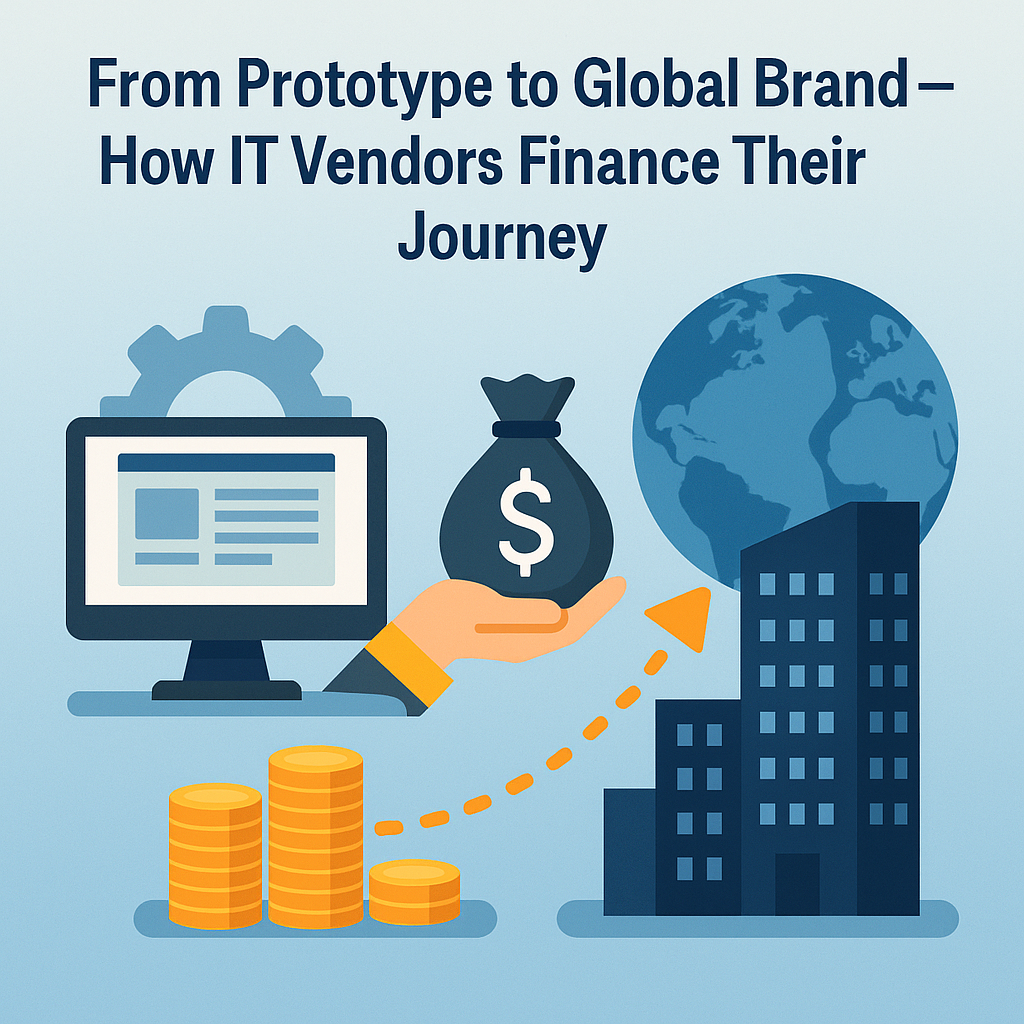
At Darkgate, the team behind one of the most renowned recruitment agencies in the IT security sector, we talk to system integrators, service providers, and vendors every single day. Their names come up in nearly every conversation – the giants of the industry. Yet we often find ourselves asking the same question: how do these massive companies actually come into existence? From the moment an idea takes shape to the point where it becomes a functioning business, there’s a long and uncertain road. How does that transformation really happen? How does an idea turn into a company and where does the money come from to make it possible?
Most stories begin the same way: with an idea. Sometimes it’s born out of frustration, sometimes out of pure conviction. An engineer, a security architect, maybe a CEO who feels that the organization he works for has grown too slow, too bureaucratic, too blind to what’s next. Then comes the moment of decision leaving the safety of the old world behind to build something new. It’s a leap into uncertainty. And between the code and the capital lies a gap that few truly understand: the stretch between innovation and the first paying customer. The early months are rarely glamorous. Many founders work from small shared offices or their own living rooms, funding servers through consulting work and hoping for a pilot customer who will take a chance. According to a recent Gartner report, fewer than fifteen percent of European cybersecurity startups survive this early phase. The reason is almost always the same not technology, but trust.
Investors don’t invest in code; they invest in people. In experience, credibility, networks. “Technology opens the door,” a former venture partner once told us, “but relationships are the currency.” Nowhere is that truer than in cybersecurity. A single slip a poorly worded statement on compliance, a questionable encryption model can kill an investor’s confidence overnight. That’s why many startups are founded by veterans of established vendors. Former leaders and engineers from Cisco, Fortinet, or Palo Alto Networks carry more than technical know-how. They carry credibility, and that is often worth more than money in the early stages. Once the first round of financing is secured, the story changes. Growth demands structure. New hires, international expansion, certifications, and compliance all cost money. But capital alone doesn’t guarantee success. Those who scale too fast risk losing touch with their product’s identity; those who move too slowly risk being overtaken by better-funded competitors. The choice between venture-backed acceleration and organic, partner-driven growth defines not only the business model but also the culture that emerges around it.
In our conversations with executives and sales directors, one theme keeps returning: money shapes mindset. Capital providers don’t just bring funding; they bring expectations reports, metrics, milestones. The entrepreneurial spirit that once defined the company often shifts toward accountability and planning. Yet underneath that structure, one thing usually remains: the belief that the product truly makes a difference.As vendors expand internationally, new layers of complexity appear. Different currencies, tax regimes, and compliance rules redefine how business is done. Global growth requires global thinking and often creative financial engineering. Some vendors build cash reserves through distribution partners who act not only as sellers but as financiers. Others rely on corporate investors or venture debt. Some even use partner programs to generate upfront liquidity, effectively financing their own expansion through their channel ecosystem.
Still, the pattern remains clear: capital follows competence. Money gravitates toward credibility. It flows to people who can prove they can deliver not once, but repeatedly. Many of today’s leading vendors, from CrowdStrike to SentinelOne to Wiz, are barely a decade old, yet they already dominate global markets. Not because they raised the most money, but because they understood how to align technology, capital, and trust at the right moment. How the next generation of IT vendors will finance their growth remains uncertain. Perhaps integrators will become investors themselves, or new hybrid models will emerge where service providers co-own innovation. What’s certain is that there’s no straight path from an idea to a global brand. It’s a road built on choices, conversations, and partnerships — and on the conviction that technology alone changes nothing until someone has the courage to turn it into reality.