
This article is a direct continuation of our recent analysis on Autonomous Fraud Ecosystems. Because of the scale and importance of the topic, the editors of Darkgate are expanding the series. As one of the most advanced cybersecurity recruitment agencies worldwide, we work closely with CTOs, CISOs and AI architects who reveal the real attack scenarios they see emerging in the field. During a recent briefing with the Chief Technology Officer of a major IT integrator that builds AI driven security systems for the mid market, we were confronted with a situation that illustrates exactly how fragile our identity validation infrastructure truly is. That conversation triggered this deeper investigation.
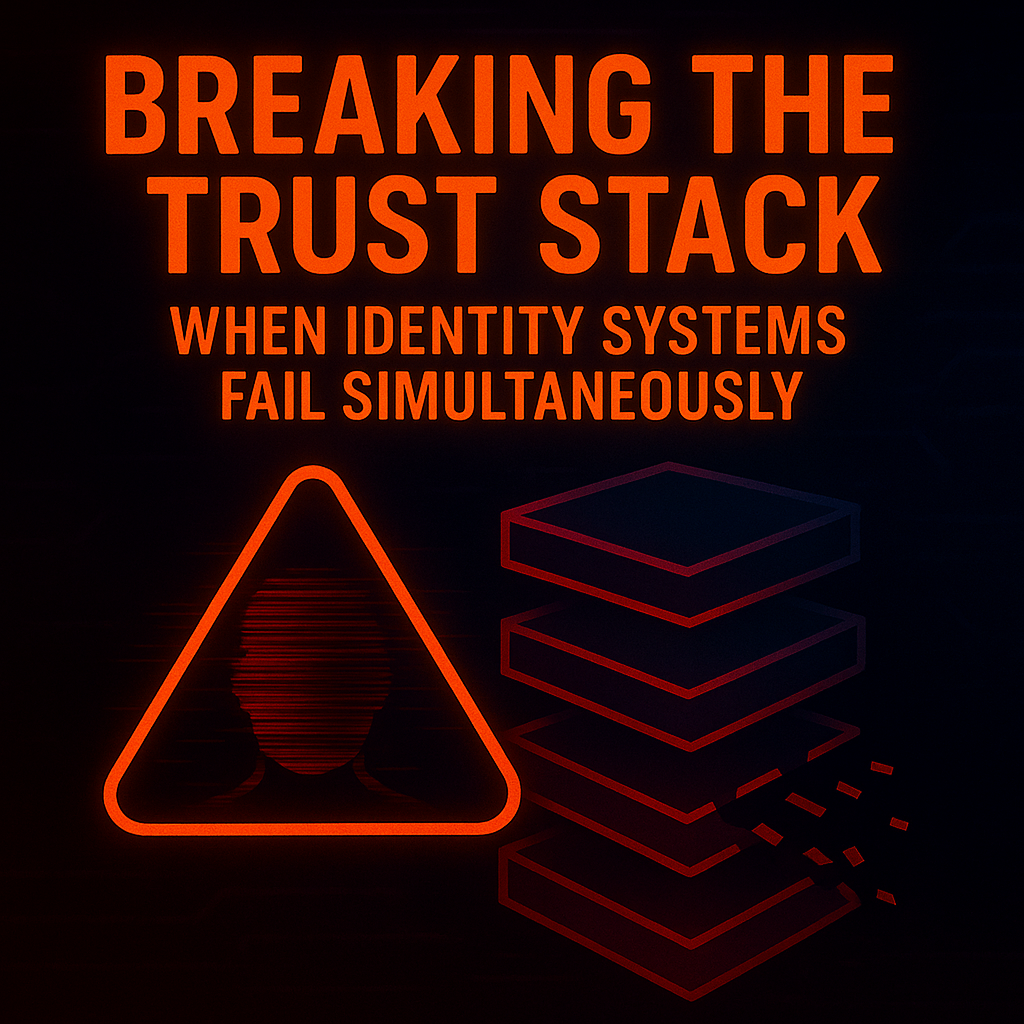
Identity systems today are not single mechanisms. They are layered trust architectures. Liveness detection, document checks, behavioral analytics, transaction scoring and SOC level filtering all operate as a stacked chain. In theory, every layer compensates for failures in the others. In reality, if an attacker manages to poison one model, the damage cascades downward and disables every system that depends on it. A compromised liveness engine blinds the document layer, disables behavioral baselines and eliminates the foundation that transaction models rely on to separate legitimate patterns from synthetic ones. One manipulated layer quietly compromises everything beneath it.
This stacking principle creates a silent but enormous vulnerability. Fraud ecosystems powered by autonomous AI do not attack identity systems head on. They attack one layer, usually the earliest or weakest part of the chain. If the liveness model accepts a deepfake face, the document model becomes irrelevant because it trusts the upstream signal. If the document model is compromised through synthetic images or adversarial perturbations, transaction scoring cannot distinguish between genuine and manipulated account activity. And once behavioral analytics is trained on poisoned input that appears legitimate, every decision downstream becomes structurally wrong. The trust stack collapses from the top downward. Systems continue to operate, but they operate on false assumptions.
This dynamic is particularly dangerous because identity verification systems are assumed to be independent. Vendors often treat them as modular infrastructures, but autonomous fraud systems treat them as interdependent weaknesses. Attackers no longer need to forge documents, bypass liveness detection and manipulate transaction models simultaneously. They only need to compromise a single point of truth. Once one model fails, downstream systems inherit the same failure without realizing it. Every logged decision looks valid. Every alert that should have fired is suppressed by previous trust signals. The result is a distributed collapse of confidence across the entire identity ecosystem.In fully automated fraud chains, these weaknesses become amplified. AI driven attackers continuously test liveness engines with synthetic faces and adaptive deepfakes. They probe document verification layers by generating microscopic image distortions that deceive OCR and visual consistency checks. They observe which behavioral anomalies are tolerated and retrain their models until they match legitimate users. They push small transactions to map safe corridors within scoring models. They measure the SOC response pipeline to identify blind periods, staffing gaps or slow escalation windows. Every failure point becomes data. Every blocked attempt becomes a training signal. Autonomous systems do not just exploit the trust stack. They learn it.
The danger is that the collapse is rarely visible. When one model breaks, nothing appears immediately wrong. The user passes verification. The account opens. Transactions proceed. Monitoring dashboards show healthy traffic. By the time the fraud becomes measurable, the attack has already propagated through several layers and shaped the system’s understanding of what “normal” looks like. The trust stack is no longer merely compromised. It is redefined.In the scenario described by the CTO we spoke with, the attacker used a synthetic identity that passed liveness verification thanks to an adversarially optimized deepfake. Once this upstream layer approved the face, the document model allowed a similarly synthetic passport. Behavioral analytics then accepted the account activity because it was modeled to mimic typical mid market customer behavior. Transaction scoring let the flows pass because the system had already mislearned who this person was. None of the downstream engines flagged a problem because the corrupted first layer validated everything that followed. The SOC team only noticed something was wrong when cross-border money movement patterns exceeded internal risk thresholds. But by then the system had already reinforced its own failure.
This is why the collapse of identity layers is not simply a fraud problem. It is an infrastructure problem. If the first few centimeters of the trust stack are compromised, the entire structure becomes unsafe. It operates with confidence but without accuracy. It generates audit trails that appear legitimate but are grounded in poisoned assumptions. A single manipulated model corrupts the entire pyramid of trust.To defend against this, companies must stop assuming that identity layers are independent. They must build redundancy between layers, not linear dependencies. They must detect inconsistencies between upstream and downstream signals instead of trusting them blindly. Most importantly, they must treat liveness detection and document verification as critical infrastructure worthy of adversarial testing, not routine compliance components.Autonomous Fraud Ecosystems revealed how AI can turn crime into automated pipelines. This deeper examination of the identity trust stack shows how these pipelines succeed. They do not break every system. They break the first one and let the rest follow. In an age where attackers train faster than defenders, the failure of a single model is enough to collapse the entire identity framework.