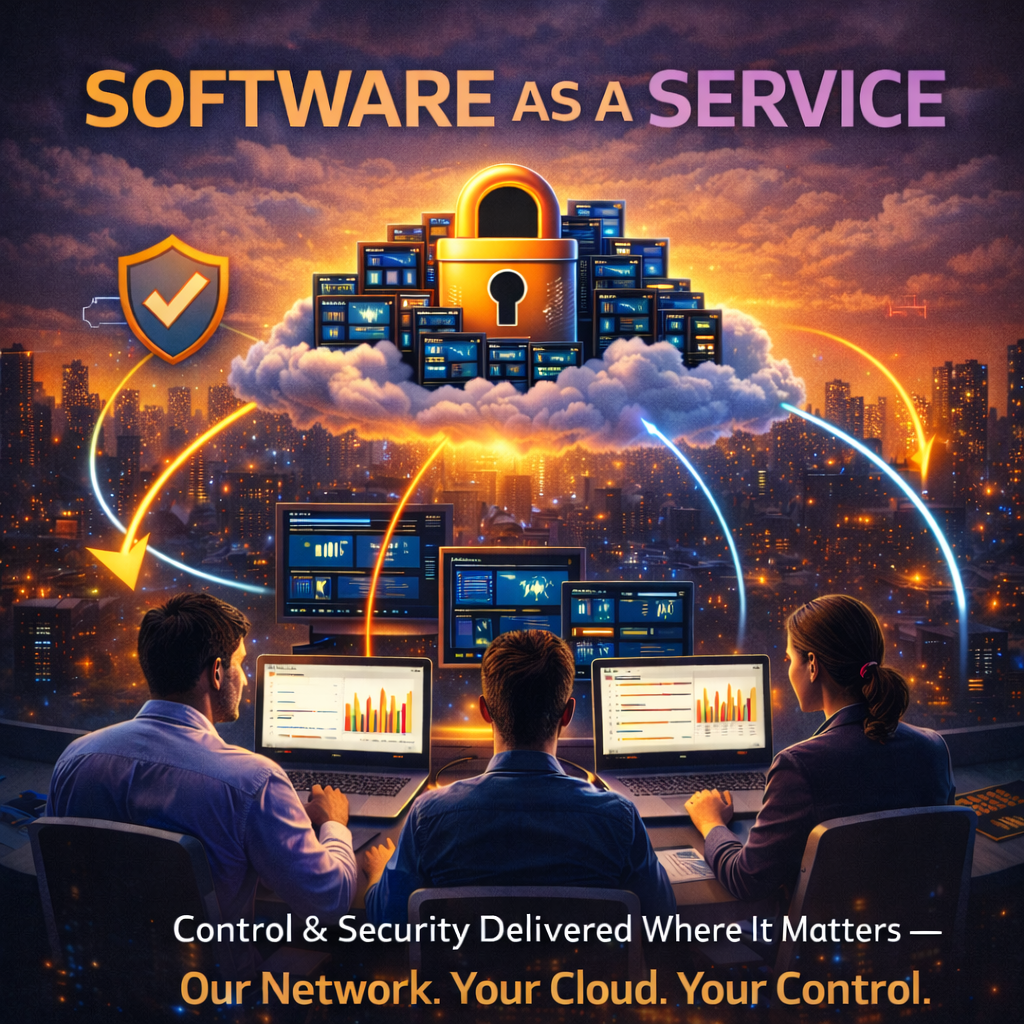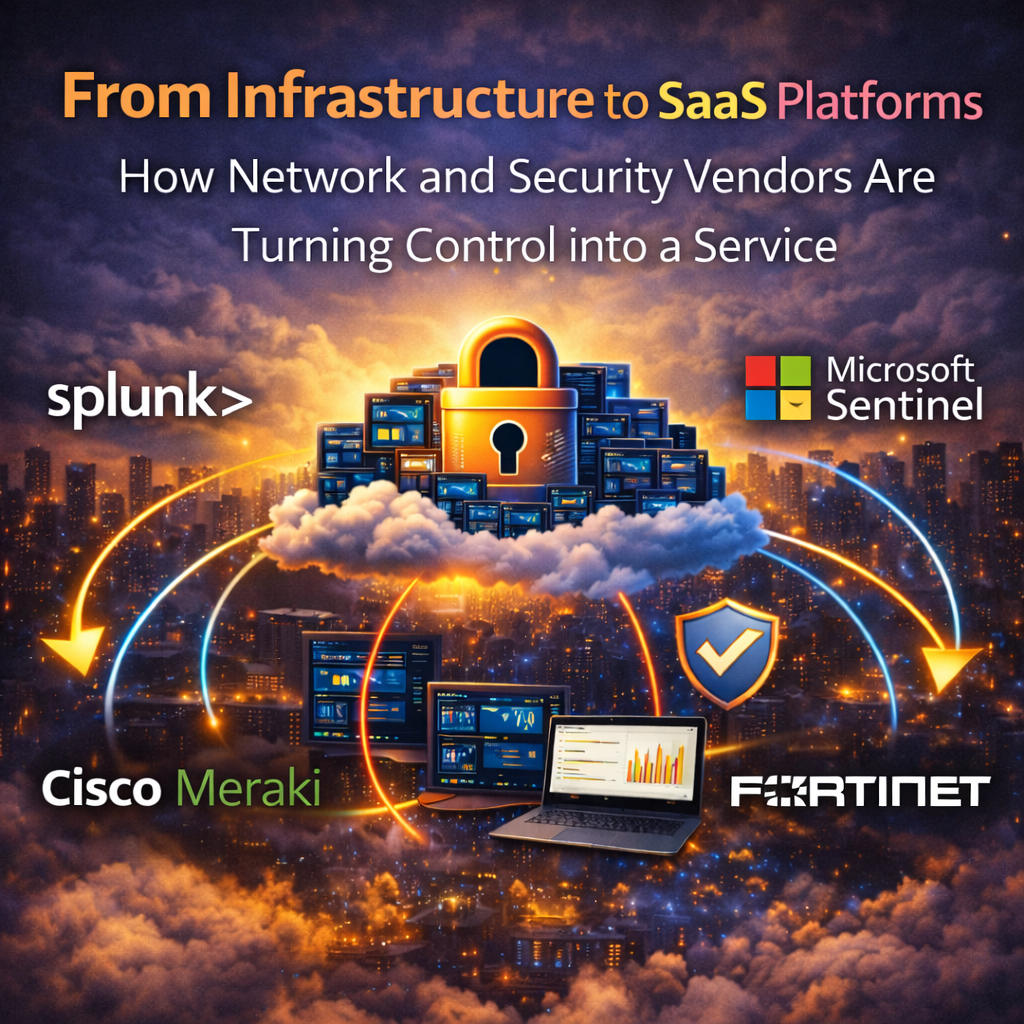
Not long ago, the world of network and security looked the same everywhere. Racks full of firewalls, controllers, appliances and dedicated systems filled data centers. Updates were planned in maintenance windows. Licenses were renewed once a year. Integrators worked on projects measured in months. Security was something you installed and then hoped would work.That world is fading.The racks are getting smaller. Control is moving upward. And many vendors no longer sell hardware or software at all. They sell visibility, control, and stability – as a service.
The shift started quietly, almost technically. As companies moved to the cloud. As employees became mobile. As logs stopped coming from a single data center and started flowing in from hundreds of sources. Suddenly, the old models no longer fit. A locally operated SIEM cannot see cloud traffic. A controller in a basement cannot manage home offices. And a firewall at the perimeter does not protect SaaS.That was the moment vendors began to rethink.
Splunk was among the first large players to make this break explicit. For years, Splunk was the classic enterprise SIEM: expensive, complex, on-premise. With Splunk Cloud, not only the technology changed, but the role of the product. It moved from being a project to becoming a platform. Microsoft followed a similar path with Sentinel launched directly as a cloud service, deeply embedded into Azure and Microsoft 365. Elastic, Sumo Logic and Datadog followed. Security stopped being installed. It started being consumed.At the same time, something similar happened in networking. Cisco Meraki, once dismissed as a simple solution for smaller businesses, became the blueprint for a new model: hardware on site, but control, monitoring and configuration entirely in the cloud. HPE followed with Aruba Central, Juniper with Mist AI, Fortinet with FortiCloud. The network stopped being configured. It started being orchestrated.What actually happened was a change in perspective. Vendors stopped building products and started operating systems. They moved from being suppliers to being operators.The trigger was not primarily technology. It was control.
Whoever operates the platform sees usage, performance, attacks, configurations and failures in real time across thousands of customers. This data flows back into product development, pricing, sales and roadmaps. The vendor no longer sits at the end of the value chain, but at the center of the system.
In conversations with vendors today, you hear sentences like: “Our customers no longer buy a product they buy a security state.” Or: “Our real value is not the firewall, but the telemetry.”You can see it organizationally as well. Where hardware engineers and channel sales once dominated, new roles appear: cloud security architects, platform product managers, usage analysts, customer success engineers. The vendor becomes a SaaS company with all cultural consequences that come with it.For customers, the shift feels ambivalent. On one hand, things become easier. Updates happen automatically. New features appear quietly. Attacks are detected faster. On the other hand, control shifts. The network feels less owned, more borrowed. Questions about data location and sovereignty become louder. Dependency on vendors increases.Most organizations do not respond with rejection, but with conscious balancing. They accept SaaS on the control layer, but retain critical points locally. They use Sentinel, but keep copies of logs. They manage networks from the cloud, but build fallback options. It is not a radical break, but a new equilibrium.
For integrators, the impact is even deeper. Projects become shorter, but relationships become longer. Less installation, more architecture. Less deployment, more governance. Integrators turn into translators between platforms and organizations.And this is where, at Darkgate, we observe the most interesting shift. In conversations with CTOs, CISOs and IT leaders, the pattern repeats itself: technology is no longer the bottleneck. Integration is. Governance is. Responsibility is.Companies no longer search primarily for people who operate systems. They search for people who understand systems. Fewer operators. More architects. Fewer administrators. More translators between technology, risk and business.The move of network and security vendors toward SaaS is therefore not a trend. It is a role change. It turns vendors into operators, customers into participants, and integrators into orchestrators.
Perhaps that is the most accurate way to describe it:Network and security are no longer things you own. They are environments you move inside.The question is no longer whether you adopt them.The question is how consciously you position yourself within them.