
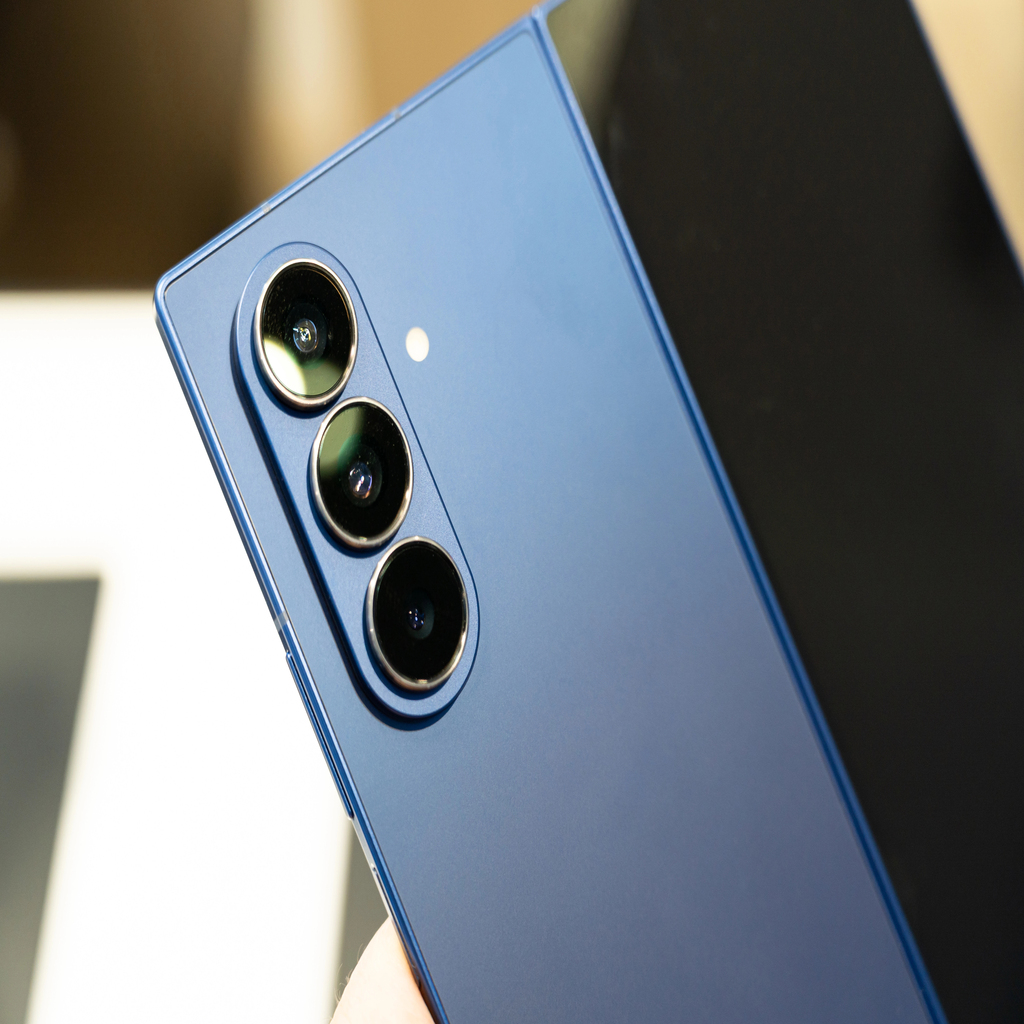
The evolution of foldable smartphones has entered a new phase. While devices like the Galaxy Z Fold7 are becoming increasingly refined and practical for everyday use, Samsung’s experimental TriFold has pushed the concept to its technical limits – and possibly beyond what the market is currently ready to accept. The recent decision to discontinue the Galaxy Z TriFold only a few months after its launch reinforces this reality and adds a new dimension to the discussion.
At first glance, both devices appear to belong to the same category. They share similar DNA, comparable hardware foundations, and a common vision: redefining how mobile devices are used. In reality, however, they represent two fundamentally different approaches to innovation.The Galaxy Z Fold7 is the result of years of iteration. It is not a concept device. It is a product designed for real-world usage. With its large display, improved form factor, and high-end camera system, it targets professionals who want to combine productivity with flexibility. It is optimized, stable, and increasingly aligned with practical use cases.
The TriFold, on the other hand, follows a completely different philosophy.With its dual-hinge design and three display segments, it pushes the physical boundaries of what a foldable device can be. When fully unfolded, it moves closer to a tablet than any previous Fold device. On paper, this seems like the logical next step. In reality, it introduces a new level of complexity.
The device is heavier, thicker when folded, and significantly more expensive. With a price point of around $3,000, it was positioned in a segment that already limits adoption. At the same time, the engineering behind a dual-folding display requires specialized materials to withstand mechanical stress at multiple hinge points. Combined with rising costs for key components such as memory and processors, scaling such a product becomes increasingly difficult from a commercial perspective.This combination of technical complexity and economic pressure ultimately appears to have been decisive. Samsung has already stopped sales in its home market and is gradually phasing out the device internationally, with remaining units simply being sold off. The product is now effectively marked as “sold out,” with no indication of future restocking. This is not the lifecycle of a mainstream product.
This is where the key distinction becomes clear.The Fold7 is built to scale.
The TriFold was built to demonstrate.Industry insiders have described the TriFold as a showcase device – a product designed primarily to demonstrate technological capability rather than to generate sustainable commercial success. Samsung’s market behavior supports this interpretation: limited production volumes, a very high price point, and a rapid discontinuation shortly after launch.
However, this does not mean the TriFold should be considered a failure.Quite the opposite.
In consumer electronics, not every innovation is intended for immediate mass adoption. Some products exist as controlled experiments. They test boundaries, gather real-world data, and shape future product generations. The TriFold fits precisely into this category. Certain aspects, such as larger display formats and new usage scenarios, may very well reappear in future Fold devices – but in a more refined and economically viable form.The Fold7, in contrast, represents the current balance between innovation and usability.
It delivers a form factor that can realistically be integrated into everyday workflows. It combines performance, portability, and durability in a way that makes sense. It may not be the most extreme version of a foldable device, but it is the most practical one.This dynamic is not limited to smartphones.
Similar patterns can be observed across industries. In automotive engineering, concept cars showcase technologies that may take years to reach production. In aviation, experimental aircraft push boundaries without ever becoming part of commercial fleets. The TriFold plays a comparable role within the smartphone ecosystem.
It signals a possible future without committing to it.From a strategic perspective, Samsung’s decision to discontinue the device is not a setback, but a controlled step forward. The company gains valuable insights into user behavior, production challenges, and market acceptance without committing to large-scale deployment of a product that has not yet reached the necessary balance between innovation, cost, and usability.
For the broader market, this leads to a clear conclusion.The future of foldable devices will not be defined by maximum complexity, but by optimal balance.
More hinges do not automatically create more value. Larger displays do not necessarily improve usability. At a certain point, innovation must align with practical application.This is exactly where the Fold7 positions itself.
It may be less visually spectacular than a triple-folding device, but it is significantly closer to what users actually need. And in the long run, that is what determines success in consumer technology.The TriFold was a glimpse into the future.
The Fold7 is the present that works.And its rapid discontinuation makes one thing clear:
The market is not ready for the next step – at least not in this form.