
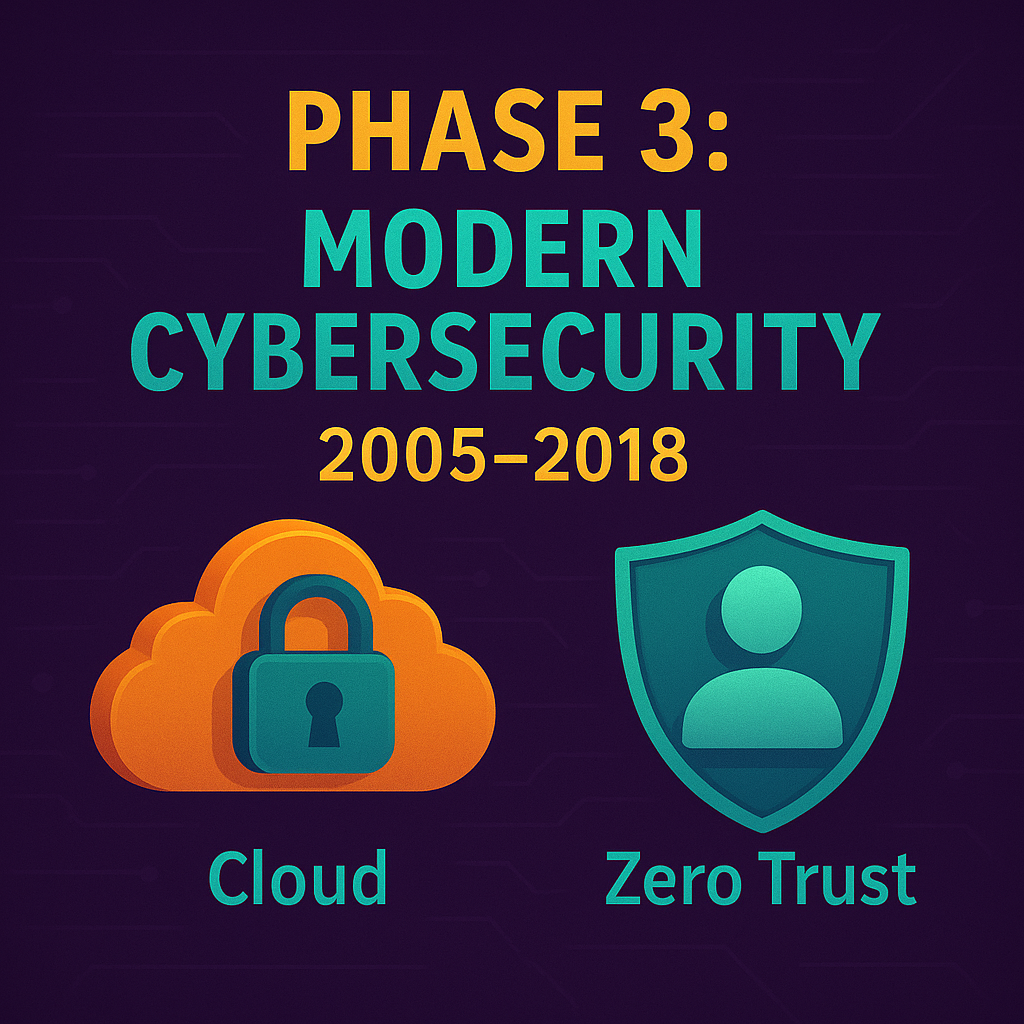
The period between 2005 and 2018 feels, in hindsight, like the moment when the digital world took a quiet but decisive step forward. The early years of cybersecurity had been shaped by clear structures and dependable technologies. Firewalls, network zones, VPN gateways and perimeter concepts formed a solid foundation that supported millions of businesses as they moved confidently into the online era. These architectures were stable, predictable and deeply trusted. They allowed organisations to grow, to expand and to explore new opportunities in a connected economy. But as these proven foundations continued to perform reliably, the world around them steadily accelerated. Applications moved into browsers. Data became mobile. Businesses connected with global partners. Devices multiplied. People began to work from more places, at more times, on more networks. It was not disruption. It was evolution. The digital environment was becoming larger, more flexible and more dynamic and this natural shift created new possibilities for organisations everywhere.
In this period, the true strength of the cybersecurity ecosystem became visible. It didn’t stand still. It adapted. It expanded. Many of the technologies emerging at that time were not designed to replace the old ones, but to complement them. They offered a broader view, deeper context and new layers of protection for an increasingly fluid world. That is what makes this era so fascinating. It is not a break from the past, nor a sudden leap into an unfamiliar future. It is a smooth transition, a phase of refinement, where maturity and innovation moved hand in hand. As businesses evolved, they wanted their security to evolve with them. Remote access became a natural part of everyday work. Web apps turned into standard tools. Mobile devices brought more flexibility rather than more risk. Security needed to protect people wherever they were and that simple idea became one of the defining principles of the modern era.At the same time, the threat landscape expanded. Attacks did not simply increase; they became more strategic. Advanced techniques appeared that combined patience with precision. These so-called APTs were not chaotic or noisy. They reflected a growing sophistication in the digital world. Their emergence highlighted an important truth: as organisations became more connected, security needed to gain more visibility into identities, applications and data, not just networks. This shift was less a reaction and more a natural progression an extension of the capabilities the industry had already been building.
While these trends shaped operations, another major development quietly gained momentum: the rise of the cloud. What began as cautious experimentation soon became a strategic tool for speed, efficiency and scalability. Companies moved workloads into hosted environments. They used new platforms, adopted SaaS applications and discovered that security could live beyond the boundaries of their own buildings. The cloud did not replace traditional environments. It expanded them. It opened new possibilities without taking anything away from the technologies that had served businesses well for decades. In this atmosphere of growth and innovation, one idea began to take form an idea that would later reshape the entire conversation around cybersecurity. Google, driven by its global scale and distributed workforce, introduced a new internal model called BeyondCorp. It placed identity, context and continuous verification at the centre of access decisions. This approach would soon be known as Zero Trust. It did not emerge because older concepts had failed. It emerged because the world had changed. It reflected a natural alignment between user mobility, cloud adoption and the need for consistent protection across diverse environments.
Zero Trust therefore wasn’t a rejection of traditional security. It was an evolution. A refinement. An additional layer designed for a world where users move between the office, home, airports and customer sites. A world where applications are no longer tied to a single datacentre. A world where data flows across platforms with ease. It was a model built on clarity, not on criticism on the awareness that trust should be earned continuously, not granted automatically.Looking back, the years from 2005 to 2018 form a bridge between two worlds. One world was structured, well-defined and guided by location. The other is dynamic, interconnected and guided by identity. And the transition was surprisingly smooth. Organisations enhanced their protections with new analytics, new segmentation methods, new behavioural insights and new approaches to identity. Traditional technologies remained valuable. New ones broadened the picture. Together they formed a modern, comprehensive security landscape.
This period laid the groundwork for everything that came after it. Without the growth of cloud services, without distributed workforces, without evolving applications and without the increasing fluidity of global digital operations, modern cybersecurity would not look the way it does today. And without the trusted foundations built in the years before, the next steps would not have been possible at all.The next article in this series will explore exactly that shift how Zero Trust matured, how cloud platforms reshaped security design, how identity became a central pillar and how modern architectures emerged that prioritise visibility, consistency and resilience. Phase 3 is the evolution. Phase 4 will be the vision.