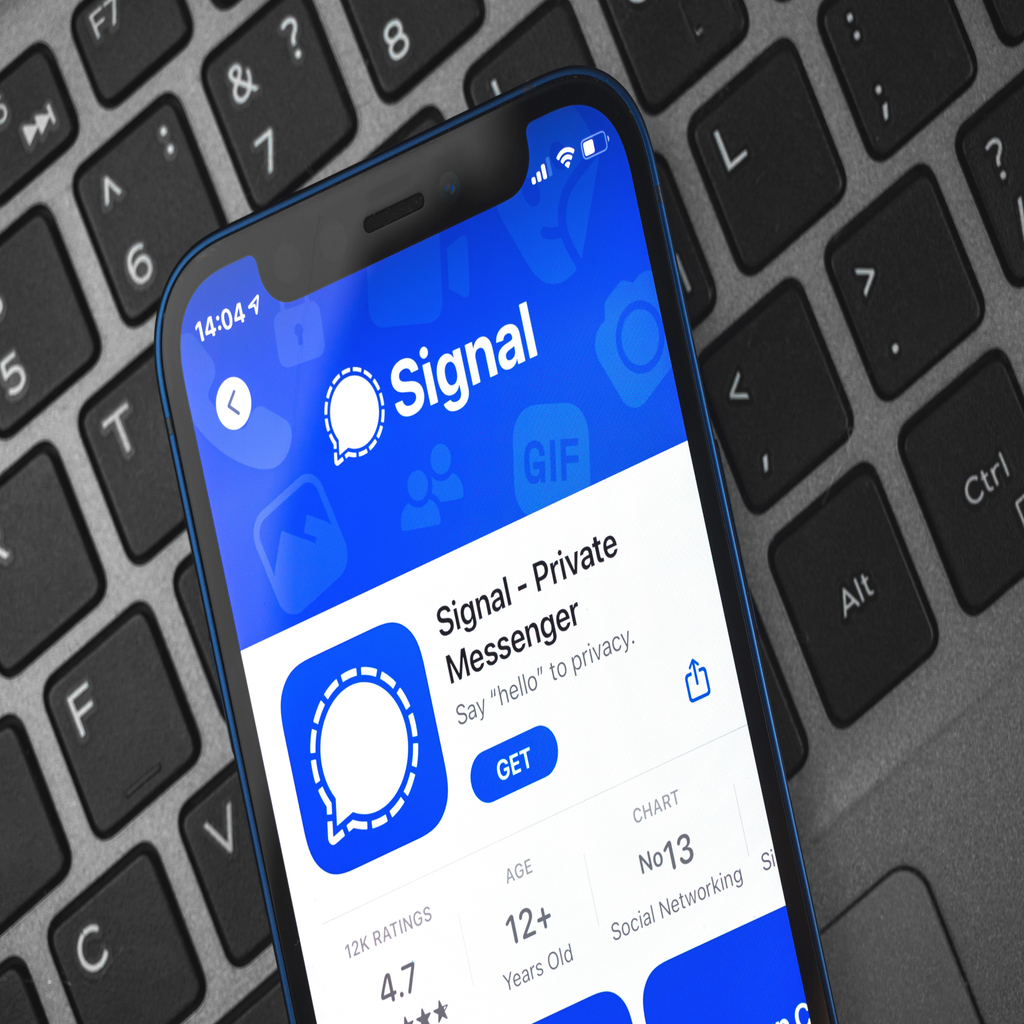
The recent phishing attacks targeting users of the Signal messenger, including individuals at the highest levels of political leadership, are not just another incident in an increasingly crowded threat landscape. They represent a structural shift in how modern cyberattacks are designed, executed, and scaled. At first glance, the attack appears familiar: attackers impersonate support, create a sense of urgency, and trick victims into revealing sensitive information. But this interpretation only scratches the surface. What we are witnessing is the systematic exploitation of trust as a core component of digital communication.Signal itself remains one of the most secure messaging platforms available today. Its end-to-end encryption, forward secrecy, and robust key management mechanisms are designed to protect the confidentiality and integrity of communications. From a purely technical perspective, the platform is not “broken.” The encryption is not bypassed through cryptographic attacks, and the protocol itself is not fundamentally compromised. Instead, the attack operates on a different layer entirely. It targets the assumptions that users make when interacting with the system.This distinction is crucial. Encryption protects data in transit and at rest, but it does not protect decisions. And in this case, the attacker’s success depends entirely on influencing user behavior rather than breaking cryptography.At a technical level, the attack exploits how Signal handles device linking and account authentication. Signal allows users to link multiple devices to a single account through a pairing mechanism, typically involving QR codes or verification tokens. This design enables seamless multi-device usage, but it also introduces a critical point of interaction. If this process is manipulated, an attacker can gain access to future communications without ever needing to decrypt existing messages.The phishing campaign leverages exactly this mechanism. Victims are convince
Subscribe or
log in to read the rest of this content.
This article is part of Darkgate Feature Articles - Deep Access.
Strategic insight. Executive-level analysis.
Real infrastructure intelligence - beyond surface-level reporting.