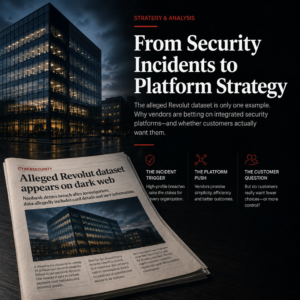

A single vendor for everything or a deliberate mix of several?
What sounds like a technical detail is, in reality, a strategic decision that shapes cost structures, risk exposure, and even the relationships between enterprises and their suppliers.
Gartner analysts warn that many organizations underestimate the long-term risk of vendor lock-in when consolidating their infrastructure too aggressively. While a single-vendor approach promises simplicity and consistency, dependence on one ecosystem can quickly become a liability. According to Gartner, more than 75% of organizations have already experienced some form of lock-in whether through proprietary APIs, restrictive licensing models, or limited exit strategies.
An IT director from a large manufacturing company put it this way:
“We didn’t want to run everything on one track. If our main vendor doubles the prices or changes direction, we need an alternative. It’s not just about technology — it’s about leverage and trust.”
The advantages of sticking to one vendor are easy to understand: unified management, fewer integration challenges, faster troubleshooting, and predictable service levels. Especially in regulated industries, a single platform can feel like an insurance policy against chaos.
But those same benefits can turn into vulnerabilities. Once prices rise, products are discontinued, or relationships cool down, switching vendors becomes slow, expensive, and politically sensitive. What started as efficiency often ends in dependency.
The multi-vendor approach is the natural counterweight. Redundancy, negotiation power, and freedom of choice are its main currencies. By diversifying across multiple providers, enterprises retain the flexibility to adapt when technology, pricing, or partnerships shift. It also has a psychological dimension: organizations feel safer when they are not tied to a single source of truth.
Of course, variety comes at a cost. Multiple vendors mean more integration layers, additional training, complex troubleshooting, and longer decision cycles. As one IT manager in healthcare noted:
“Every new platform adds complexity, but it also ensures we’re never left stranded if something goes wrong.”
The emerging trend is hybrid: one dominant vendor forming the backbone of the infrastructure, complemented by a handful of alternatives in critical segments. The goal is balance — stability without dependence.
The debate is far from over. With Zero Trust, SASE, and ever-evolving licensing models, the pressure to consolidate continues to rise. Yet so does awareness of the risks that come with total reliance. In the end, the real challenge for enterprises is not choosing between lock-in and diversity — but learning how to stay in control while the market keeps changing around them.