
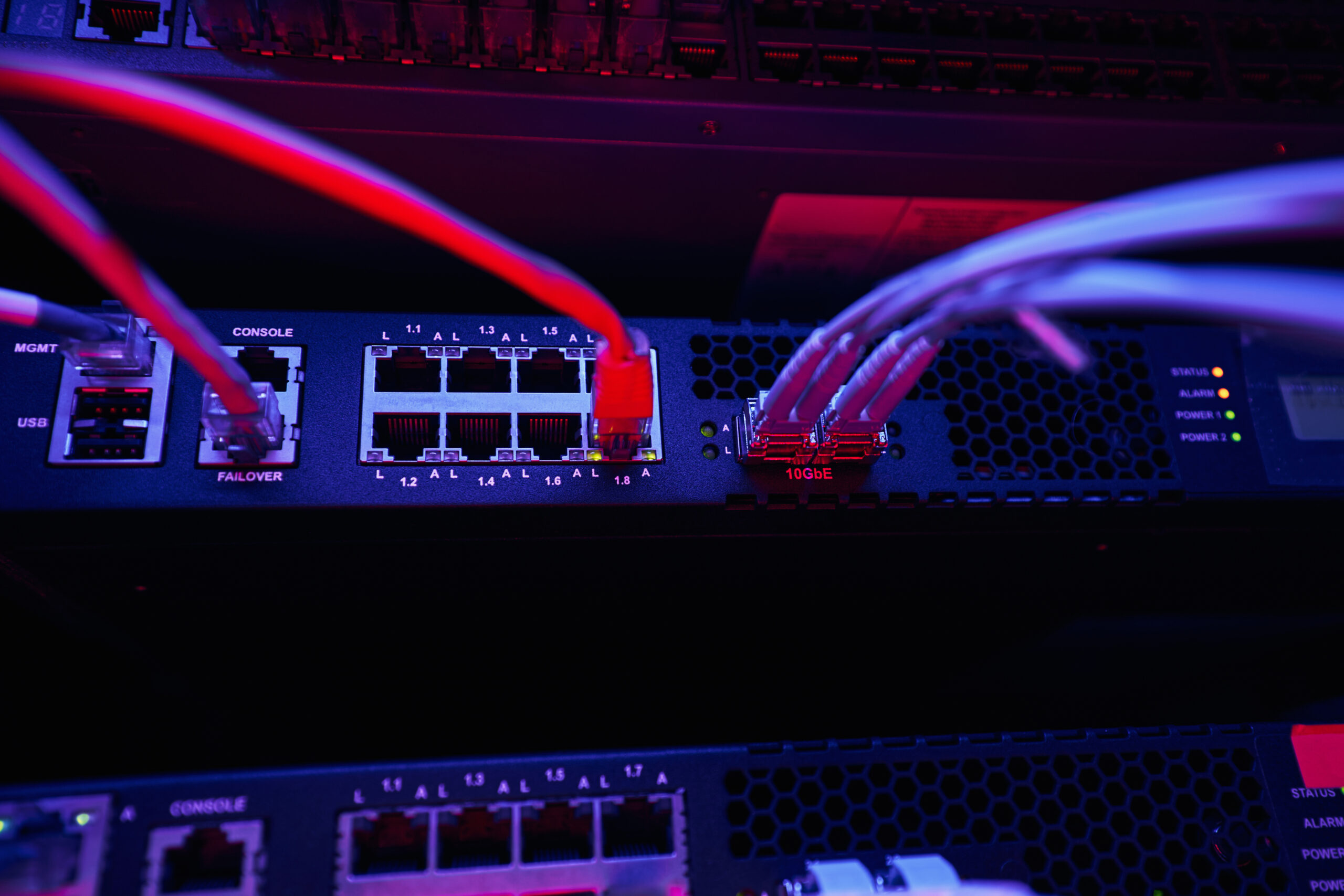
To understand IT in the 1990s, you have to go back to a time when everything was new, noisy, and tangled in cables. It was the decade when tinkerers became system integrators, technicians became architects, and isolated PCs evolved into connected systems. Those years laid the foundation for everything we now call cloud, managed services, or cybersecurity. The 90s were the decade when companies realized that IT was not a machine but a system – a nervous system of data, wires, and protocols connecting and steering organizations.
Back then, the hum of a running server was the sound of progress. System houses across Germany, Austria, and Switzerland were installing Novell NetWare, Microsoft Windows NT, or Unix-based servers that linked entire departments together. Cisco routers, 3Com and Bay Networks switches formed the backbone, while kilometers of coaxial cables and RJ45 connectors ran through offices. IT was visible and tangible, and administrators knew every port, every backup tape, and every password by heart. Companies invested in infrastructure, not licenses – and the knowledge of how to keep systems stable became the true currency of an entire generation of technicians.
During this time, the European system integrator business took shape. Many of today’s well-known integrators started in basements or small workshops, where screwdrivers, floppy disks, and thick manuals lay side by side. The founders were not salespeople – they were builders. They understood hardware and built trust, not brands. Installing a network was a personal mission: they arrived on-site, tested, repaired, optimized – and only left an invoice once everything worked. Customer relationships were real, almost familial, and IT itself was still a field for pioneers.At the same time, professionalism entered the scene. Vendors like IBM, HP, and Compaq realized they needed partners who didn’t just sell but understood. Thus, the partner ecosystem was born: system houses were certified, trained, and assigned Gold and Silver status. Trainings from Microsoft, Cisco, and Novell became the entry ticket to the new world of networking. The quality of a system house was no longer defined by price, but by knowledge – by the ability to integrate systems rather than simply deliver them. “In the 90s, IT evolved from individual components to full architecture,” recalls a veteran integrator from southern Germany. “We were the draftsmen of this new digital world.”
Meanwhile, data backup became a discipline of its own. Tape drives – DAT, DLT, or LTO – spun in server rooms labeled with weekdays and rotation cycles. Losing a single tape could bring an entire company to a halt, and those who restored lost data were treated like heroes. Disaster recovery wasn’t a tool but a craft – the art of resurrecting broken bits. This mindset defined early system houses: taking responsibility when things went wrong.
As technology advanced, a new identity emerged. System integrators no longer just installed devices – they designed entire infrastructures. Network topologies were planned, user rights managed, server rooms cooled, and power circuits calculated. “We weren’t sellers – we were engineers with customer contact,” says one Swiss founder. That’s when the term system house became meaningful: a place where every component of an IT environment came together – hardware, software, security, and operations.
This era also set the stage for future specialization. Some focused on networks, others on servers, and others on data protection. Many of the backup architectures created then still form the blueprint for today’s solutions. These specialists would grow into mid-sized integrators with 50, 100, or 200 employees – all carrying the DNA of the 1990s: the drive to make systems stable and reliable, not as a marketing slogan but as a professional creed.
Looking back, that time seems almost romantic. There was no cloud portal, no remote console, no automated ticketing system – but there was proximity, craftsmanship, and an intimate understanding of technology down to the component level. And from that, trust was born – the same trust that still defines customer relationships today. Many clients who first had their networks built by small system houses back then are still loyal today, not because they bought technology, but because they bought accountability.
The 90s were more than a technological shift – they marked the birth of a profession: the system integrator. Out of hardware came architecture, out of chaos came structure, out of tinkerers came companies. And even though today’s conversations revolve around AI, cloud, and automation, the principle remains the same: systems must work, and people must be able to rely on them.
The IT of the 1990s was loud, warm, and full of cables – but it had something that much of today’s architecture lacks: character.