
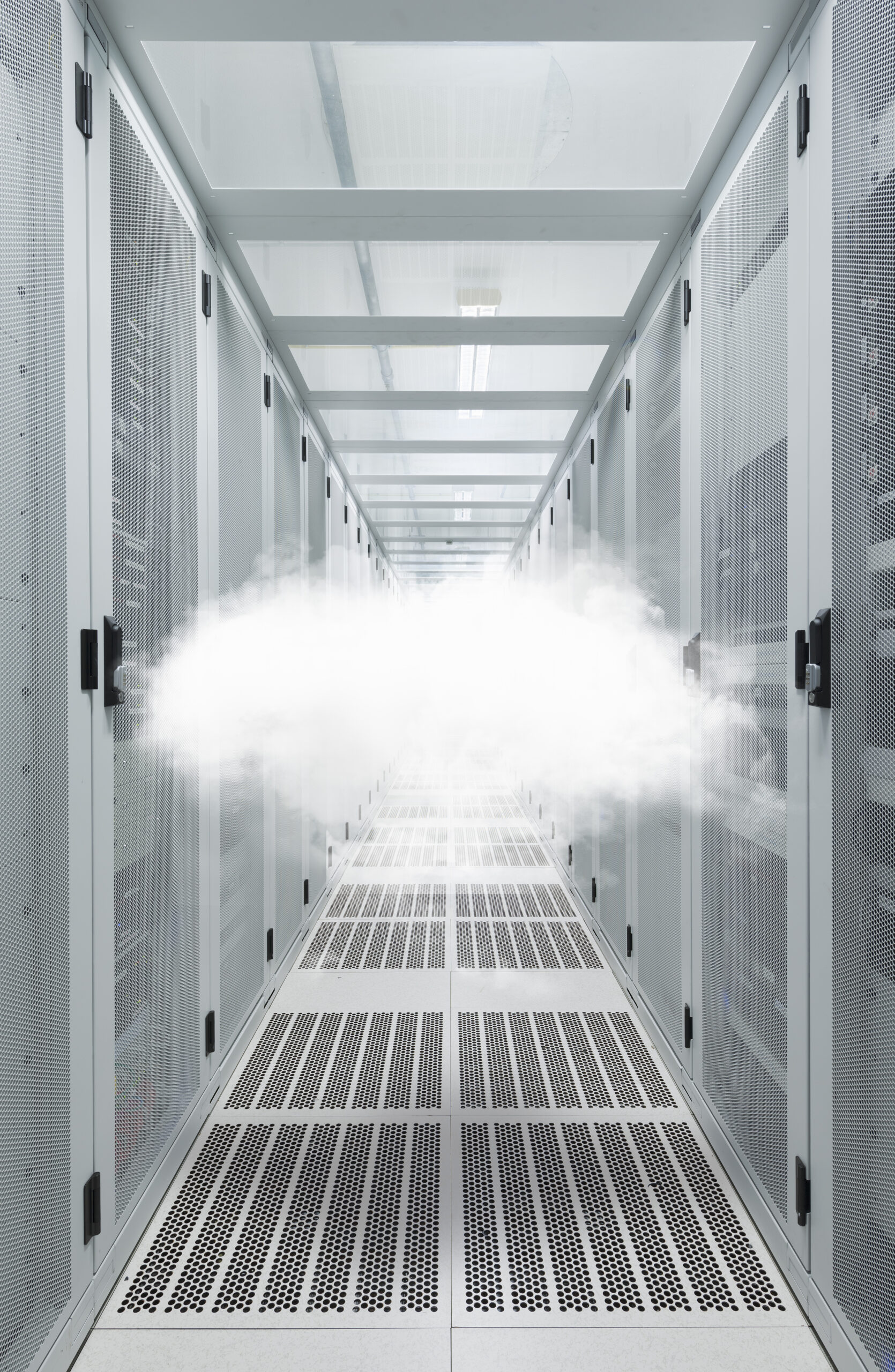
The shift from on-premise to cloud was not just a technical evolution – it was a redefinition of how the IT world operates. A decade ago, companies bought infrastructure. Servers, licenses, hardware – physical assets that filled data centers and symbolized control. Today, that control has moved upward — into the cloud, where flexibility, speed, and global scale define success.
According to Gartner, by the end of 2025, over 85% of enterprise applications will run in cloud environments. What began as an experiment with virtualization through pioneers like VMware and Citrix became a global movement led by hyperscalers. Microsoft Azure, Amazon Web Services, and Google Cloud turned IT from a capital investment into a service economy. IBM and Oracle restructured their decades-old infrastructures, offering hybrid models that combined legacy systems with modern SaaS capabilities. The old concept of ownership gave way to access, and the power shifted from hardware providers to service architects.
In the cybersecurity realm, the same transformation reshaped the battlefield. Palo Alto Networks, Fortinet, and Check Point translated traditional firewall architectures into cloud-native frameworks. Zscaler, CrowdStrike, and Wiz built their entire identities around protecting assets that no longer had physical borders. European vendors like Sophos and Thales focused on data sovereignty and compliance-driven security, while Trend Micro in Japan bridged the gap between cloud flexibility and enterprise-grade reliability. The shift also redefined business logic itself. Vendors stopped selling products and started selling participation – continuous updates, automated insights, usage-based billing. The cloud turned IT into a living ecosystem, one that adapts to user behavior in real time. Yet it also brought dependence: the deeper the integration, the higher the switching cost.
The transformation from on-premise to cloud is far from complete, but its direction is irreversible. The server room has become a symbol of the past; the platform, a symbol of the future. What once required cables, racks, and physical walls now runs in invisible layers across continents – and the manufacturers who mastered that shift no longer sell technology. They sell evolution.