
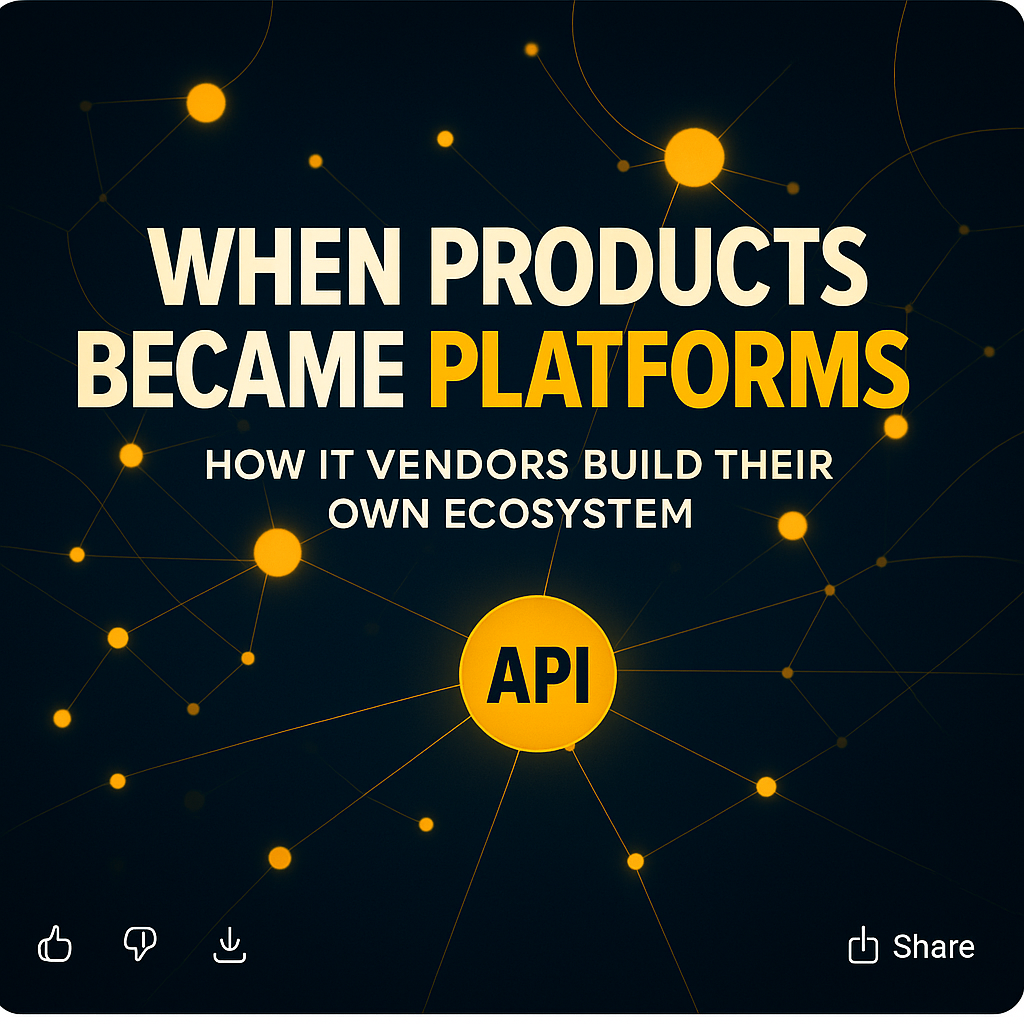
IT vendors once sold things. Today, they sell worlds.
What was once a server, a router, or a firewall is now a portal – an ecosystem of APIs, updates, and subscriptions. The platform has quietly replaced the product, and in doing so, it has redefined the very fabric of how technology companies operate, compete, and grow.
According to IDC, more than 75% of global IT revenue in 2025 will come from platform-based models. Software, hardware, and services are no longer separate layers of value but parts of a single continuous system: usage feeds data, data fuels improvement, and improvement drives retention. The vendor is no longer a supplier – it is the architect of a digital environment in which its technology and its users coexist.
This evolution changed the relationship between customer and creator. Customers are no longer endpoints; they are living nodes in the ecosystem. Platforms bind through participation. APIs make users into co-developers. Subscriptions transform transactions into relationships. Each patch, each version update, is not merely maintenance – it is a signal that the ecosystem is alive, adaptive, and listening.
The transition from products to platforms did not happen overnight. It began with support contracts and cloud portals that promised convenience but slowly shifted ownership from the customer to the vendor. Today, you don’t own your tools; you rent your place in the system. Microsoft, Cisco, Palo Alto Networks, Salesforce – they all cracked the same code: control the access, and you control the value chain. Platforms have become the operating system of the digital economy. They produce data, dependence, and trust – all at scale. Every login, every click, every integration is an input into a vast feedback loop that reveals not only what users do, but why they do it. Vendors analyze these invisible signals to predict needs, adjust pricing, or launch new modules before the market even realizes it wants them. The platform no longer responds to demand – it creates it.
But with this new architecture of power comes a paradox. The more seamless and integrated a platform becomes, the harder it is to leave. The APIs that empower interoperability also enforce loyalty. Ecosystems open doors while quietly locking others. What began as innovation becomes infrastructure; what began as freedom becomes dependence. Still, the platform era has also democratized creation. Small vendors can now build on global ecosystems, leveraging APIs and open frameworks to deliver value without reinventing the wheel. The same gravity that holds customers close can, at its best, create entire universes of connected innovation.
“We don’t build firewalls anymore,” says a senior security architect at a U.S. vendor. “We build digital habitats for identity.” That statement captures the essence of the new age. Technology is no longer a product you buy – it’s a space you inhabit.
And those who build the platforms don’t just deliver solutions.
They define the future.





