
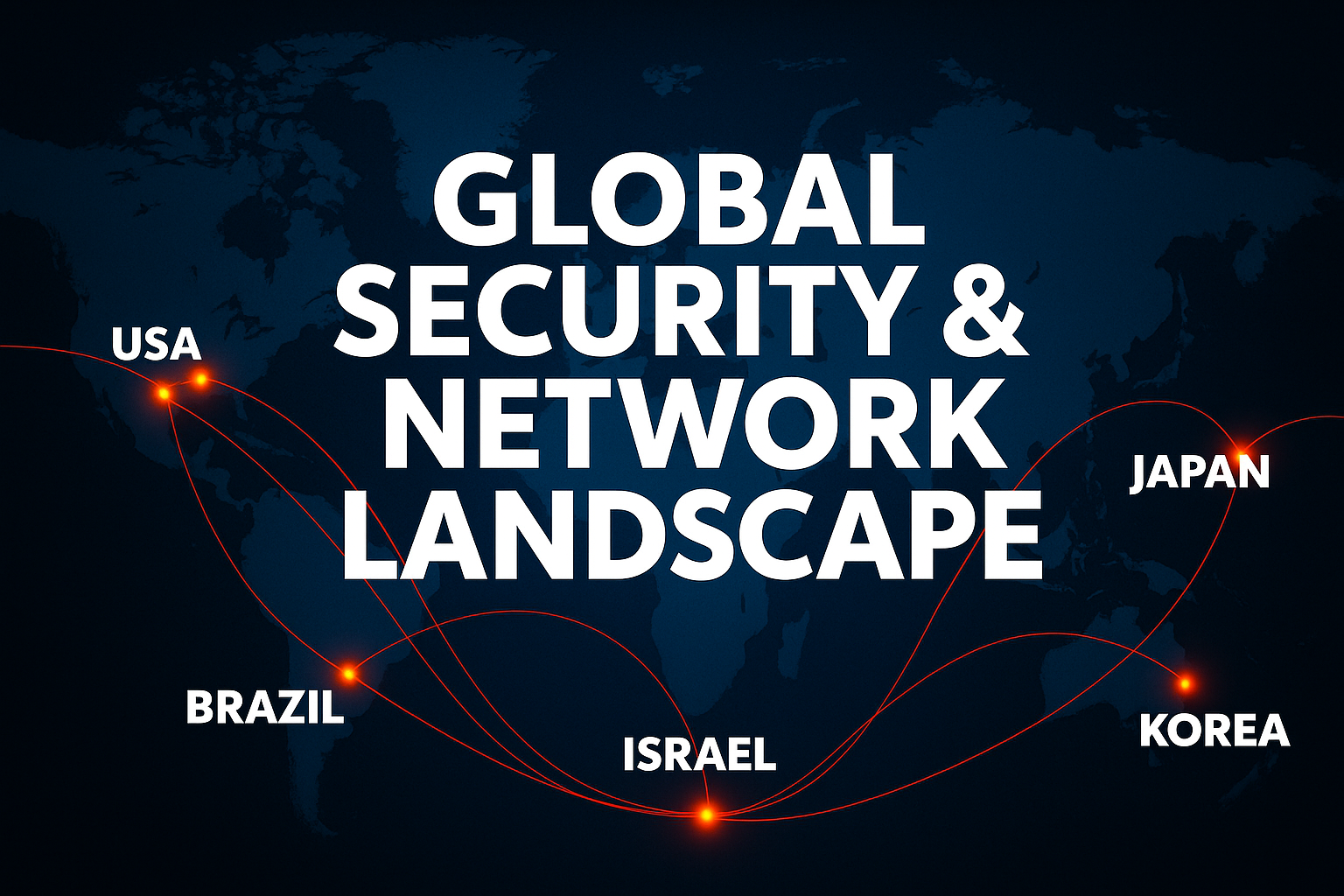
Almost every major security innovation began in the United States. From the first router to the Next-Generation Firewall, from Cisco to Palo Alto Networks – America has always been the birthplace of IT security. It’s where the technologies were built that made networks both possible and vulnerable – and where the culture to defend them was born.
In the U.S., the core of the world’s security and networking industry still resides. Cisco, Palo Alto Networks, Fortinet, Juniper Networks, Zscaler, CrowdStrike, and Splunk form the backbone of the American cyber industry. These companies don’t just define products – they define mindsets: cloud-native, scalable, service-driven. In the U.S., security innovation rarely grows out of academic research; it grows out of market pressure. Every new threat becomes a business opportunity.
Europe operates more quietly – but precisely. The U.K., with Sophos and Darktrace, has become a serious player, particularly in endpoint protection and AI-driven threat detection. France, with Stormshield and Thales, delivers stable, government-certified cybersecurity solutions, primarily serving the defense and public sectors. Germany has technically strong companies but few independent vendors of global relevance. Most act as integrators rather than true product creators.
The true innovation hub outside the U.S. is Israel. Over the past two decades, the country has evolved into the beating heart of global cyber defense. Vendors like Check Point, CyberArk, SentinelOne, Imperva, Wiz, and Aqua Security shape the international security market. Many of these companies emerged from elite military cyber units, bringing battlefield-grade intelligence into the corporate world. Israel may be small – but its vendors set the pace for global cybersecurity.
Japan remains a steady force in Asia. With Trend Micro, it’s home to one of the world’s oldest independent cybersecurity vendors – strong in endpoint and cloud protection and deeply embedded in enterprises of all sizes. South Korea has become an emerging power in network and threat intelligence, led by AhnLab, which plays a regional role comparable to Sophos in Europe: solid, technically refined, and steadily expanding beyond national borders.
Beyond these regions, new hotspots are rising. Brazil is emerging as a hub for monitoring and identity-security solutions. Companies like Tempest, senhasegura, and Modulo prove that cybersecurity expertise is no longer confined to the U.S. or Israel.
Today, in 2025, America remains the benchmark. But the world of vendors is no longer a monopoly. Network and security intelligence now emerge everywhere. The U.S. provides the foundation, Israel the nerve, Europe the structure, Asia the stability, and Latin America the new perspective. Security is no longer a place – it’s a network of ideas, cultures, and strategies. The world doesn’t defend itself from one center anymore. It defends itself together.





