
The rapid adoption of remote work has permanently reshaped how organizations use cloud services. While cloud platforms enable flexibility, scalability, and global collaboration, they also introduce new security challenges that can be costly if left unaddressed.
Key Risks Emerging in the Remote-Work Era
1. Expanded Attack Surface
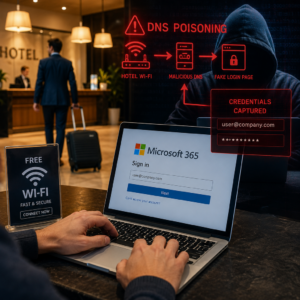
When employees connect from home networks and personal devices, the traditional security perimeter disappears. Attackers exploit unsecured Wi-Fi, outdated routers, and weak endpoint protections to gain access to company resources.
2. Misconfigured Cloud Services
Cloud environments grow quickly and often across multiple providers. A single misconfigured storage bucket or overly permissive access policy can expose sensitive data. Misconfiguration remains one of the top causes of major breaches.
3. Identity and Access Management (IAM) Gaps
With users logging in from different time zones and devices, ensuring proper authentication and role-based access becomes harder. Weak or reused passwords and poor key management make it easier for attackers to impersonate users.
4. Shadow IT and Unapproved Apps
Employees may adopt unauthorized tools to stay productive. These unmonitored services can create data leakage points and bypass established security protocols.
Best Practices for Strengthening Cloud Security
Adopt a Zero-Trust Model
Treat every user, device, and application as untrusted until verified. Enforce continuous authentication and authorization, and segment resources so that a single compromise does not lead to full access.
Implement Strong Identity and Access Controls
Use multi-factor authentication (MFA), enforce least-privilege principles, and review permissions regularly. Automated tools can help identify and correct risky access rights.
Automate Configuration Management
Deploy Infrastructure as Code (IaC) templates and continuous compliance checks to ensure that cloud resources are consistently configured according to policy.
Encrypt Data in Transit and at Rest
Ensure end-to-end encryption of sensitive information and manage encryption keys securely—ideally through a dedicated key management service.
Continuous Monitoring and Incident Response
Leverage Security Information and Event Management (SIEM) tools or cloud-native monitoring solutions to detect anomalies in real time. Have an incident response plan that is tested regularly.
The Road Ahead
As remote work becomes a long-term fixture, organizations must assume that cloud environments will remain a prime target for attackers. A proactive approach—combining zero-trust principles, automated security controls, and continuous monitoring—will not only reduce risk but also build trust with customers and partners. Companies that invest in these best practices today will be best positioned to thrive in the evolving digital landscape.