
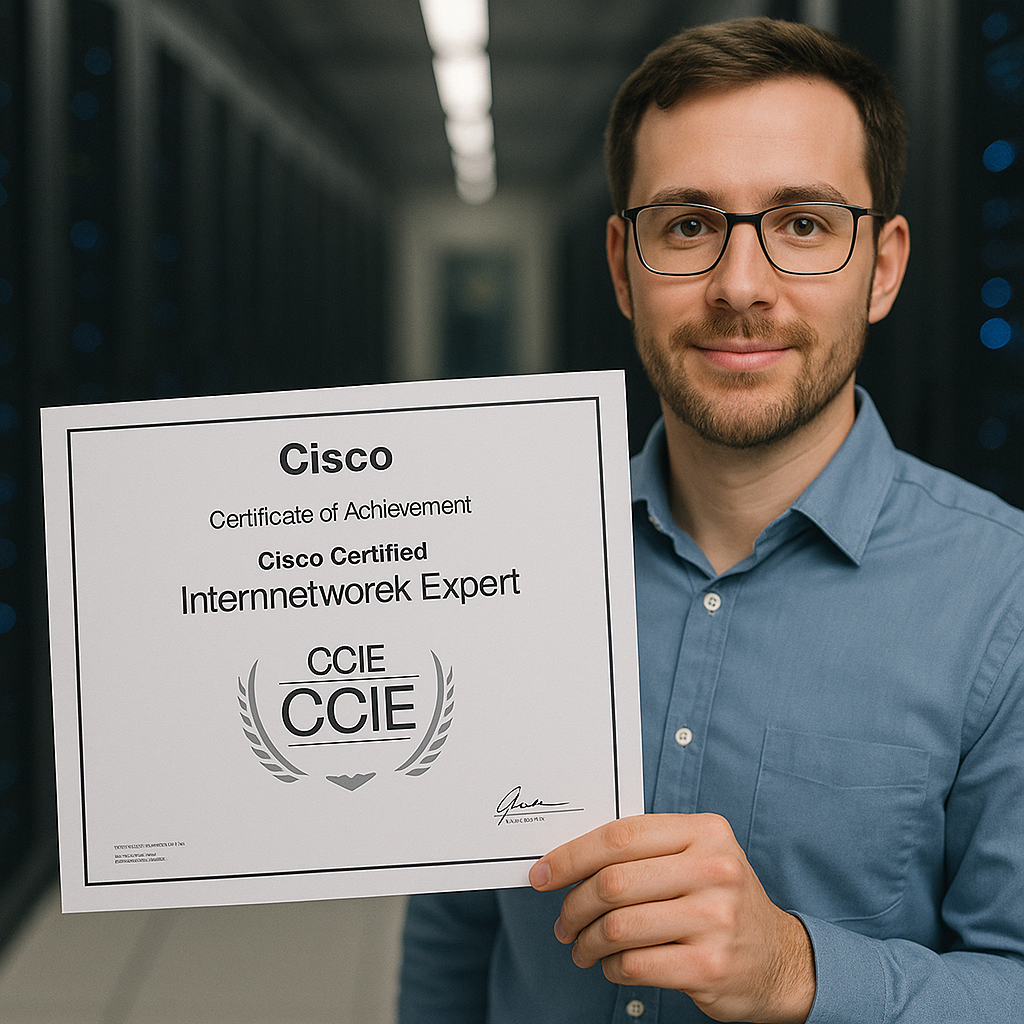
In a previous Darkgate Magazine feature we explored the broader concept of IT certifications, why vendors create them, what role they play, and how they shape entire partner ecosystems. Now we continue this thread with a closer look at one of the world’s most influential technology companies: Cisco. With around 80,000 employees, Cisco is both a global leader in networking and cybersecurity and a pioneer in developing structured certification systems that became a model for many others. The story began in 1993 when Cisco introduced the CCIE program, designed to test engineers at the highest level of networking expertise. A few years later, in 1998, came the CCNA as an entry-level certification for network professionals. This opened the path for a wider audience and laid the foundation for a tiered system that ranges from beginner to expert level.
Over time Cisco refined its program continuously. Today its structure includes three core levels Associate, Professional and Expert represented by CCNA, CCNP and CCIE, complemented by specializations such as Security, Data Center, Collaboration and Cloud. A major reform in 2020 simplified the system when Cisco merged its many CCNA branches into one unified exam. This reflected the growing need for broad, integrated knowledge across network disciplines. Most certifications are valid for three years and can be renewed by retaking an exam or advancing to a higher level.To provide an overview, here are the main Cisco certifications as of 2025:
• CCNA (Cisco Certified Network Associate) – Entry level covering routing, switching, network security, cloud and automation. Current exam 200-301 v1.1, active since August 2024.
• CCNP (Cisco Certified Network Professional) – Advanced level with options in Enterprise, Security, Collaboration, Data Center or Service Provider.
• CCIE (Cisco Certified Internetwork Expert) – Expert level featuring a demanding lab exam, widely regarded as the highest technical credential in networking.
• CCAr (Cisco Certified Architect) – The top certification for senior architects designing complex infrastructures.
Each of these can be expanded through specialist exams focusing on areas such as automation, cloud and cybersecurity.For system integrators and IT service providers these certifications have strong strategic value. They help ensure consistent technical quality and are often required to achieve Cisco partner levels like Silver, Gold or Platinum. The higher a company’s certification ratio, the greater the benefits: better purchasing terms, early project access, marketing support and privileged contact with Cisco teams. Integrators use certified engineers to signal reliability and competence to customers, which builds trust and helps them stand out in a crowded market.
As the team behind Darkgate, which also operates a leading IT recruitment agency, we are in constant contact with Cisco specialists who proudly share when they have earned a new certification or completed a recertification. Many of them say their companies support the process by offering study time and covering exam fees. This shows how deeply certifications are integrated into professional life. They have become a career driver, a quality signal and a key factor in retaining skilled staff.
Cisco’s most recognized credential, the CCNA, has evolved to stay relevant. The current version 200-301 v1.1, introduced in August 2024, includes topics such as generative AI, cloud networking and automation. Higher levels like CCNP and CCIE explore these subjects in more detail through practical, scenario-based exams. Written tests usually last between 90 and 120 minutes, while the expert-level lab exams can take several hours and require precise troubleshooting and design ability. For companies working within the Cisco ecosystem certifications are the currency of trust. Vendors rely on them to maintain quality and ensure consistency, while integrators use them to prove competence and secure growth. Cisco understood this early and built one of the most respected certification programs in the entire IT industry. Anyone who has seen an engineer finally pass the CCIE lab after months of preparation knows that these achievements represent more than technical knowledge – they stand for persistence, ambition and professional pride.
Outlook
In the next parts of this series we will look at other major vendors and their certification systems, including Fortinet, Palo Alto Networks and Microsoft. Each of them follows its own logic, but all share one principle: certifications connect vendors, integrators and customers into a shared ecosystem of trust and long-term collaboration.
Conceptional image digitally created for editorial illustration. All trademarks and brand names are the property of their respective owners