
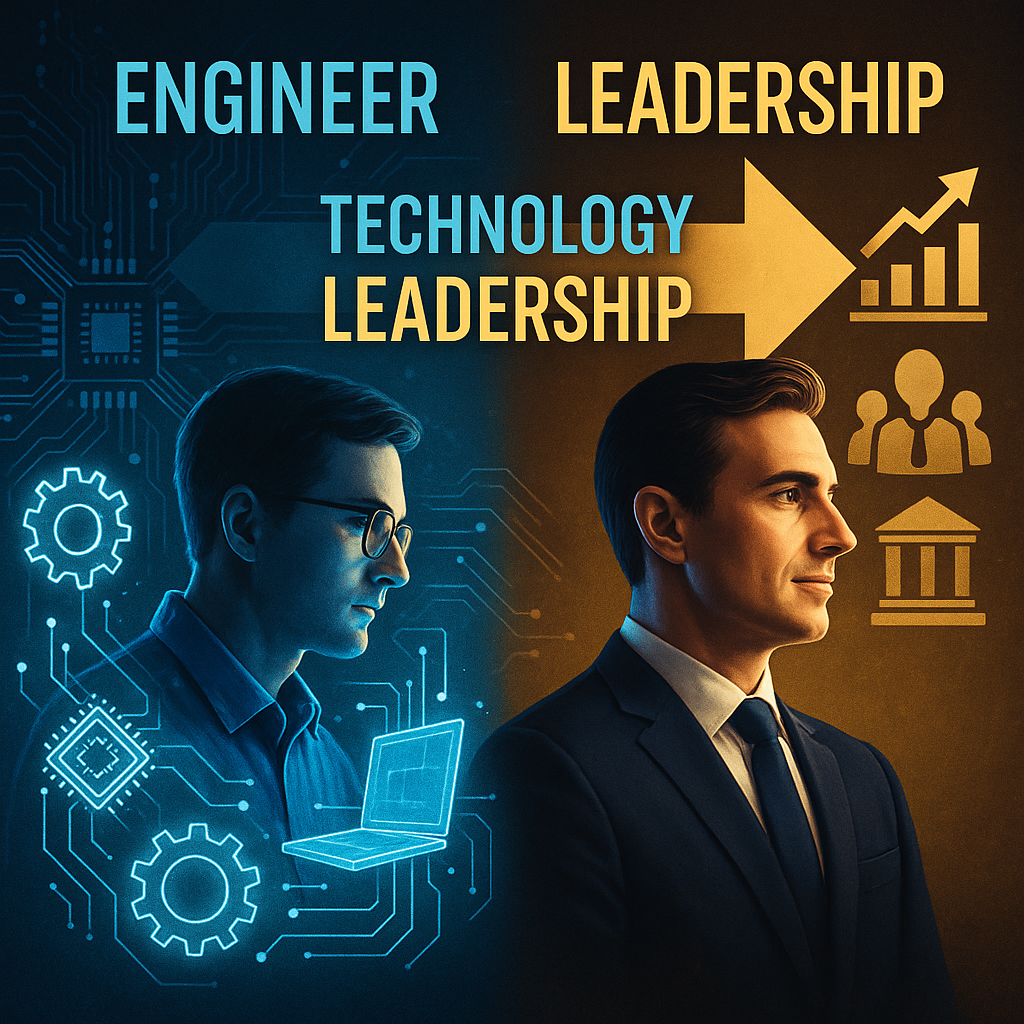
Most great IT vendors were not founded by businesspeople. They were built by engineers, by problem solvers and cybersecurity researchers who simply wanted to fix something specific and ended up creating companies that changed industries. People who once lived in code and command lines suddenly had to manage budgets, employees, and investors. In today’s vendor landscape, this transformation from engineer to executive is one of the toughest and most defining journeys a leader can take. At Darkgate, we see this shift all the time. CTOs, architects, and network specialists realize at some point that they are no longer measured by how fast they solve technical problems, but by how well they inspire others to do it. Some struggle. Others rise above their own limits. The difference rarely lies in intelligence. It lies in perspective. Moving from building a product to building an organization requires a completely different kind of energy. Technical skill creates stability. Leadership creates growth.
Take Nir Zuk, the founder of Palo Alto Networks. He started as an engineer at Check Point, designing security systems long before his company became a global player. When Palo Alto began to grow, Zuk had to decide whether to remain the architect of the product or become the architect of the company. He chose the latter. That decision meant learning to trust others, to communicate vision instead of only fixing problems, and to think beyond technology. Leadership begins the moment you stop controlling every detail yourself. In engineering, every issue has a logical cause. In leadership, the variables are human. You cannot debug people or recompile emotions. What you can do is build systems that help others succeed. As one former network engineer, now CEO of a cybersecurity vendor, told us: “I had to learn that talking is as important as solving. I used to find bugs in systems; now I find them in strategy.”
This journey usually moves through three stages. First comes technical mastery, the ability to understand and solve complex problems. Then comes strategic awareness, the skill to recognize which problems are worth solving. And finally comes leadership, the art of enabling others to solve them together. These stages overlap, and every founder circles through them again and again as their company grows. True leadership in technology also means understanding money, markets, and people. Many founders underestimate how much success depends not on innovation, but on culture, structure, and financial discipline. “Technology scales easily,” a CFO from a global security vendor once said, “but people don’t.” Knowing how to motivate, finance, and stabilize growth is often harder than building the product itself. The pattern is not limited to IT. Surgeons who open their own clinics face it. Engineers who launch production startups face it. The technical skill is the foundation, but leadership means stepping outside of it. You stop perfecting the craft and start building the system around it.
Vendor founders face an additional challenge: the ecosystem. They need to deal with distributors, partners, investors, and large customers. They have to translate technical depth into commercial value. Suddenly, an API becomes a product feature. A licensing model becomes recurring income. The technical vision becomes a business strategy.cThis shift is demanding. It requires patience, humility, and emotional intelligence. Engineers live in deterministic worlds, where every problem can be fixed if you look long enough. Business does not work that way. In leadership, there is rarely a single right answer. You don’t always fix what’s broken. Sometimes you guide what’s uncertain.
But that’s exactly what makes this evolution so powerful. Those who master it redefine what leadership in technology looks like. They combine the clarity of engineering with the intuition of management. They know both code and conversation. And they understand that long-term success depends not on the product alone, but on the people who believe in it.The journey from engineer to executive is not a change of job. It’s a change of mindset. It is not about knowing less technology, but understanding more humanity. It is not about giving up control, but expanding influence. Those who complete this journey don’t just lead companies. They shape industries. They are the ones who no longer build technology alone they build the future around it.