Malware used to be something you caught. Today it is a process, a cycle, an industry. In the 1990s and early 2000s, antivirus was enough because attack patterns were narrow and predictable: a file infects a system, the scanner identifies a signature, the block triggers, problem solved. Antivirus was a static tool in a static threat landscape and no one realized how quickly that world would dissolve. As cybercrime professionalized, reactive defense was exposed for what it was: protection that only works as long as attackers repeat what we’ve already seen. But attackers stopped repeating. They began generating new variants daily polymorphic, modular, remotely controlled. Antivirus kept blinking, but the internet was already operating at a different velocity.
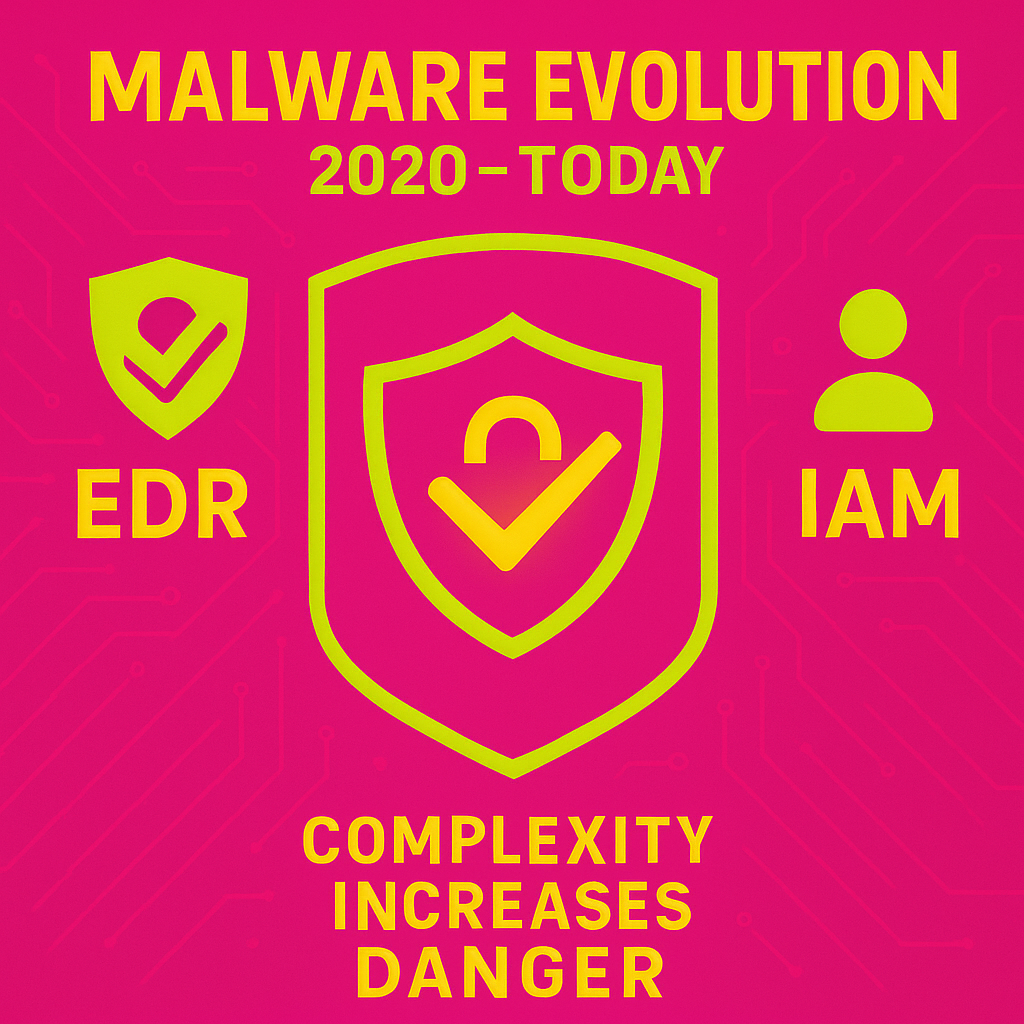
EDR was the answer to that shift in speed. No longer just scanning files, but understanding the system. No longer only blocking, but observing, reconstructing, tracing. Endpoint Detection & Response marked the moment when security stopped being only protection and became awareness. Telemetry replaced signature tables. The endpoint was no longer treated as a black box, but as a sensor grid. Processes, registry changes, network calls, memory access everything became a signal, everything a forensic trace. For the first time, security could see while it happened. That was the true paradigm change.
But visibility alone solves nothing. Seeing requires acting, and not every organization has the capacity to triage alerts 24/7, run forensics, and execute live response cleanly. This is exactly where the shift toward MDR begins. Managed Detection & Response is not just a service it is delegated responsibility. Detection and response no longer run purely through tools, but through teams. SOC analysts, threat hunters, live-response operators — outsourced, but integrated. EDR runs inside the organization, MDR provides the muscle. The customer keeps control, but someone reacts even when no one internally is awake. It is security as an operating layer.Yet MDR itself is only a transition stage. Anyone processing thousands of signals per day anyone aiming to automate incident response eventually reaches the point where human reaction time becomes the bottleneck. This is where the next layer forms: AI-Response Agents. Systems that don’t just report, but intervene. Kill-chain interruption in seconds, not hours. Quarantine without an analyst. Rollback without a ticket. Policy-shaping driven by live telemetry. Endpoint security stops being reactive it becomes autonomous. The endpoint starts to fight back.
We are moving from recognizing malware to removing attackers from the process itself. First signatures, then telemetry, then delegation and now the era in which response no longer waits for a human click. The future of security is not blocking it is preempting. Antivirus was a lock. EDR was the camera. MDR was the security team. AI-Response becomes the system itself.And at that point, security is no longer a product it is a condition.