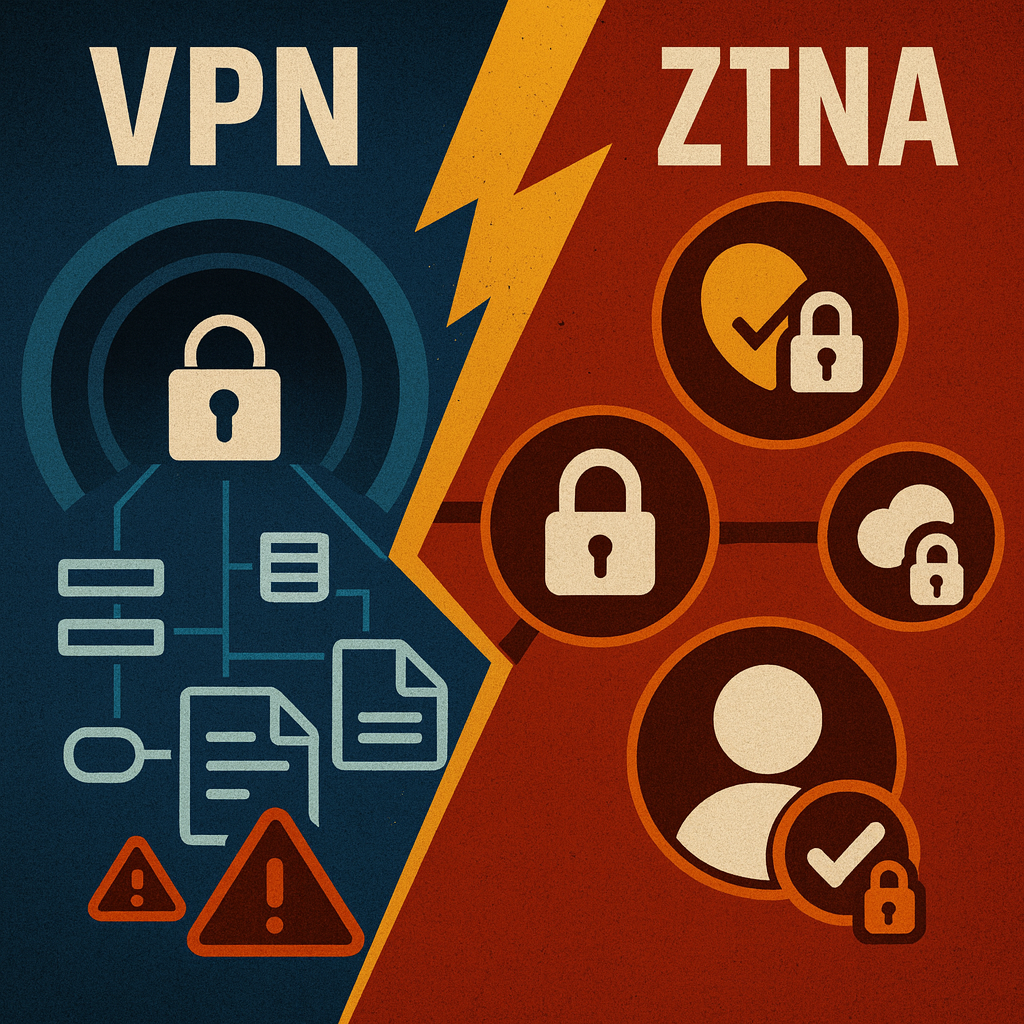
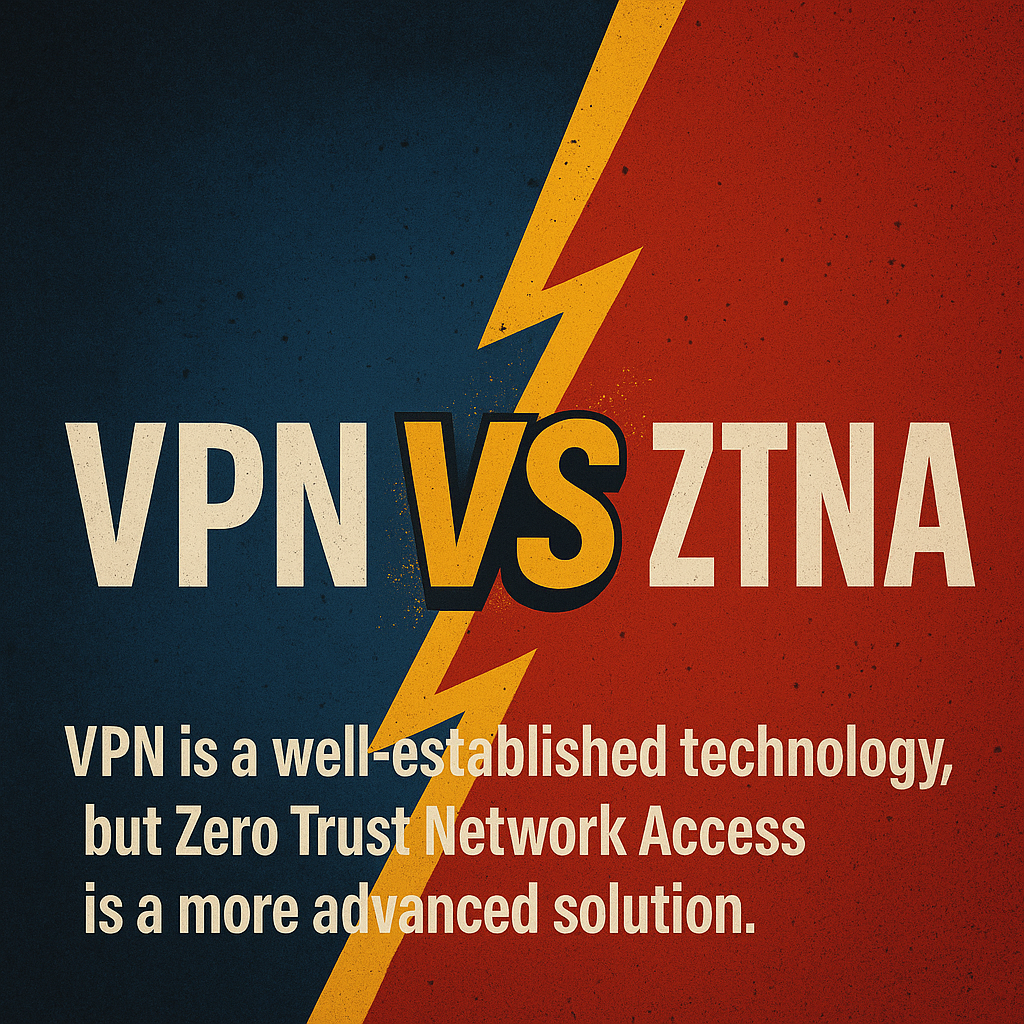
For a long time, remote access was treated as a straightforward discipline. A client, a tunnel, a familiar pattern that barely changed for more than two decades. It worked well enough as long as nobody questioned the underlying assumptions. But the reality around it has shifted. Employees work from anywhere, applications move into the cloud, devices vary widely and threats strike exactly where companies once felt the most protected: at the point of entry. A recent European study shows that almost 60 percent of enterprises plan to rethink their remote access strategy and phase out classic VPN structures. It is a sign that the old model no longer matches the environment it was built for.VPN used to be a reliable companion. The concept was easy to grasp. You connect through a tunnel, enter the internal network and operate as if you were inside the office. But that very idea has become the core of the problem. VPN does not simply grant access. It grants presence. It opens a network space that is far wider than modern security requirements would ever justify. A security architect at a global energy company put it plainly: “A user with VPN has more internal reach than they should ever have by default.” That is precisely the moment where Zero Trust Network Access steps in.
Zero Trust Network Access changes not just the mechanism, but the logic of connectivity. Instead of placing users inside a network, ZTNA delivers only the application or service they are authorized to see. No subnets, no broad visibility, no unnecessary surfaces where an attacker might move. The result is a precise, context-driven form of access tied to identity, device posture, location and situation. It adapts to the way people work today rather than forcing modern workflows into old architectural assumptions.
Conversations with network and security leaders reveal that the pressure for change comes from practice, not theory. Remote work is no longer an exception. Partners access internal systems more frequently. Developers operate across continents. Employees use personal devices. All of this increases the attack surface. Enterprises respond by binding access not to a network boundary but to identity and context. As one IT manager explained, “We no longer grant location access. We grant function access.” It is a quiet but fundamental shift.ZTNA takes that logic and pushes it further. While VPN provides a broad network and requires heavy restrictions afterwards ACLs, firewalls, segmentation ZTNA begins with minimal rights and expands only when conditions allow it. Instead of a master key, it creates a single, controlled doorway. This change forces companies to rethink how they define trust. Identity becomes the new center of architecture. Applications become isolated units. And every access request is evaluated as if it were the first.But the move toward Zero Trust is not without complications. Many organizations discover that the real challenge is organizational rather than technical. Legacy applications that do not support modern authentication models slow down adoption. User roles must be cleanly defined before ZTNA can be effective. Device posture becomes a critical part of the decision process. A network architect from the public sector told us, “Zero Trust sounds like technology, but in reality it is governance.” It is a sentiment that comes up often.
At the same time, ZTNA brings an unexpected side effect: visibility. While VPN merely shows who is connected, Zero Trust platforms provide granular insights into actual usage. Which applications are accessed. How long sessions last. Which connections were denied. Where anomalies occur. These data points become increasingly valuable as enterprises deal with larger and more complex environments. The transparency helps reduce shadow IT and improves understanding of how the organization truly functions.Of course, there are also cautious voices. Some security experts warn against seeing ZTNA as a quick fix. They emphasize that Zero Trust is not a product that can be installed but a principle that must be carefully implemented. Poor identity hygiene, inconsistent device management or vague role definitions can create friction. Users might face more blocked sessions. Older services might react poorly to context-driven authentication. Hybrid multicloud environments require thoughtful integration. Yet analysts agree that there is no realistic way back. The traditional perimeter model simply does not match the way distributed enterprises operate today.The shift has architectural implications that go far beyond remote access. VPN relies on the idea of a well-defined inside and outside. ZTNA dissolves that boundary entirely. There is no longer an internal zone that can be inherently trusted. There are only authorized and unauthorized requests. That shift is profound. It affects not only security teams but the organization as a whole because roles, responsibilities and decision paths must be redefined.
The argument becomes even stronger when looking from the attacker’s perspective. Ransomware groups have exploited VPN access for years, using stolen credentials to move laterally through internal systems. ZTNA removes that environment. There is no internal network to explore. No open surfaces. No lateral movement. What a user cannot see cannot be mapped or breached. For many organizations, this reduction in exposure is one of the strongest motivations to move forward.
How fast enterprises leave classic VPN behind will depend on their willingness to replace familiar habits. Some will operate both models in parallel for a while. Others will move directly to strict identity-driven access. But the direction is unmistakable. Remote access is undergoing a structural shift. VPN falls. Zero Trust rises. And the discussion about how much control, automation and contextual decision-making is both safe and appropriate will continue long after the technology is deployed.