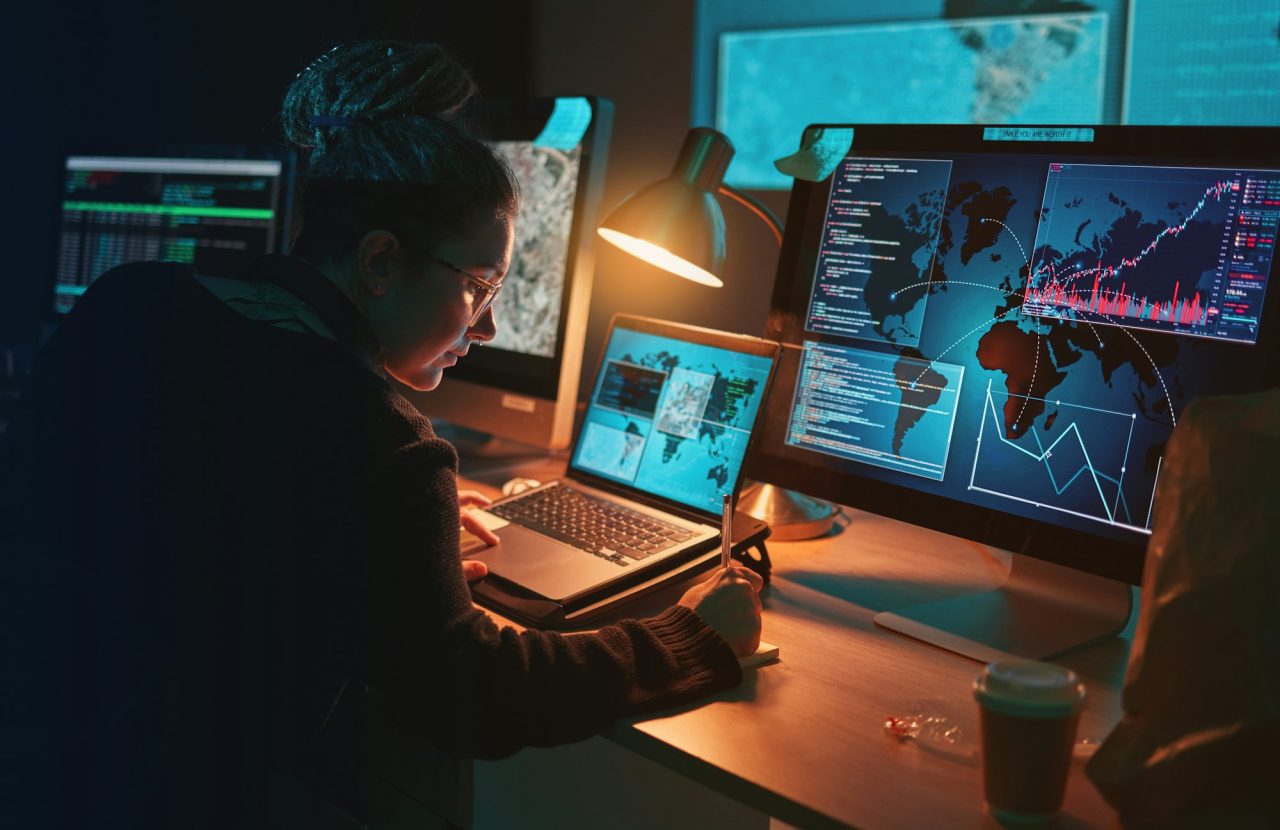

The workday today rarely starts with a task. It starts with a screen. A Slack message. Three emails. A Jira ticket that quietly moved to high priority overnight. A comment in a shared document. Before you have even fully arrived in your day, you are already inside the system, reacting, scanning, orienting yourself, not in relation to people, but in relation to interfaces. Work no longer begins with a conversation.
It begins with a click. The first instinct is not to talk to someone, but to open something, a tool, a board, an inbox, and that is where work happens now, not in the meeting room, not in the hallway, but inside systems, between fields, status labels and comment threads. In many companies this is simply how things work. If you want to know what needs to be done, you check the system. If you want to know what others are working on, you look at the board. If you want to know whether something is finished, you do not ask, you check a status. It feels practical. It saves time. It reduces friction. It makes things visible that were once vague, but it also changes how work feels. A project is no longer a shared effort, it is a collection of tasks. An idea is no longer a thought, it is a comment. Progress is no longer a sense of movement, it is a number on a dashboard. You do not work on something, you work inside something, inside a tool, inside a workflow, inside a structure that already defines what counts and what does not.
Meetings still exist, of course, but their role has changed. They are no longer the place where work begins. They are the place where people explain what already happened inside the system. Screens are shared. Boards are reviewed. Statuses are read out loud. Conversations follow the structure the software has already created. The discussion becomes a layer on top of the tool, not the other way around. Decisions are not made in the moment anymore. They are prepared in workflows, in approval chains, in predefined rules that decide what happens when something happens. The human confirms what the system suggests. And when something goes wrong, it is often unclear whether it was a mistake or simply the process working exactly as it was designed. That changes responsibility. It becomes less personal, more technical, more distributed. No one decides alone. Everyone follows a flow. It also changes pace. Everything is faster, but nothing is ever finished. New tasks appear while old ones are still open. There is no clear end, only transitions, no closure, only movement. That can feel freeing. Less waiting. Less blocking. More flexibility. But it can also feel exhausting. There is no natural pause. No moment where things are simply done. Work does not end, it just fades into the next notification.
Collaboration feels different too. Less like working together, more like handing things over. One person writes, another reads. One comments, another edits. People work next to each other on the same object, but rarely with each other in the same moment. And still, it works. It scales. It performs. It delivers. But it also quietly pushes something human out of work, the nuance, the shared sense making, the spontaneous correction, the unspoken understanding that happens when people sit together in front of a problem. Today, people no longer sit together in front of problems. They sit in front of their own screens, looking at the same interface, reacting to the same signals, following the same flows, but rarely sharing the same moment of thinking. This is not worse. It is different. And that difference matters, because tools do not just support work, they shape it. They define what is visible, what is urgent, what is measured, and therefore what is valued. If this happens unconsciously, it simply becomes reality, quietly, efficiently, without resistance. And maybe that is the real challenge of modern work, not that work happens inside tools, but that we slowly forget that the tools were built to serve us, not to define us, and that remembering this might be more important than any new feature, any new platform, or any new productivity promise.