Cyber Defense Center as a Service (CDCaaS) is moving to the forefront of a shift that has been unfolding across the European security landscape for years. As the operators of Darkgate, we sit at the intersection of global vendors, leading IT integrators, major enterprises and deeply specialized security teams. As one of the most established cybersecurity recruitment agencies with global activity, we witness the same pattern across all client segments. Organizations no longer want implementations alone. They want defense. They want a shield, not a checklist. They want a security operation that remains stable even when environments change, clouds expand, workloads move and networks evolve into complex distributed architectures. Cyber Defense is no longer an optional extension of IT security. It has become the anchor discipline of a world where speed, complexity and threat velocity rise in parallel.
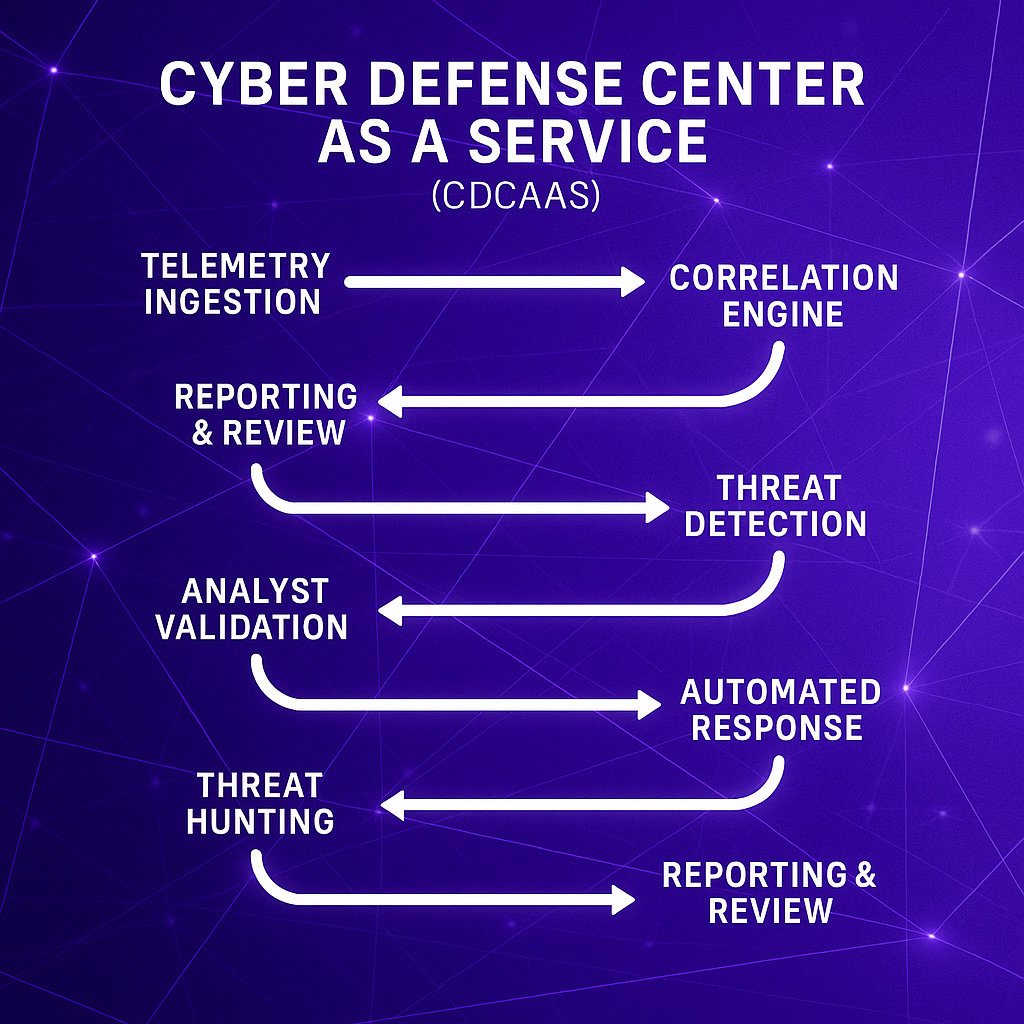
In almost every mandate we run in Security Operations, Network Defense or Cloud Security, the trajectory is identical. Infrastructure has been modernized. Cloud workloads have been deployed. Zero Trust frameworks have been introduced. Endpoint concepts have been hardened. All of this matters, but it does not answer the most important question. Who runs this defense continuously, reliably and at the pace that modern threats demand? For years, the answer was typically a blend of internal SOC teams supported by occasional engagements from service providers. A model that functioned well enough when tools were simpler and attack chains slower. But the operational reality has shifted. Artificial intelligence is no longer a long-term vision; it is already embedded in attack patterns and detection ecosystems. Threat surfaces grow faster than teams can adapt. Hybrid IT is no longer a strategy it is the default state of enterprise infrastructure. According to IDC, roughly 60 percent of European organizations plan to transition parts of their security operations into a service model. Not because it sounds innovative, but because traditional operating structures cannot keep pace with the threat landscape.This is where CDCaaS delivers its strategic value. Cyber Defense Center as a Service does not simply redefine the SOC. It establishes defense as a continuous, service-based operating layer across the entire enterprise. It is not about replacing teams or reorganizing shifts. It is about creating an uninterrupted line of defense that integrates use case engineering, event correlation, behavioral analytics, identity signals, predictive monitoring, continuous response and operationalized threat intelligence. The gap between detection and response becomes smaller. Prioritization becomes clearer. Operational noise diminishes. And the organization moves from reactive protection toward an ongoing defensive posture.
Conversations with security leaders, architects and operations managers reveal the same message across industries: “Security is no longer a project. It is a condition you must maintain.” This represents a deep cultural shift. Maintenance contracts, service agreements and managed services have already laid the groundwork. They have ensured that network and cloud infrastructures are not only deployed, but also run with long-term stability. Cyber Defense, however, goes beyond traditional service concepts. It requires continuous vigilance. It demands a defensive operation that spans every technical layer network, cloud, identity, endpoint, OT and core infrastructure. CDCaaS does not unite these areas conceptually. It unites them operationally.
This evolution also changes the workforce itself. The classic Level 1 analyst, once responsible for manually sorting alerts, is losing relevance. Modern defense requires engineers who understand cloud-native security, can interpret telemetry at scale, create meaningful use cases and translate signals into decisions. Threat hunters who can identify emerging attack patterns before they materialize. Specialists who not only operate extended detection and response systems but actively improve them. CDCaaS providers increasingly attract these profiles on the global talent market, and enterprises increasingly rely on hybrid defense models combining internal expertise with continuous service-based operations.At the same time, automation does not remove responsibility. Organizations do not want a passive layer of protection. They want an active defensive architecture that makes its decisions transparently. This is one of the major differences between CDCaaS and earlier SOC approaches. It is not just another layer of tooling. It is an operating model a collaboration between human expertise, process maturity and intelligent systems that together create a consistent line of defense.
The direction is unmistakable. Security is becoming more dynamic, more continuous and more deeply integrated into the fabric of enterprise IT. Cyber Defense Center as a Service is evolving into a foundational component of modern enterprise architecture because the need for it does not originate from a trend, but from operational necessity. Threats evolve daily. Infrastructure changes weekly. Strategies shift monthly. But defense cannot pause. It cannot wait. It cannot rely on reaction alone.Whether CDCaaS eventually leads to fully autonomous defensive networks remains to be seen. What is certain is that organizations can no longer rely on traditional reactive structures. The transition toward continuous, service-driven defense is not a luxury. It is the minimum requirement for operating in a world where Cyber Defense is not simply a discipline it is a permanent state.