Google is expanding its AI assistant Gemini in Germany with new personalization features, making one thing very clear: the future of artificial intelligence is no longer just about better answers, but about which AI knows the user best.
With the new “Saved Information” feature, Gemini can remember personal preferences, interests, and important details from previous conversations and use them in future interactions. The goal is to make the assistant feel more natural, relevant, and personal. Instead of starting from zero in every conversation, the system can gradually build a more complete picture of the user, their habits, their interests, their working style, and the way they prefer to receive information.
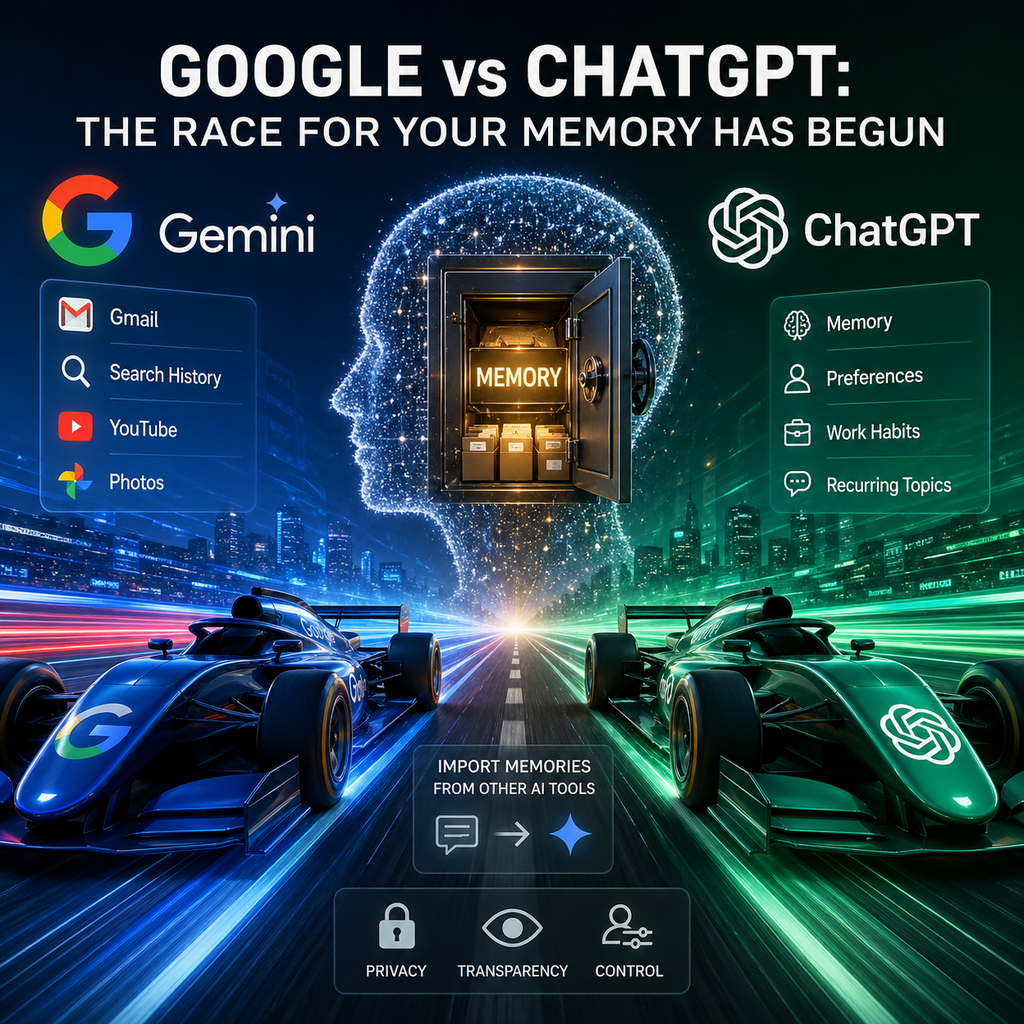
While users in the United States already have access to Google’s deeper “Personal Intelligence” system, which can connect with Gmail, search history, YouTube activity, and even photos, the European rollout starts with a more limited version. Still, the direction is obvious: Gemini is moving from being a chatbot to becoming a true personal digital companion. The more context an assistant has, the more it can anticipate needs, suggest relevant next steps, and feel less like a tool and more like a digital layer around everyday life.
OpenAI is following the same strategy with ChatGPT. Its memory features are also becoming more advanced, allowing the system to retain preferences, work habits, recurring topics, writing styles, projects, and long-term objectives over time. This turns the competition between Google and ChatGPT into something much bigger than a simple product battle. It becomes a race for long-term user loyalty, because once an AI assistant understands a user deeply, switching platforms becomes much harder.
This is where memory becomes a strategic asset. A user who has spent months building context inside one AI system does not only lose chat history when switching providers. They lose tone, routine, preferences, recurring workflows, personal shortcuts, and a form of digital continuity. In that sense, AI memory may become one of the strongest lock-in effects in the next generation of software.
The key question is no longer just which AI is smarter, but which platform understands personal context better and uses it more effectively. Google is also introducing an import function that allows users to transfer memories and chat histories from other AI tools directly into Gemini. Strategically, this is highly important. It reduces one of the biggest reasons users stay with competing platforms like ChatGPT: the fear of losing built-up personal context.
But with deeper personalization come bigger concerns around privacy, transparency, and control. Who owns these memories? How far should AI assistants be allowed to analyze personal behavior? How clearly can users see what has been saved, edited, imported, or deleted? And at what point does helpful personalization turn into silent surveillance?
The race has started. The future of AI will not be decided only by the quality of answers, model benchmarks, or interface design, but by who users trust with their digital memory. In the end, the most powerful assistant may not be the one that knows the most about the internet, but the one that understands the individual best.