Anyone who steps into a professional Security Operations Center for the first time immediately understands why these environments have such a magnetic effect on young security talent. The dimmed lighting, the quiet rows of analysts, the massive dashboards pulsing with telemetry, the sealed-off atmosphere that feels closer to an air-traffic control room than to traditional IT. Nothing about a SOC resembles a typical office space. Everything appears structured, disciplined, and sharply focused. But the real fascination lies not in the screens or the tools. It lies in the way SOC teams actually operate.
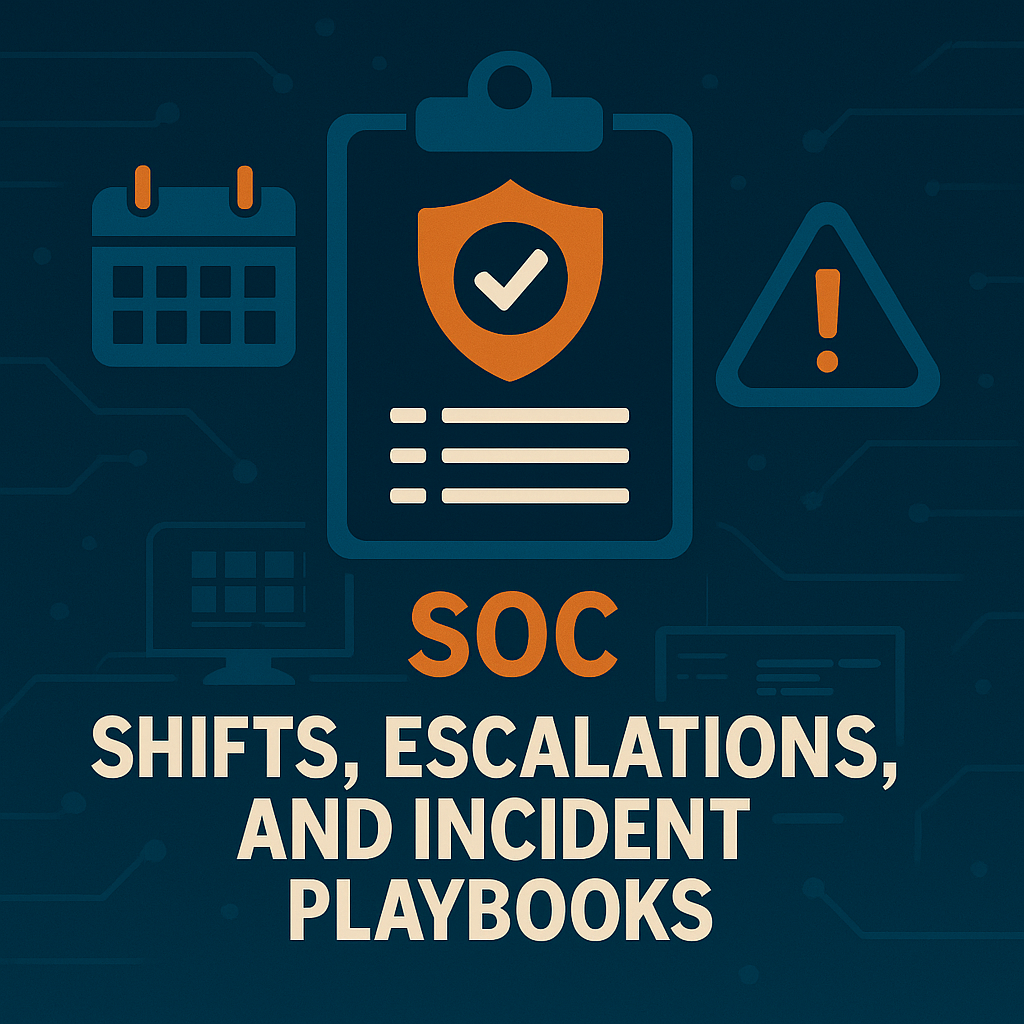
In interviews with junior candidates, we regularly see how unclear the inner workings of a SOC still are. Many know the basic idea of “monitoring alerts” or “detecting attacks,” but the organizational realities remain a mystery. Shift rotations, tiered escalations, playbooks, severity models, communication protocols, incident lifecycles – these are unfamiliar concepts. And perhaps exactly for that reason, the SOC has become one of the most attractive first career steps for technically oriented Generation-Z analysts who want structure, responsibility and direct exposure to real threats.A SOC does not follow regular business hours. Any organization that takes security seriously accepts that attacks do not wait until Monday morning. Every functioning SOC runs a true 24/7 model, and this alone shapes the entire work culture. Early, late and night shifts form the backbone of the operation, and each shift hands over seamlessly to the next. Handover notes are precise, structured and documented through ticketing systems, SIEM dashboards, case logs or shift reports. Analysts coming in know exactly which incidents are active, which campaigns look suspicious, which accounts demand attention and which network zones behaved abnormally. Nothing is left open-ended, because any gap creates an opportunity for adversaries.
Once a new alert appears, the first task is not technical but analytical: is this noise or is it a real signal? Large SOCs deal with tens of thousands of alerts per day. No one, not even the best analysts, can manually inspect all of them. Prioritization becomes the defining skill for Tier-1 analysts. They rely on risk scoring, identity context, endpoint telemetry, threat intelligence and historical patterns to determine what deserves immediate action. It is the discipline that separates good analysts from exceptional ones.If an alert cannot be dismissed, the triage phase begins. The analyst must decide whether this issue can be resolved at Tier-1 or needs escalation. Every SOC uses a tiered model. Tier-1 monitors, validates and contextualizes. Tier-2 performs deep analysis, cross-correlation and early forensics. Tier-3 – often including threat hunters, reverse engineers or cloud specialists – takes over when an adversary is already inside or advanced techniques are in play. Escalation is not a failure. It is the structure that allows the SOC to function under pressure.
Parallel to this, incident playbooks guide the next steps. Outsiders often imagine playbooks as simple checklists, but in reality, they are dynamic frameworks that ensure discipline without eliminating human judgment. Many SOCs automate parts of these sequences through SOAR platforms, yet crucial decisions remain manual. Playbooks ensure consistency; analysts determine the outcome.If the incident is confirmed, the SOC transitions into the established incident lifecycle, a structure nearly universal across the industry. It begins with detection, moves into analysis and triage, proceeds to containment where lateral movement is stopped or systems are isolated, then continues with eradication and finally recovery. In every phase, communication plays a central role. SOC teams constantly coordinate with networking teams, cloud engineers, endpoint specialists, DevOps groups and, when situations escalate, crisis response teams. Clean communication often decides whether containment takes minutes or hours.For many junior analysts, the appeal is not only the structure but the proximity to real adversaries. In a SOC, you watch threats unfold in real time. You see attackers probe identities, test misconfigurations, enumerate networks, try privilege escalation, pivot across environments or slip through vulnerabilities. It is one of the few IT roles where you learn from watching adversaries at work. That exposure is both motivating and addictive.A SOC is not glamorous in a cinematic way, but it has an undeniable aura. It feels like a command center. It carries the energy of a team that sits at the frontline of an organization’s defense. Mistakes matter. Seconds matter. And young analysts who are eager to learn, eager to improve and eager to face real-world pressure often feel that this is exactly the environment they were looking for.
In our daily briefings with MSSPs, IT integrators and global cybersecurity teams, we see consistently how high the demand for early-career SOC analysts remains. The learning curve is steep, the exposure is intense and the sense of responsibility arrives early. For the new generation entering the field, the SOC is not just a workplace. It is the place where cybersecurity becomes tangible, immediate and real.