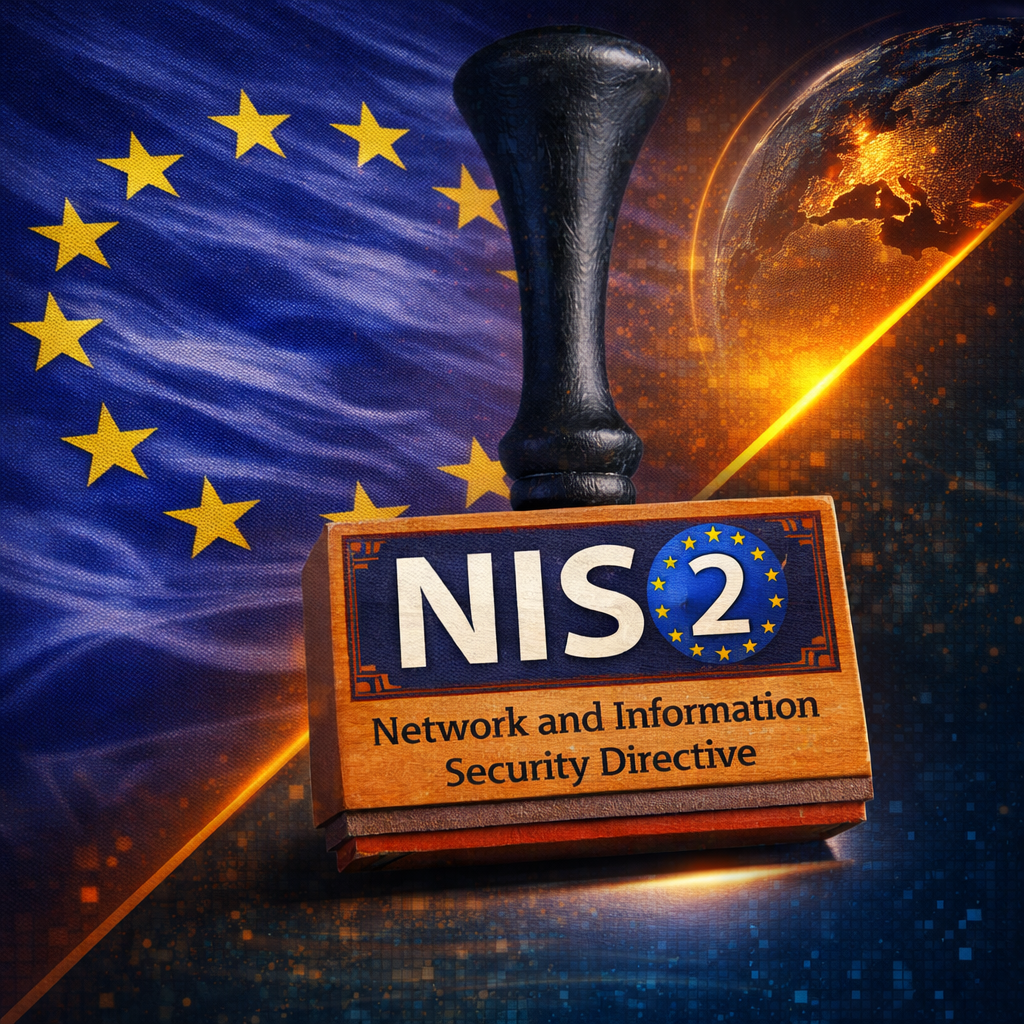
In recent years, a new acronym has increasingly entered the vocabulary of European businesses: NIS2. Just as many organizations were finally getting used to the requirements of GDPR, another major regulatory framework has arrived – one that reaches deep into the IT and security structures of companies across Europe. This has left many executives and IT leaders asking the same questions: What exactly is NIS2? Who does it really affect? And how does it differ from the well-known General Data Protection Regulation?
NIS2 stands for the Network and Information Security Directive 2, the second European directive focused on the security of network and information systems. It was adopted in 2022 as an evolution of the original NIS Directive from 2016. The European Union’s objective was clear: in response to rapidly increasing cyber threats, a stricter, more unified, and more enforceable security standard was needed across all member states. While the first NIS Directive was relatively narrow in scope, NIS2 significantly expands both the requirements and the number of organizations that fall under its jurisdiction.
The motivation behind NIS2 is easy to understand. Europe’s economic and social systems are becoming more digital every year. Supply chains are interconnected, business processes are automated, and data flows are more complex than ever. At the same time, cyberattacks have grown in frequency, sophistication, and impact. Ransomware, supply-chain compromises, and state-sponsored cyber operations are no longer rare events. Against this backdrop, the EU decided to establish a framework that forces companies to manage cybersecurity in a structured, professional, and sustainable way.
This is also where the fundamental difference between NIS2 and GDPR becomes clear. GDPR – the General Data Protection Regulation – focuses primarily on the protection of personal data. It governs how companies collect, process, store, and secure information about individuals. The core concern is privacy and the rights of citizens. NIS2, on the other hand, has a very different objective. It is not about data itself, but about the security and resilience of IT systems, networks, and critical infrastructures. In simple terms: GDPR protects people, while NIS2 protects digital ecosystems.
This distinction is crucial. GDPR asks whether personal data is handled lawfully and responsibly. NIS2 asks whether the underlying systems are secure, robust, and capable of withstanding cyber threats. Organizations must demonstrate that they have implemented proper risk management, technical safeguards, incident response processes, and continuous monitoring capabilities. It is a much more operational and infrastructure-focused regulation.So who is actually affected by NIS2? Unlike GDPR, which applies to almost every organization that handles personal data, NIS2 is somewhat more selective – but still far broader than many initially expect. The directive targets medium and large enterprises in sectors classified as “essential” or “important.” These include energy, transportation, healthcare, digital infrastructure, telecommunications, financial services, public administration, and many technology and IT service providers. Even mid-sized manufacturing companies or logistics firms may suddenly find themselves within the scope of the directive.
Very small businesses and individual entrepreneurs are generally not directly covered. However, NIS2 will still impact them indirectly. Large organizations will increasingly require their suppliers and partners to meet specific security standards. This creates a cascading effect throughout entire supply chains. Even companies that are not legally obligated under NIS2 may need to comply in practice to remain competitive and maintain business relationships.
What exactly must affected companies implement? NIS2 does not prescribe a single product or specific software solution. Instead, it demands a holistic cybersecurity approach. This includes structured risk management processes, technical protection measures, regular security assessments, employee training, incident response planning, and clearly defined responsibilities. Security incidents must be reported within strict timeframes. Furthermore, senior management is held directly accountable. Under NIS2, executives and board members carry far greater responsibility for cybersecurity than ever before.This aspect in particular makes many organizations uneasy. Implementing NIS2 means additional effort, investment, and organizational change. In economically challenging times, new compliance requirements can feel like an extra burden. Many business leaders quietly ask themselves: Are we making life unnecessarily difficult for companies that are already struggling?
Such concerns are understandable. At the same time, it is important to remember why NIS2 exists in the first place. Modern cyberattacks can paralyze organizations within hours. The financial damage, reputational harm, and operational disruption can be catastrophic. From this perspective, NIS2 is not merely another bureaucratic exercise – it is an attempt to make European businesses more resilient and future-proof.
Who enforces NIS2 in practice? Oversight is carried out by national authorities within each EU member state. In Germany, for example, this responsibility is expected to lie primarily with the Federal Office for Information Security (BSI). Companies must be able to provide concrete evidence of compliance upon request, such as security concepts, risk analyses, or documentation of incident response processes.The international context is also interesting. Europe traditionally favors a structured, compliance-driven approach to cybersecurity. The United States tends to rely more on market-driven and sector-specific frameworks. Asia presents a mixed picture, with significant differences between countries. NIS2 therefore reflects a distinctly European philosophy: security through regulation, standards, and formal governance.
As the operators of DarkGate and a globally active high-level recruiting agency, we experience these developments firsthand. Since around 2018 and 2019, information security has become an increasingly critical topic across nearly every industry. NIS2 is now accelerating this trend dramatically. Companies are no longer only searching for system administrators or network engineers – they need security managers, compliance specialists, and experienced CISO profiles. The job market is shifting accordingly, and the required skill sets are evolving fast.For many organizations, NIS2 is therefore not just a legal obligation but a strategic challenge. It touches questions of competitiveness, trust, and long-term stability. Customers, partners, and investors will increasingly pay attention to how seriously a company treats cybersecurity. Those who are well prepared can even turn NIS2 into an advantage.
Of course, implementation should remain pragmatic and reasonable. Excessive bureaucracy helps no one. But a solid security foundation is essential in today’s digital economy. NIS2 forces organizations to address issues that were often neglected in the past. Ultimately, that is in the interest of businesses, governments, and society as a whole.In summary, NIS2 is not another data protection law and not merely an IT project. It is a comprehensive European framework designed to raise cybersecurity to a new level. For companies, it means additional work – but also clearer structures and greater resilience. And that may well be the greatest value of this directive.