Phishing is not a static phenomenon. It continuously evolves, often quietly and without attracting immediate attention. While traditional attacks have long relied on links embedded in emails or text messages, a noticeable shift is emerging toward a different entry point: the QR code. What may initially appear as a simple variation in format reflects a deeper structural change in how attacks are delivered and how existing security mechanisms are bypassed.
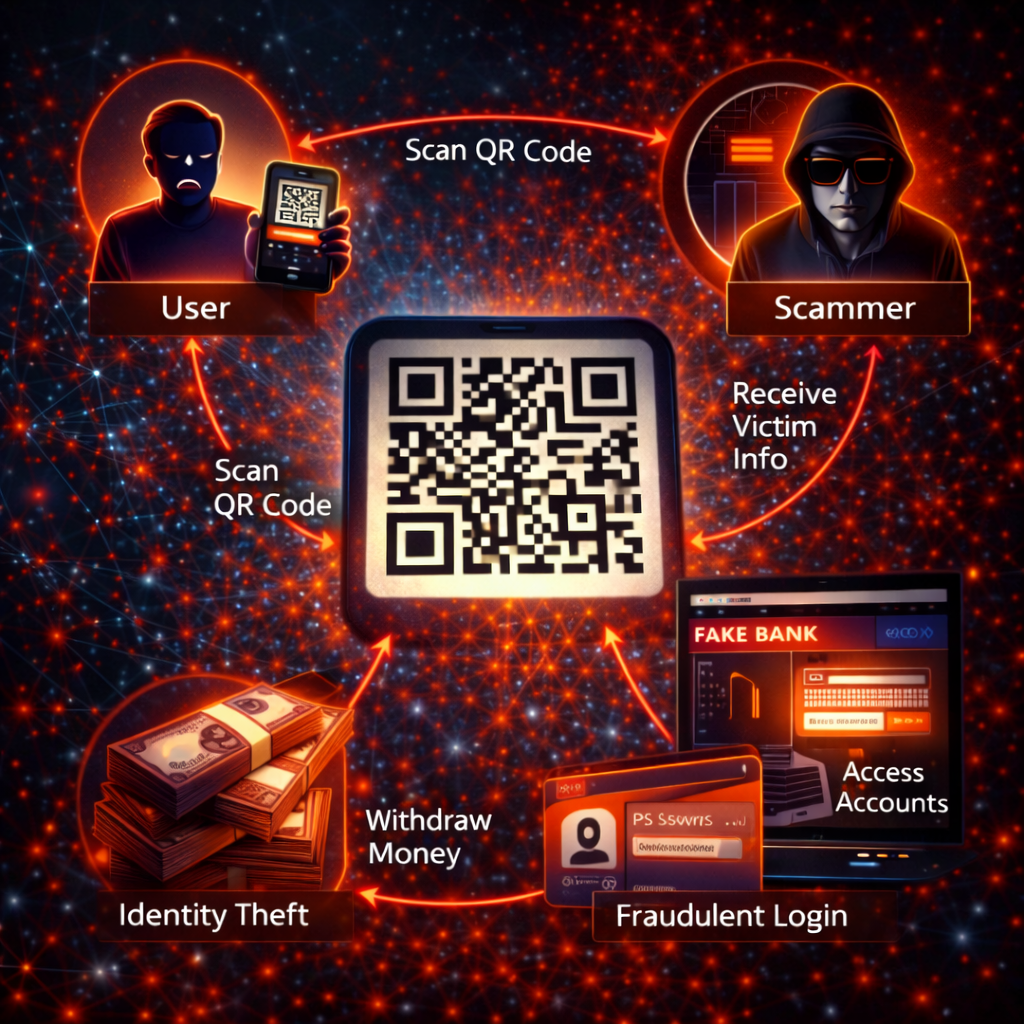
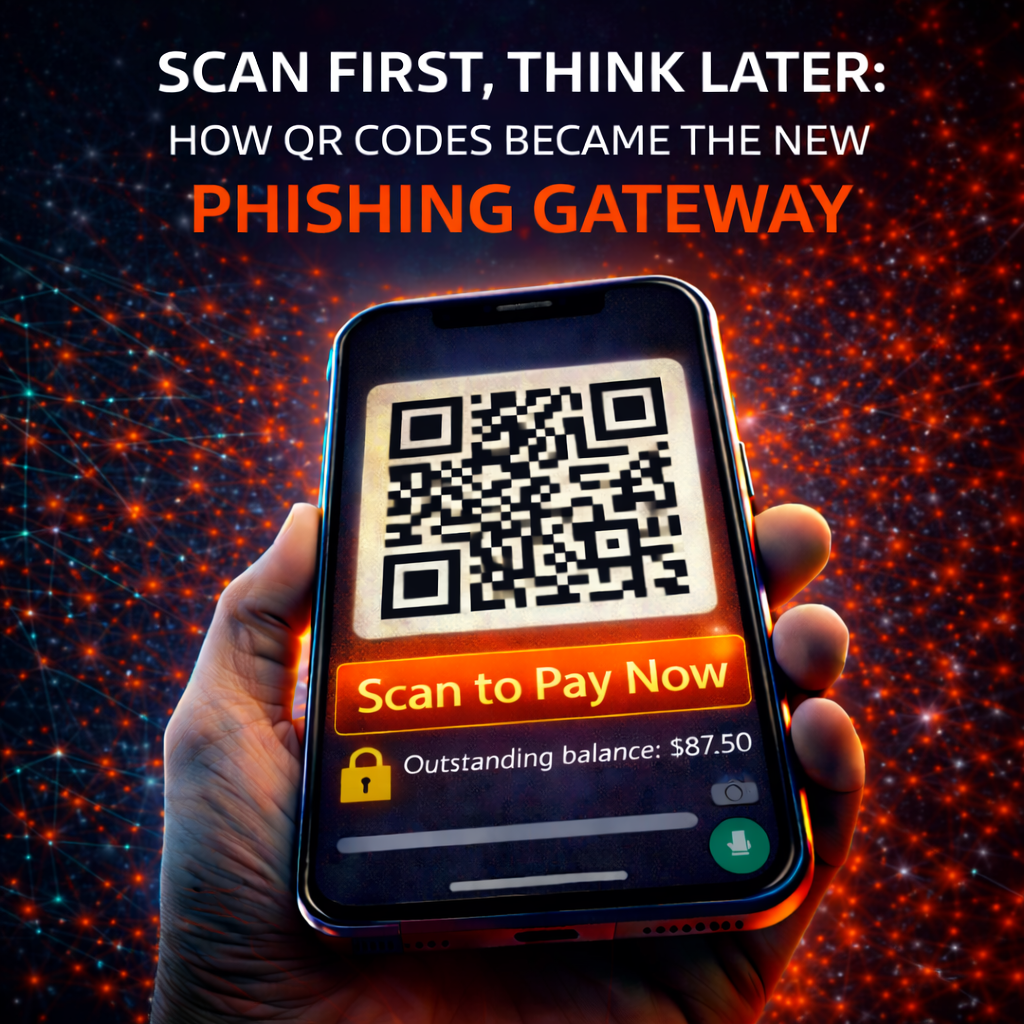
At the center of recent campaigns are highly convincing messages that impersonate official institutions such as courts or government agencies. Recipients receive text messages claiming there is an outstanding traffic violation or unpaid toll. The tone is formal and deliberately urgent, designed to create pressure. What distinguishes these campaigns is not the narrative itself, but the delivery method. Instead of a clickable link, the message includes an image of an alleged official notice containing a QR code. The recipient is instructed to scan the code to view details or settle the supposed fine.
The critical difference lies in how QR codes interact with security controls. Traditional URLs are typically analyzed by email gateways, browsers, or endpoint protection systems before a user interacts with them. QR codes, however, bypass much of this scrutiny. They are delivered visually and only resolved at the moment they are scanned by the user’s device. At that point, many of the established layers of defense are no longer effective. There is no immediate preview of the destination, no automated filtering beforehand, and often no conscious evaluation by the user, as scanning is perceived as a neutral or routine action.
A senior security consultant would likely frame this development not as a new type of attack, but as a shift in the entry vector. The underlying phishing infrastructure remains largely unchanged. After scanning the QR code, the user is typically directed to an intermediary page, often protected by a CAPTCHA to make automated analysis more difficult. From there, the user is redirected to a phishing site designed to closely mimic an official agency. The requested payment is usually small, deliberately chosen to avoid raising suspicion. The primary objective is not the payment itself, but the collection of personal and financial information, which can later be used for fraud, identity theft, or further targeted attacks.
From a CTO’s perspective, the core issue is not the individual scam, but the systematic bypassing of established security logic. Over the past decade, organizations have invested heavily in defenses against known phishing patterns. Email filtering, web security gateways, and endpoint protection have been optimized to detect suspicious links and behaviors. QR codes operate outside these traditional control points. They shift the decision entirely to the user, placing the burden of security on a layer that is inherently difficult to manage.
A senior architect would add that this trend becomes particularly relevant in the context of mobile devices. Smartphones have become the primary interface for many digital interactions, both personal and professional. At the same time, they are often less tightly integrated into corporate security frameworks than traditional workstations. When a QR code is scanned on a mobile device, the entire interaction may take place outside the visibility and control of enterprise security systems. This creates a blind spot that is not easily addressed with existing tools.
From an analyst’s perspective, an important question is whether this represents a short-term tactic or a longer-term shift. Early observations suggest that QR-based phishing is not an isolated trend, but part of a broader adaptation strategy. Attackers are increasingly leveraging communication formats that users already trust. QR codes have become commonplace in everyday scenarios, from restaurant menus to payment systems. This familiarity lowers the level of skepticism and increases the likelihood that users will engage without hesitation.
On the vendor side, responses have so far been measured. Traditional security solutions are not fully designed to inspect visual elements such as QR codes in real time. While there are emerging approaches that attempt to extract and analyze embedded links, these capabilities are not yet widely deployed. A representative from a security vendor might argue that extending detection mechanisms to cover QR-based threats is feasible, but introduces challenges in terms of performance, scalability, and false positives.
For system integrators, this development introduces additional complexity, particularly in presales and advisory roles. Customers are increasingly expecting a broader perspective on security that goes beyond well-known threat vectors. At the same time, it remains uncertain whether this added complexity translates into increased budgets. A CEO might view this as a margin pressure scenario, where the effort required to design, explain, and validate solutions grows faster than the willingness of customers to invest.
Operational feasibility is another factor. Technical countermeasures such as enhanced mobile security controls or extended threat detection capabilities are available, but often require adjustments to existing infrastructures. In parallel, the human factor remains central. Awareness and training continue to play an important role, although they are unlikely to fully mitigate the risk on their own.
Regional differences further influence how such developments are addressed. In DACH markets, organizations often take a more cautious approach to new security investments, requiring clear justification before allocating budgets. In contrast, companies in markets such as the United Kingdom or the Netherlands may respond more quickly to emerging threats, even when their immediate impact is not fully understood. Over time, this could lead to varying levels of preparedness, particularly in areas heavily reliant on mobile interactions.
What is already becoming evident is a shift in attack logic. The emphasis is less on technical sophistication and more on circumventing established control mechanisms. QR codes are simply the current vehicle for this strategy. They transfer the responsibility for security decisions to the user while simultaneously bypassing many of the systems designed to prevent such attacks.
Whether this evolves into a sustained trend or is mitigated by new defensive measures remains to be seen. What is clear is that phishing continues to adapt, increasingly exploiting pathways that fall outside traditional security models. For organizations, this implies a need to reassess existing assumptions and to consider new entry points that may not yet be fully covered by their current security strategies.