
A recent compatibility issue involving a Windows update, selected Dell systems and an Intel driver has drawn attention across the enterprise IT community. Microsoft temporarily paused the rollout of its July security updates for affected devices while working with Dell and Intel on a resolution.
The incident itself will likely be resolved relatively quickly. The broader question, however, is more important: who effectively controls the lifecycle of a modern enterprise endpoint when several vendors influence its stability, security and performance?
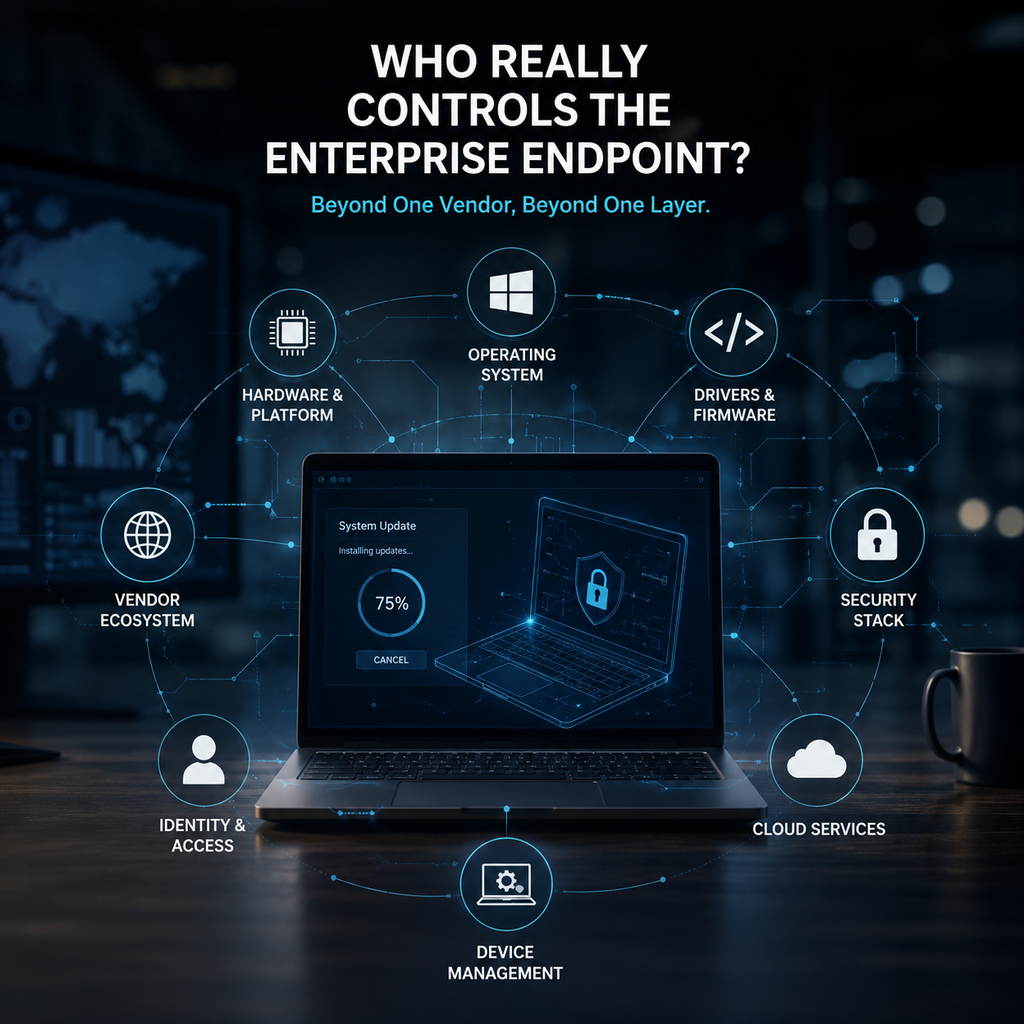
Today’s enterprise endpoint is no longer defined by a single operating system or hardware manufacturer. Windows, firmware, processor platforms, drivers, endpoint security, device management and cloud services have become increasingly interconnected. When one layer fails or behaves unexpectedly, the consequences can extend across the entire update and security lifecycle.
For IT leaders, the discussion is therefore shifting away from simply identifying which vendor caused the problem. The greater challenge is balancing security, operational stability and business continuity. Delaying an update may leave known vulnerabilities unpatched, while deploying it immediately can introduce compatibility issues, performance degradation or additional support requirements.
The growing complexity also affects system integrators and managed service providers. Customers continue to expect predictable endpoint services at competitive prices, yet providers must coordinate an expanding ecosystem of vendors, platforms and dependencies. Additional testing, architecture work, documentation and vendor coordination do not necessarily translate into higher margins.
For mid-sized IT service providers, this raises an important strategic question: is it still realistic to maintain deep expertise across every relevant platform, or will greater standardisation around selected vendor ecosystems become unavoidable?
The Dell incident itself is unlikely to remain a major topic for long. The underlying trend, however, will continue. Enterprise endpoints are evolving into highly interconnected platforms whose lifecycle is increasingly influenced by multiple technology providers. The strategic challenge is therefore no longer a single software update, but how organisations assign responsibility, manage dependencies and maintain control over time.





