We continue our series on certification programs from leading IT vendors. After covering Cisco, one of the best-known names in networking and cybersecurity, we now focus on Fortinet, a global leader in modern cybersecurity solutions that has grown rapidly in both scale and relevance over the past years.
The founders of Darkgate Magazine also run one of the most respected IT recruitment agencies and are in daily contact with vendors, system integrators, managing directors, CTOs, HR leaders, and technical specialists. Few names appear as often in these conversations as Fortinet. In the field of cybersecurity and network protection, Fortinet is one of the most widely adopted vendors. Both global integrators and mid-sized service providers rely on its technologies, making Fortinet one of the most established security names across the IT channel.
Founded in 2000 by brothers Ken and Michael Xie, Fortinet was built on the idea of creating an integrated security system rather than isolated products. This vision became the foundation of the Fortinet Security Fabric, a framework that connects network, endpoint, and cloud security under one unified architecture. From early on, Fortinet understood that technology alone is not enough — skilled professionals are essential. To ensure the necessary expertise, Fortinet launched the Network Security Expert (NSE) program, which for more than a decade became one of the most recognized certification systems in the cybersecurity industry.
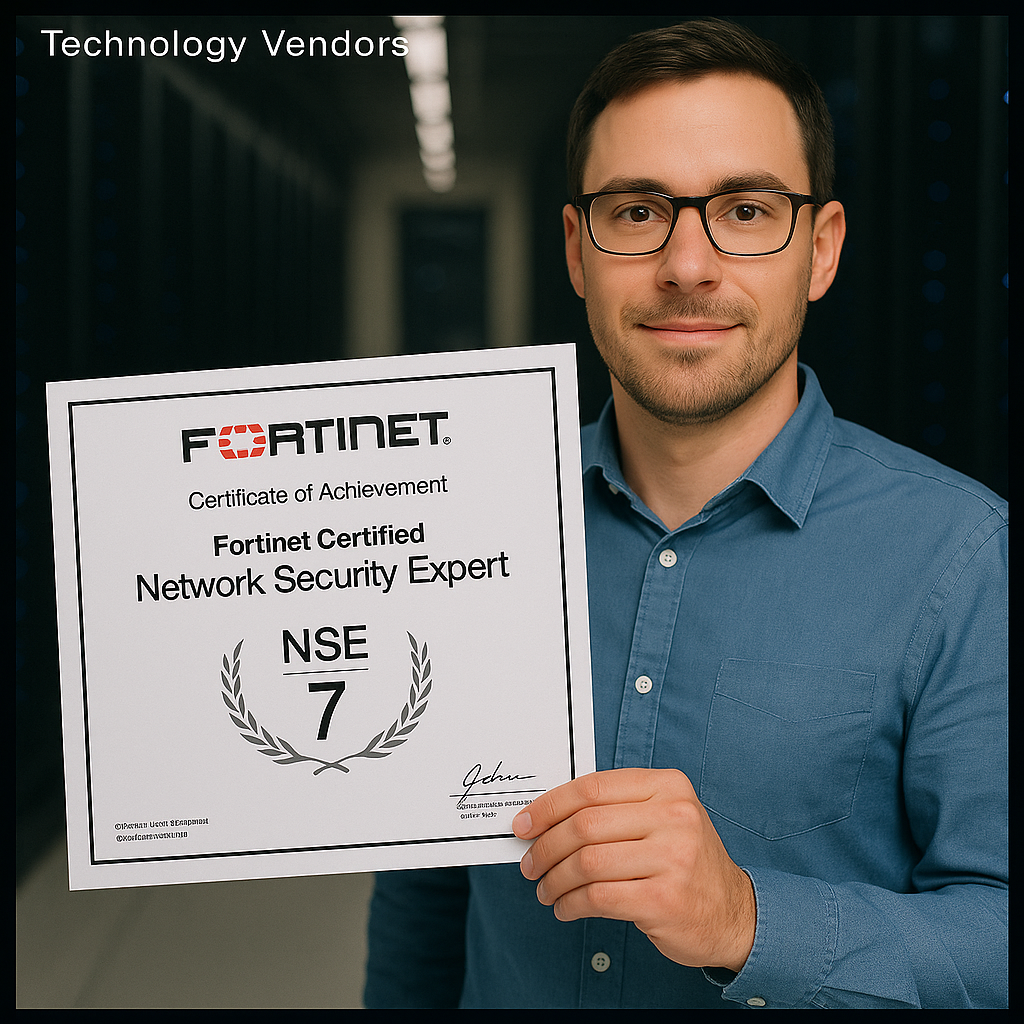
The NSE program started in the early 2010s and consisted of eight levels, from NSE 1 to NSE 8. Lower levels focused on general knowledge and awareness, while higher ones targeted experienced engineers and architects. The NSE 4 certification became especially important for partner companies that implement and support Fortinet solutions. The exams combined theory and practical tasks that reflected real-world network challenges. Many engineers describe earning their certification as demanding but highly rewarding, a true milestone in their careers. As Fortinet expanded its portfolio from firewalls to SD-WAN, Zero Trust, OT, and cloud security, it also modernized its certification system. In 2023, the Fortinet Certification Program (FCP) replaced the old NSE structure. The new framework aligns with job roles and market needs and is divided into three main areas: Cybersecurity, Network Security, and Security Operations, each with three stages – Associate, Professional, and Expert.
Fortinet also introduced three new titles: FCP (Fortinet Certified Professional), FCSS (Fortinet Certified Solution Specialist), and FCX (Fortinet Certified Expert). To achieve the FCP level, candidates must pass both the NSE 4 and NSE 5 exams in the same track. Exams now focus more on applied skills and real scenarios. Most certifications are valid for two years and can be renewed by retesting or moving to a higher level. From our daily recruiting work, we often hear how proud candidates are when they complete a Fortinet certification. Many describe the exams as tough but fulfilling. Companies frequently support their staff with study time and cover exam fees, recognizing the value of these certifications for employee growth and retention.
For IT integrators, Fortinet certifications are strategically important. Partner status and benefits depend directly on the number of certified engineers. The more certified staff, the better the purchasing terms, project opportunities, and access to vendor support. Certifications are therefore not only proof of technical skill but also a business advantage that strengthens trust with clients. With its renewed certification system, Fortinet has moved beyond product-specific training toward broader professional development that covers the full security cycle – prevention, detection, and response. In today’s fast-changing threat landscape, these programs are more than credentials. They are a cornerstone of consistency, reliability, and professional growth within the global cybersecurity community.
Next, our series will explore Palo Alto Networks, another major security vendor with a comparable certification philosophy but a different approach to structure and learning.
Conceptional image digitally created for editorial illustration. All trademarks and brand names are the property of their respective owners