Privileged Access Management comes into play wherever a single login is powerful enough to break everything, take over everything and control everything without resistance. PAM is not an add-on, not a luxury upgrade and not a theoretical Zero-Trust footnote. It is the final wall between order and collapse, between a stable network and complete compromise. Privileged accounts do not just open doors. They unlock the entire building. Once a threat actor holds administrative power, every downstream security control becomes forensic history. Network Access Control, EDR, encryption, segmentation, monitoring they all assume that access is earned, not stolen. PAM is the point where that assumption is tested.At DarkGate, where we operate one of the most recognized global cybersecurity recruiting agencies, PAM has been a constant topic long before Zero-Trust became marketing currency. When we recruit Cyber Security Engineers, Cloud Security Architects or Identity-Posture Specialists for high-value clients – including major IT integrators and internal security teams in high-risk industrial environments PAM expertise is one of the first skills we check. Not because it is trendy, but because it signals maturity. Anyone can configure MFA. Only a smaller group understands how privilege escalation works, how service accounts can silently become the weak spot, how Vault misconfigurations break everything, and how a single unrotated emergency account can undo years of security investment.
When did PAM rise? The first wave of awareness hit between 2012 and 2016. Ransomware was not new, but it evolved. Attackers stopped encrypting endpoints blindly and instead went straight for domain authority. They learned what insiders always knew: if you get the domain admin, you win. The second wave hit around 2018–2021 when Zero Trust entered the mainstream. Identity was the gateway conversation, but PAM was the core that no one wanted to look at too closely. It was the place where risk was not theoretical but absolute. You can dispute firewall vendors. You can argue SIEM telemetry. But no one argues with root.Today PAM is more relevant, not less. The cloud did not reduce privileged identities. It multiplied them. In the past a company had a few Linux root credentials, a few Hyper-V Admins, a few firewall superuser accounts. Now we have AWS IAM privilege escalation paths, Azure Contributor roles that can extract Key-Vault secrets, GCP Service Accounts with Write/Delete rights across environments, Kubernetes cluster-admin perms, GitHub Action secrets, Terraform keys, DevOps pipelines with unrestricted execution. Privilege has exploded in quantity, invisibility and persistence. PAM is not a legacy concept. PAM is the only structured answer.
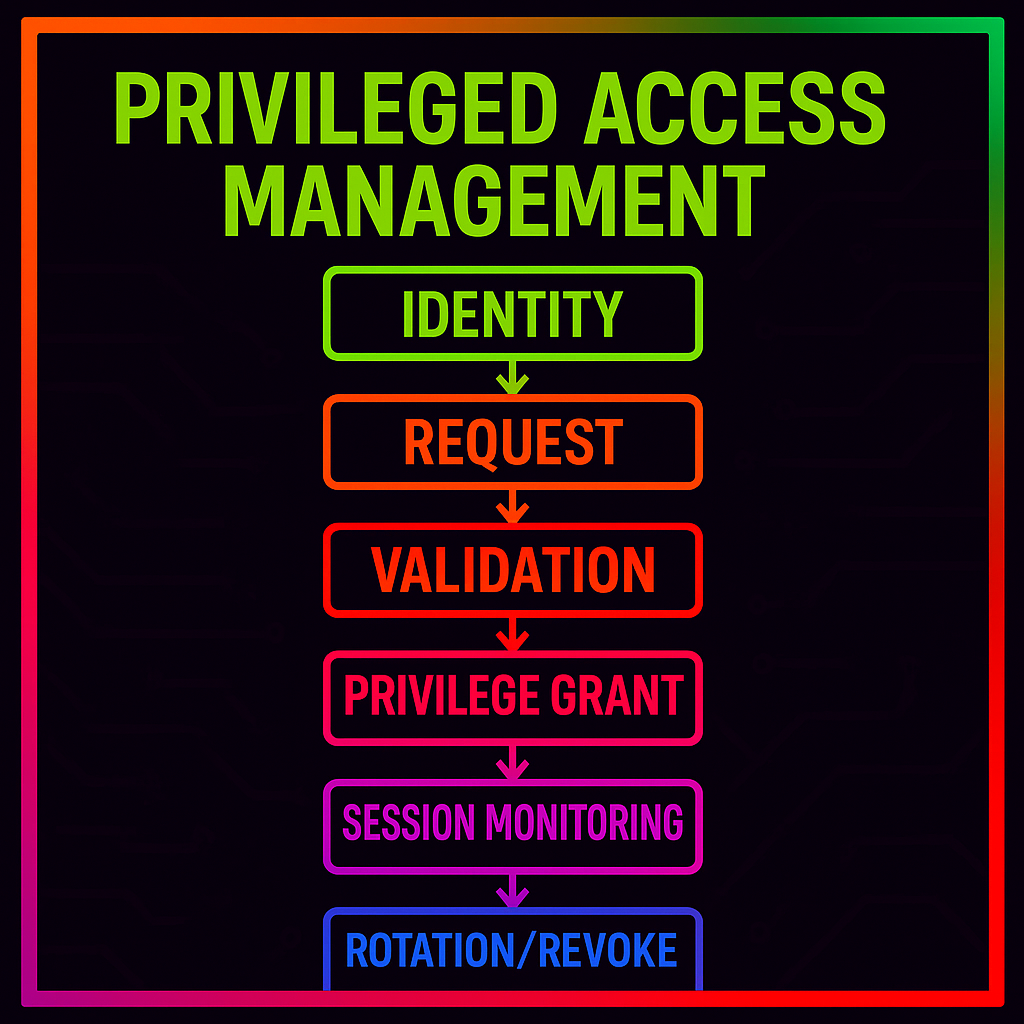
Two vendors dominate the landscape. CyberArk stands as the fortress – established, complex, mature. It owns the enterprise space with powerful credential rotation, session recording, app control and granular vault enforcement. BeyondTrust is the agile rival, often preferred in environments with mixed infrastructures, cloud-native adoption cycles and distributed DevOps pipelines. Both solve the same problem, but CyberArk treats privilege like gold bullion sealed in a vault, while BeyondTrust treats it like currency that must flow but never leak. The duel shapes most PAM decisions today, though the ecosystem also includes Delinea (Thycotic/Centrify), One Identity Safeguard, and Wallix on the European axis. No matter which tool you deploy, the philosophy is the same: remove standing privileges, grant access only when needed, record every action taken, rotate secrets before they become toxic.PAM lives where power lives. Domain Admin. Root. SU01 in SAP. ESXi Console. Firewall superuser access. Kubernetes cluster control. CI/CD pipelines. Remote maintenance accounts. OT/ICS engineering consoles. PAM ends shared passwords. PAM forces rotation. PAM logs and proxies sessions so silence is no longer possible. PAM enforces approval flows for actions that could break production. It does not merely separate users from systems. It separates power from risk. It answers the question every breach report eventually asks: who had access, who should have had it, and why?
Recruitment reveals something interesting about PAM. You can measure PAM skill without certifications. If a candidate can explain why a break-glass account must exist offline, why domain admin tiers should never overlap, why secrets must not live inside Git, why privileged sessions require real-time monitoring instead of historical review, then they understand PAM. And if they cannot, they might understand identity – but not power. PAM is the difference between controlling the system and hoping it behaves.Strip PAM down to its truth and one sentence remains: companies don’t fall because they lacked a firewall. They fall because someone gained root. Privileged Access Management is not glamorous. It does not shine in demos. It does not impress executives with dashboards and analytics. But it defines control. It defines who rules the system and who merely uses it. Security without PAM is a locked front door with the spare key under the mat.PAM existed before Zero Trust. PAM outlived first-gen identity systems. PAM will remain when new buzzwords rise. Because companies do not collapse from noise. They collapse from privilege. Whoever holds root controls the company.