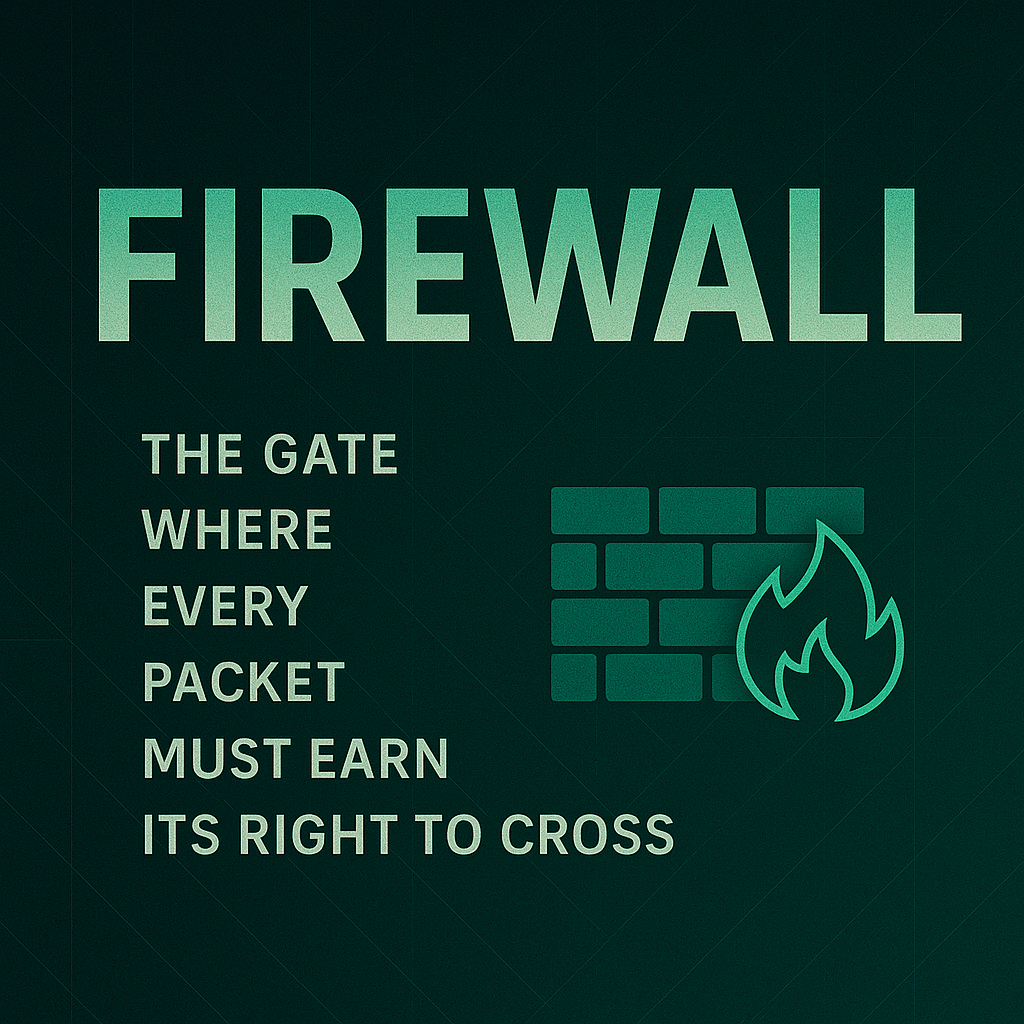
When someone hears the word cybersecurity, one idea rises faster than any technical framework or product category. Firewall. It is the mental image most people carry. A barrier, a border, a checkpoint. Something that stands between danger and the place where data lives. Simple, visible, almost physical. That is why the term survives even in a world where security has become far more complex than one device at the edge of a network.
In our work with global system integrators we speak daily with engineers and architects who deploy these systems across continents. They speak of Fortinet, Palo Alto Networks and Trend Micro as naturally as other people speak about documents and emails. These vendors are not just tools. They are the backbone of modern enterprise security. Their certifications shape candidate profiles, define job requirements and influence how networks are built. Many discussions start at the firewall, even if they end much deeper in detection and response.To understand what a firewall truly is, you must imagine movement instead of equipment. Picture network traffic as a stream of vehicles entering a border crossing. Some drive calmly and follow the rules. Others speed, hide cargo or carry passengers that should not be allowed to enter. The firewall is the border officer who checks each vehicle in real time. It does not assume trust. It demands proof.
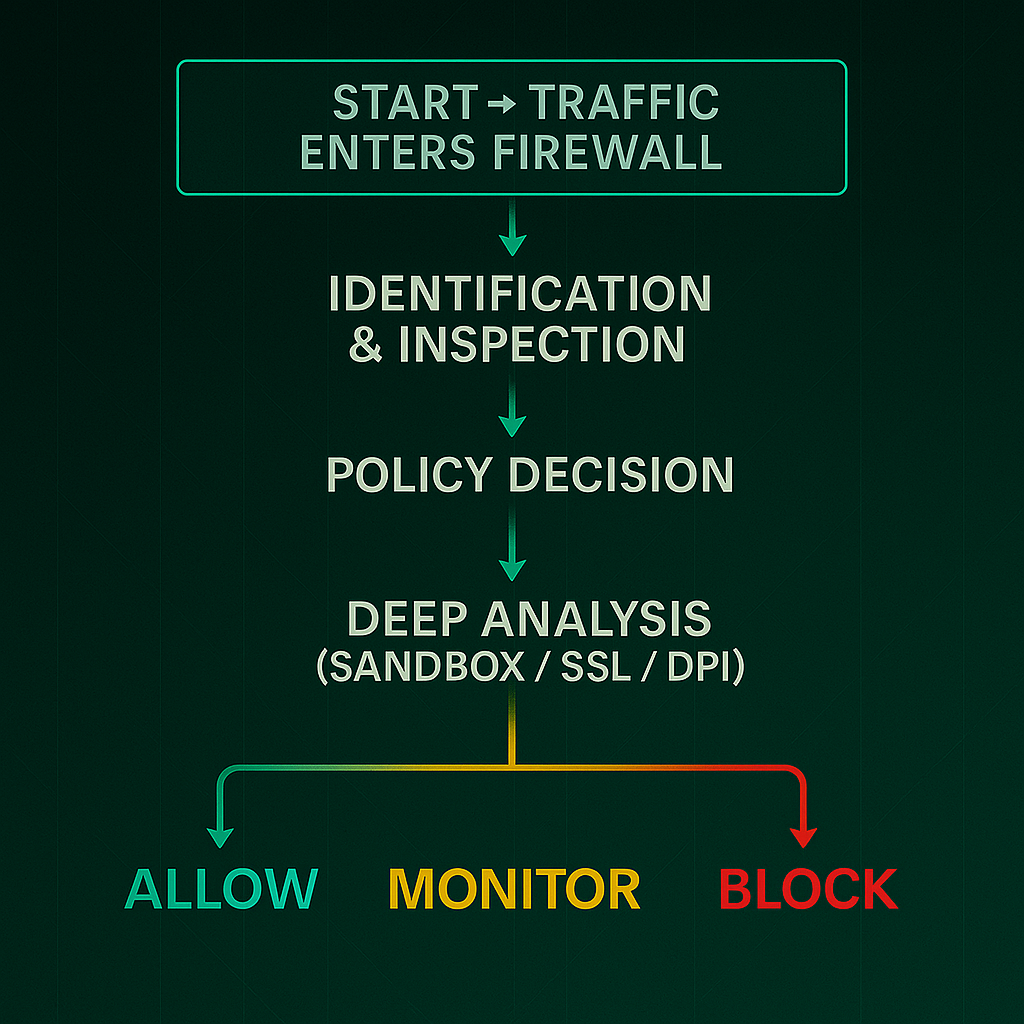
The first moment is arrival. Traffic flows in at high volume, not yet approved or denied. The firewall looks into the packet header the same way a passport officer scans a document. It checks where the traffic came from, where it wants to go and which protocol it uses. A few years ago this was often enough. Today it is only the beginning.Modern firewalls do not judge traffic only by port or IP address. They try to understand the actual application behind it. Port 443 is no longer equal to safe browsing. Behind it may hide Zoom calls, cloud storage uploads or a malicious command channel that blends in with encrypted traffic. The firewall decodes the identity of the flow, even if it hides behind encryption and common ports. It is less like a guard at the wall and mehr wie ein Ermittler mit Erfahrung.Once the application is understood, rules become relevant. These rules are not technical restrictions but expressions of business logic. A developer is allowed to reach a code repository. A marketing intern is not. A remote administrator may open a management session, but only with logging and monitoring. A contractor may enter the network, but every step is recorded. A firewall does not simply block or allow. It decides based on identity, purpose and trust level.Then comes the deeper inspection layer. If something looks unusual, the firewall opens the package and inspects its contents. A file may be executed safely inside a sandbox. A script may be simulated to observe how it behaves. If nothing suspicious happens, the gate opens. If the traffic shows signs of exploitation, persistence, or data theft, the tone changes immediately. Security in this moment is not theory but reaction.
At the end of this process every packet receives one of four outcomes. It may pass freely. It may pass with silent supervision. It may be held in digital quarantine for further examination. Or it may be stopped on the spot and denied entry entirely. The evaluation happens in milliseconds, but the decision can influence everything that follows.A firewall is therefore not a box and not only a word that people associate with cybersecurity. It is the first checkpoint in a defensive chain. It filters, questions, investigates and then chooses what may enter. Threat detection happens behind it. XDR monitors the hosts inside. Crisis Response is the stage where damage must be contained and the organisation must fight to recover. But the first moment where danger becomes visible is often here, at the gate.Security begins with that moment. Sometimes quietly, sometimes violently. But always with a question: may this packet pass or should it be stopped.