Aviation is probably the most heavily regulated technology domain in the world. Few industries are as standardized, as process-driven and as uncompromisingly focused on safety as air transport. Every safety-critical system is subject to strict certification, every procedural change goes through years of validation, every deviation is documented, analyzed and reviewed. Authorities such as EASA in Europe and the FAA in the United States do not merely define safety goals, they define the entire pathway to reach them. Innovation is possible, but it is structurally slow and that slowness is a feature, not a flaw.
Against this background, the central question becomes: is there actually room for artificial intelligence in this world? And if so, where exactly?
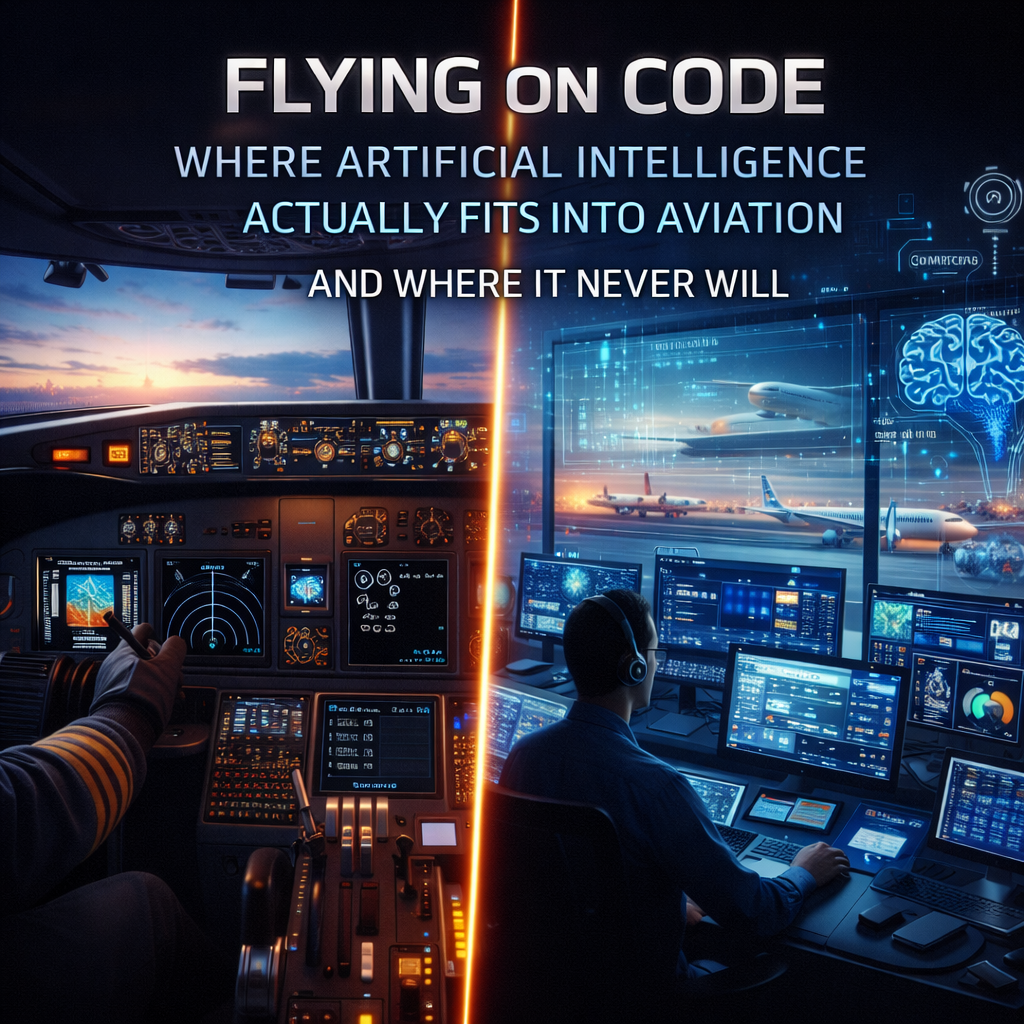
The answer is yes but not in the way science fiction imagines it. Artificial intelligence will not replace pilots, it will not act as an autonomous decision-maker in the cockpit, and it will not take responsibility for flight operations. That is unlikely to change anytime soon, and for good reason. Aviation follows a strict principle: responsibility remains with humans, systems may support but not replace them. This principle is not cultural, it is regulatory. Certifiable systems must be deterministic, explainable and predictable. Learning systems are, by their nature, not fully predictable.This is why AI is not used as a flight control system and why it is unlikely to be certified as such in the foreseeable future.
Modern commercial aircraft are already highly automated. Autopilots, fly-by-wire, automatic thrust control, and automatic landings under defined conditions have existed for years. But all of these systems follow fixed logic, are exhaustively tested and are certified within strictly defined operational envelopes. They are not allowed to change their behavior dynamically.Any modification to a safety-critical system requires re-certification under standards such as DO-178C for software, DO-254 for hardware, ARP4754A for system development and ARP4761 for safety assessment. A system that changes its internal logic during operation does not fit into this certification framework.
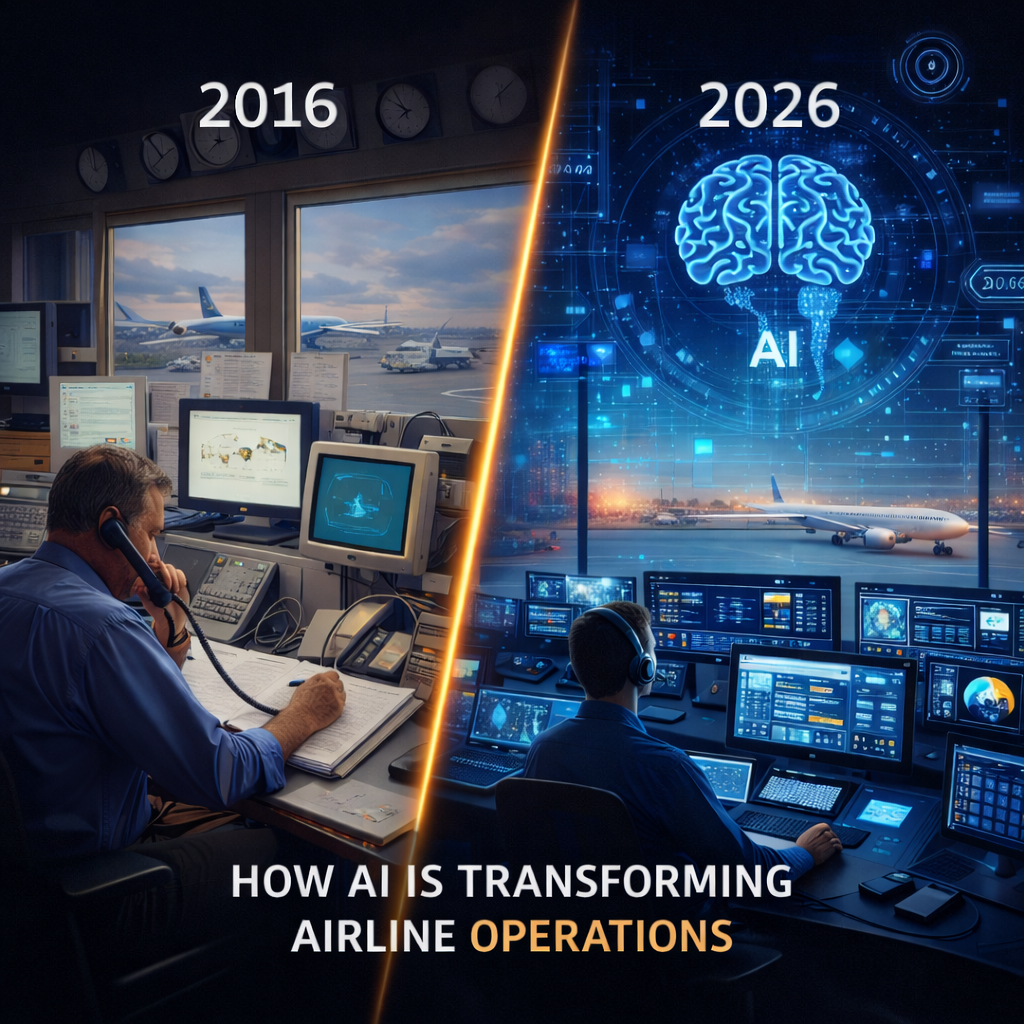
That does not mean AI has no place in aviation. On the contrary, it is becoming increasingly important just not in the direct control loop of the aircraft.One major area is airline operations. Airline Operations Control Centers coordinate thousands of flights, crews, aircraft rotations, maintenance windows, airport slots and weather conditions every day. These systems are extremely complex, but they are not directly safety-critical in the sense of controlling the aircraft in flight. This makes them suitable for AI-based support.
AI models analyze historical data on delays, weather patterns, congestion, crew availability and network effects. They identify patterns, forecast disruptions and propose alternatives before problems escalate. These systems do not make decisions they provide orientation.From a regulatory perspective, this distinction is crucial. Decision support systems are treated very differently from flight control systems. They fall under IT governance, data protection and quality management frameworks rather than flight safety certification.
Another important field is predictive maintenance. Aircraft generate enormous volumes of telemetry data: engine parameters, temperatures, pressures, vibrations, loads and wear indicators. AI systems analyze this data to detect early signs of degradation long before a component fails. A bearing running slightly warmer, a vibration increasing marginally, a pressure curve slowly drifting these are invisible to humans but visible to statistical models.Maintenance decisions, however, remain with certified engineers. AI provides indications, not instructions. Again, the regulatory principle of human responsibility is preserved.
AI also plays a growing role in safety management. Airlines operate Safety Management Systems that collect incident reports, near misses, anomalies and deviations. AI helps correlate this information, uncover hidden patterns and identify systemic risks. Safety becomes not only reactive but learning-oriented.Beyond this, AI is used in demand forecasting, pricing, crew scheduling, baggage logistics and customer interaction. These areas are far removed from flight control, but they shape efficiency, resilience and passenger experience.
The key point is that aviation is not a domain for disruptive experimentation. It is a domain for evolutionary improvement. For quiet optimization. For robust, stable systems. AI fits here not as a revolutionary force but as a stabilizing one.It does not make systems more autonomous, it makes them more aware. It does not remove human control, it enhances human foresight. It does not reduce responsibility, it helps manage it.That is the role of AI in aviation.Not as a pilot. But as a navigator of complexity. It will reduce failures, not increase freedom. It will absorb complexity, not amplify it. It will reduce uncertainty, not create new forms of it.
By 2026, airlines will increasingly operate as data-driven system operators. Fleets will be managed not only as physical assets but as learning systems. Safety will become not only a matter of compliance but of anticipation. Operations will become not only planning but prediction.Regulators will play a decisive role in this evolution. Both EASA and the FAA are already developing frameworks for the use of AI in safety-relevant contexts, particularly in areas such as explainable AI, model validation and continuous monitoring. The goal is not to prevent innovation but to make it governable.Aviation may therefore become a model for responsible AI integration: not through prohibition, not through blind enthusiasm, but through structured adoption.
Not everything that is possible will be allowed.But much of what is allowed will be valuable. And that is what makes this transformation so significant.Not because everything changes.But because the right things change quietly, carefully and responsibly.