Until only a few years ago, everyday work in many organizations looked surprisingly similar even in technologically advanced ones. Tickets were created and forwarded. Excel sheets were maintained and sent by email. Status meetings existed mainly because nobody really knew where things stood. Decisions were made when something escalated, not when it slowly started drifting in the wrong direction. In IT, this was no different just faster. More tools, more dashboards, more data. But not necessarily more clarity. Integrators had modern stacks, cloud platforms, automation, monitoring yet daily work was still full of follow-ups, handovers, context loss and friction. A lot of motion, but very little flow.
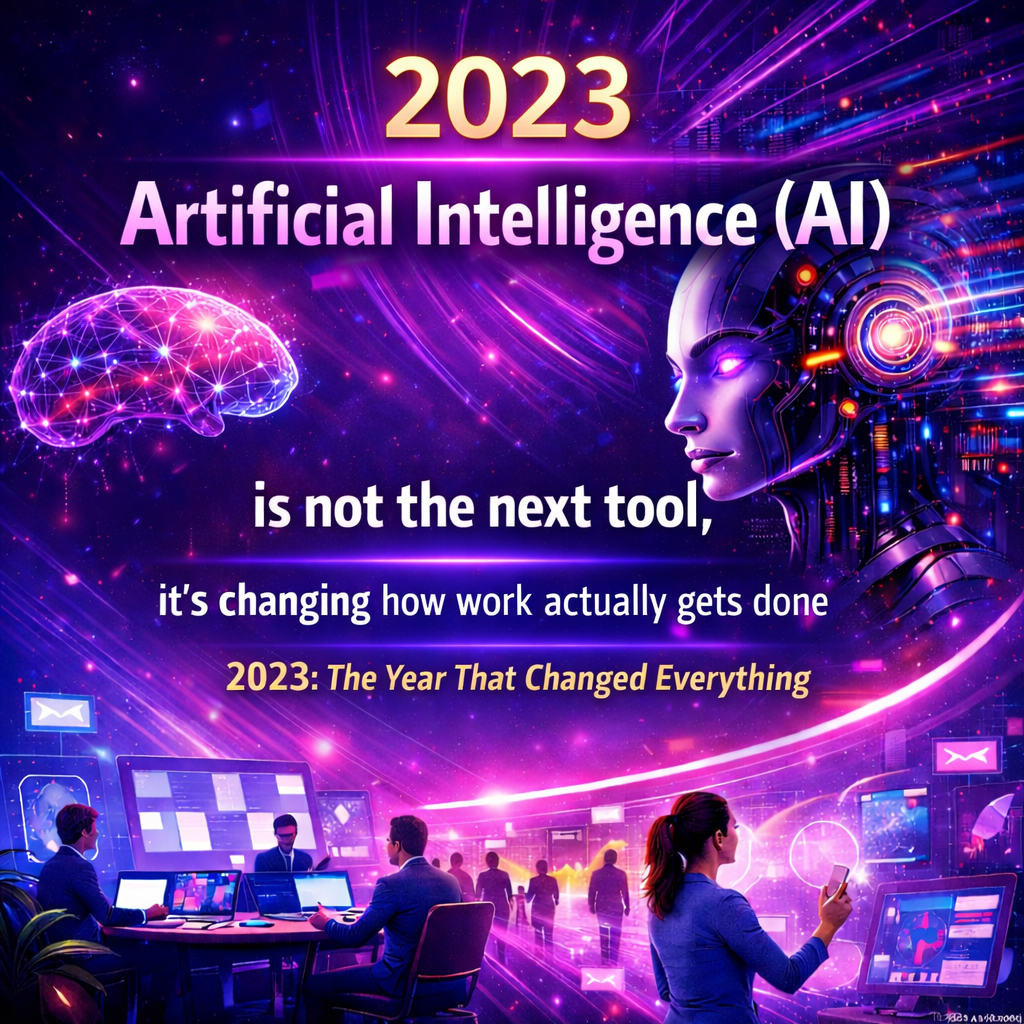
When AI entered the picture, it did not suddenly change everything. But it started shifting things in a different way than previous technology waves. Not by adding another tool, but by adding a layer above the tools. This layer does something classical software cannot do: it observes patterns over time. It reads along as work happens. It detects repetitions, delays, anomalies and correlations. And it begins to prepare work instead of only reacting to it. This is already visible in everyday work. A project manager no longer only sees that a project is late, but that it is likely to become late because similar projects with similar structures failed in the same way before. An IT lead no longer only sees that tickets are open, but that certain types of tickets systematically accumulate despite officially being “in progress.” Sales teams no longer only see that a deal is stalling, but that its probability is declining because similar deals at this stage usually collapse.
This changes when work begins. Work no longer begins when something breaks. It begins when something is likely to break. That shift changes everything. Traditional organizations are reactive. AI-enabled organizations become anticipatory. Not perfectly. Not flawlessly. But early enough to intervene. That creates tension. Many roles were built around solving visible problems. If systems now make problems visible earlier, the logic of these roles changes. Experts are needed less to fight fires and more to interpret risks. Managers are needed less to push decisions and more to shape priorities. This does not feel like relief to many people. It feels like loss of control. Because suddenly the system knows something, too and sometimes earlier.
This tension is particularly visible in the IT world. IT integrators are traditionally strong in architectures, solutions and technologies. But operationally, they live from complexity, from imperfect customer realities, from unclear requirements and from human factors. AI does not fit cleanly into this picture. It is not a new firewall or a new monitoring tool. It is not a product you can neatly position. It cuts across everything. It changes presales, because proposals are no longer only written but simulated. It changes delivery, because risks are no longer only discovered but predicted. It changes operations, because anomalies are no longer searched for but flagged. It changes support, because root causes are no longer reconstructed but suggested. And it changes customer expectations. Customers no longer only ask for stability, availability and security. They increasingly ask for predictability, for transparency, for the ability not only to react, but to anticipate. They do not just want systems that work they want systems that do not fail unexpectedly.
That puts pressure on integrators. They are no longer selling only solutions. They are selling responsibility. Responsibility for systems that are not only stable, but understandable, not only secure, but explainable, not only performant, but predictable. And this is where friction appears. Many organizations upgraded technologically but not culturally. They introduced AI tools but did not change how decisions are made. They have dashboards but no time to read them. They have predictions but no processes to act on them. This creates a paradox: more information than ever, but not automatically more orientation.
And this is where it becomes clear whether AI becomes relief or noise. If organizations treat AI as another tool, it becomes another channel, another alert stream, another source of reports and recommendations that nobody truly integrates. If organizations treat AI as a layer, something deeper changes. Work becomes prepared before it escalates. Decisions become smaller, earlier and more distributed. Responsibility shifts from control to design. This is uncomfortable. But it is necessary. Because reality is not getting simpler. Systems are becoming more complex. Markets more volatile. Customers more demanding. Speed increases. Uncertainty increases. AI is not a solution to this complexity. But it is a way to make it readable. And that is its real value. Not automation. Not efficiency. Not cost reduction. But pattern visibility before those patterns turn into problems.This is not a poetic idea. It is a survival strategy.