Cloud security sounds like a technical topic. Firewalls, encryption, identity management, monitoring. And yes, those are part of it. But cloud security is primarily the result of a structural shift that began with the rise of cloud computing and only revealed its full implications years later. When companies started outsourcing infrastructure, virtualizing applications and moving data into platforms, speed was the dominant driver. Time to market, scalability, cost flexibility and developer productivity were the focus. Security was not ignored, but it was implicit. It was assumed that the large platforms would “take care of it.”The understanding that cloud security is a distinct and complex discipline did not emerge at the beginning of cloud adoption, but with its first real crises. With the first major data leaks caused by misconfigured S3 buckets, publicly exposed databases, compromised API keys committed to GitHub, over-privileged service accounts, ransomware attacks on cloud backups, supply-chain attacks through CI/CD pipelines, and attacks targeting identity systems rather than networks. Once attacks stopped targeting infrastructure and started targeting identities, permissions, automation and configuration, it became clear that security in the cloud follows a fundamentally different logic.
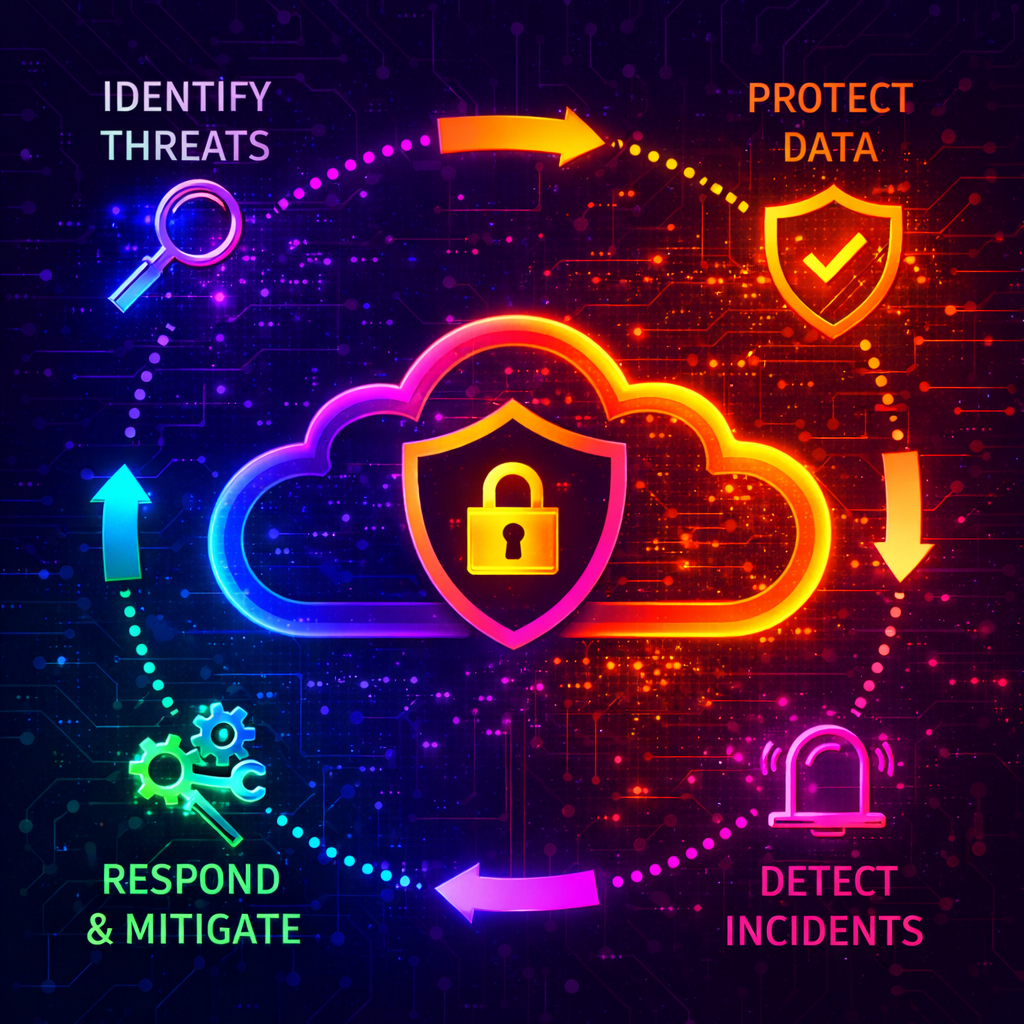
Today, cloud security spans multiple layers and disciplines. It includes identity and access management, where the question is who can do what, when, where and why. It includes zero-trust architectures, where trust is never assumed and always verified. It includes encryption at rest and in transit, key management, secrets handling, network segmentation in virtual environments, API security, logging and observability, continuous security monitoring, policy as code, infrastructure as code with embedded security controls, container security, Kubernetes hardening, cloud security posture management, detection and response, governance risk and compliance, and regulatory frameworks such as GDPR, ISO 27001 or NIS2.These are exactly the terms we hear in conversations with CTOs, CISOs and heads of platform when they describe the profiles they are looking for. Not classical administrators, but cloud security architects who combine technical depth with structural thinking. DevSecOps engineers who treat security as part of development rather than a control function. IAM specialists who understand that identity is the new perimeter. GRC experts who connect technology, regulation and organization. Platform security leads who integrate security into platforms instead of operating it next to them.
From a recruiting perspective, cloud security has become one of the fastest growing segments over the past five years. Not because attacks have suddenly increased, but because the nature of risk has changed. Where a single server used to be affected, now entire platforms are involved. Where a single application was compromised, now entire data landscapes are exposed. Where technical errors used to be local, they are now global, visible and legally relevant.Typical cloud attack surfaces are therefore less about classical vulnerabilities and more about structural weaknesses. Misconfigured access rights, overly broad role models, uncontrolled automation, open interfaces, missing segmentation, insufficient separation of environments, lack of visibility into data flows, unclear responsibilities between teams, providers and platform operators. In practice, cloud security incidents are often design failures rather than hacking successes.
This is why cloud security is not primarily a technical problem. It is a responsibility problem. Cloud has changed how responsibility is distributed. In traditional IT, it was clear who operated infrastructure, who had access, who was accountable and who decided. In the cloud, responsibility is spread across platform providers, internal teams, external partners, developers, security functions and management. Everyone is involved, but no one is fully in control.Shared responsibility often becomes shared diffusion. Gaps do not exist because nobody acts, but because everyone acts within their own frame. Developers rely on the platform, security teams rely on policies, management relies on audits, integrators rely on documentation, and platform providers rely on correct customer usage. The gaps appear between those layers.
This is why cloud security is ultimately a governance topic. It is about ownership, decision structures, prioritization and accountability. It is about who accepts risk, who evaluates it, who carries it and who explains it. It is about how organizations deal with uncertainty not only technically, but structurally.For decision makers, cloud security is therefore not a tooling question but an organizational design question. It forces companies to rethink how decisions are made, how responsibility is assigned and how digital systems are not only efficient, but explainable, auditable and accountable.From Darkgate’s perspective, cloud security is not a protection layer. It is a new organizational discipline that connects technology, law, governance and culture. It is the point where digitalization meets responsibility. And that is why it will not fade away, but become more central over time.Cloud security is not a promise of protection. It is a call to take responsibility in a world where control is no longer tangible, but distributed.