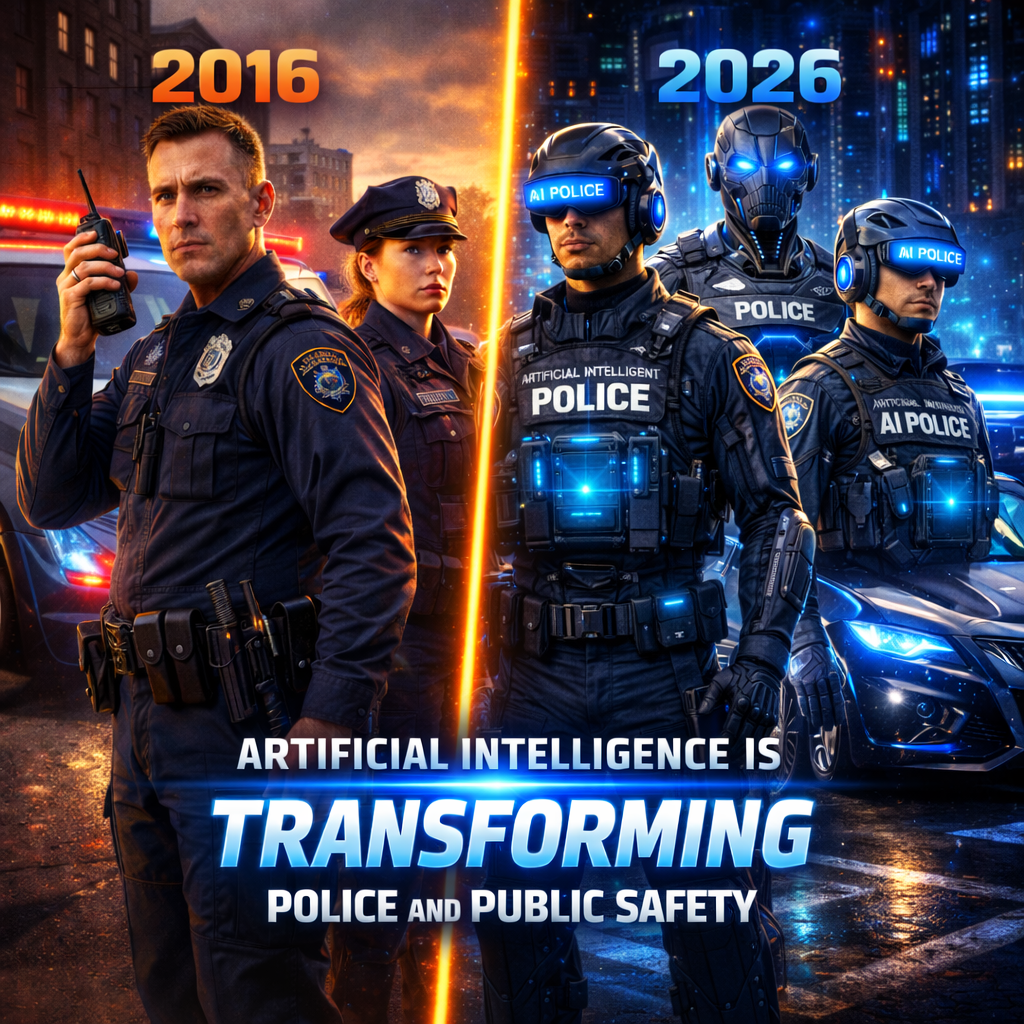
Policing has long been shaped by presence, experience and reaction. Patrol cars followed their routes, dispatch centers received emergency calls, officers were sent when something had already happened. Information was heard, written down, passed on. Radios crackled, phones rang, incident reports were created, updated and expanded. Much of this happened in parallel, much of it under time pressure, much of it dependent on the attention and resilience of the people working inside these systems. Public safety was a coordination of humans, procedures and tools, but it was always fragmented, always reactive, always slightly behind the event itself. That picture is now quietly changing, not because policing is being automated, but because it is becoming more connected, more anticipatory and more aware. Artificial intelligence does not replace officers, it inserts a new layer between information and action, connecting data, translating complexity and creating orientation in situations that used to be visible only in fragments.
The transformation begins at the very start, with the emergency call. In the past, a dispatcher answered the phone, listened, asked questions, typed information, structured it and forwarded it. Location, type of incident, number of people involved, potential risks, all of this had to be captured manually and interpreted in real time. Today, AI systems already assist during the call itself. They transcribe speech in real time, extract key information, detect risk indicators and emotional escalation and suggest follow-up questions to the dispatcher. They do not decide, they prepare. While the call is still ongoing, a structured incident picture begins to form. Location, incident type, potential danger, past incidents in the area, available patrol units, everything comes together, not to replace judgment, but to support it.
Then the activation begins. In the past, dispatchers roughly knew where units were. Today, systems know precisely. They know positions, travel times, traffic conditions, construction zones, weather and special events. They suggest which units could arrive fastest and safest. They consider equipment, specialization, workload and rest times. Not to command, but to offer orientation. On the way to the scene, the system continues to assist. Navigation is no longer just about the shortest route, but about the safest and most appropriate one. AI considers congestion, accidents, demonstrations, weather and road closures and adapts routes dynamically. It warns about hazards ahead and helps officers arrive focused rather than stressed before the situation even begins.
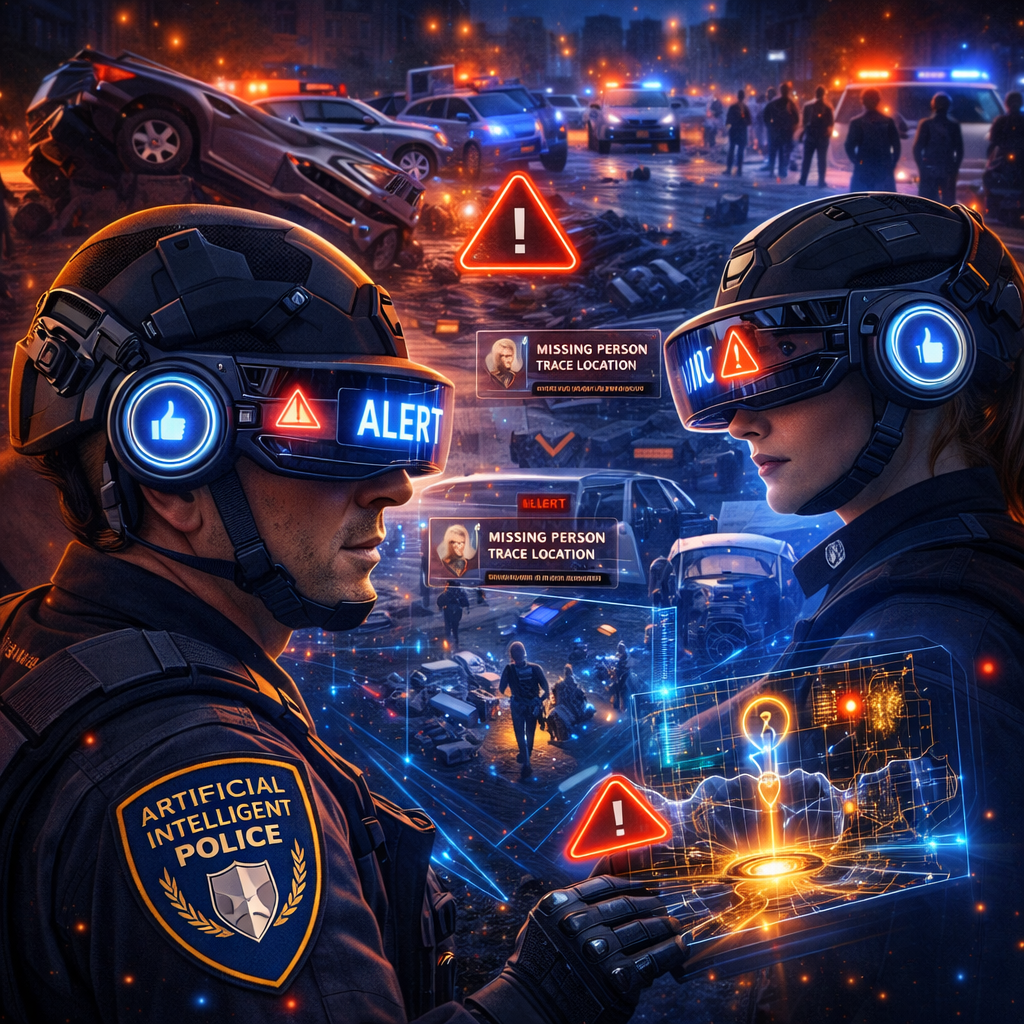
At the scene itself, perception changes again. Imagine a traffic accident. In the past, officers saw only what was physically visible. Today, aerial views from drones can map the scene, identify injured people, analyze traffic flows and detect secondary risks. AI can help assess whether hazardous materials may be involved, whether vehicles are unstable or whether additional dangers are emerging. It does not decide, but it expands awareness. In a burglary or missing person case, the same applies. Movement patterns, camera footage, witness information and environmental data can be combined. Not to surveil people, but to recognize patterns that help find faster, protect earlier and resolve situations before they escalate. In situations where people are in danger, AI primarily does one thing: it creates calm. It reduces uncertainty by structuring information. It reduces stress by providing overview. It reduces risk by making relevant factors visible earlier.
It also changes work internally. Body cameras, reports and documentation can be generated automatically. Processes become more transparent, decisions more traceable, learning easier. Not to control, but to improve. Not to punish, but to build trust, both inside police organizations and between police and the public. Artificial intelligence therefore does not change what policing is, but how it is supported. Officers remain officers. They listen, speak, judge and take responsibility. But they do so in an environment that is clearer, calmer and more connected than before.
The real transformation is not technological, but structural. From reaction to prevention, from fragments to context, from stress to orientation. Artificial intelligence does not make policing more powerful, but more attentive. It does not make it faster, but earlier. It does not make it harsher, but more informed. And perhaps that is its most important contribution to public safety, not control, but clarity, not power, but awareness, not escalation, but the ability to prevent escalation before it happens.