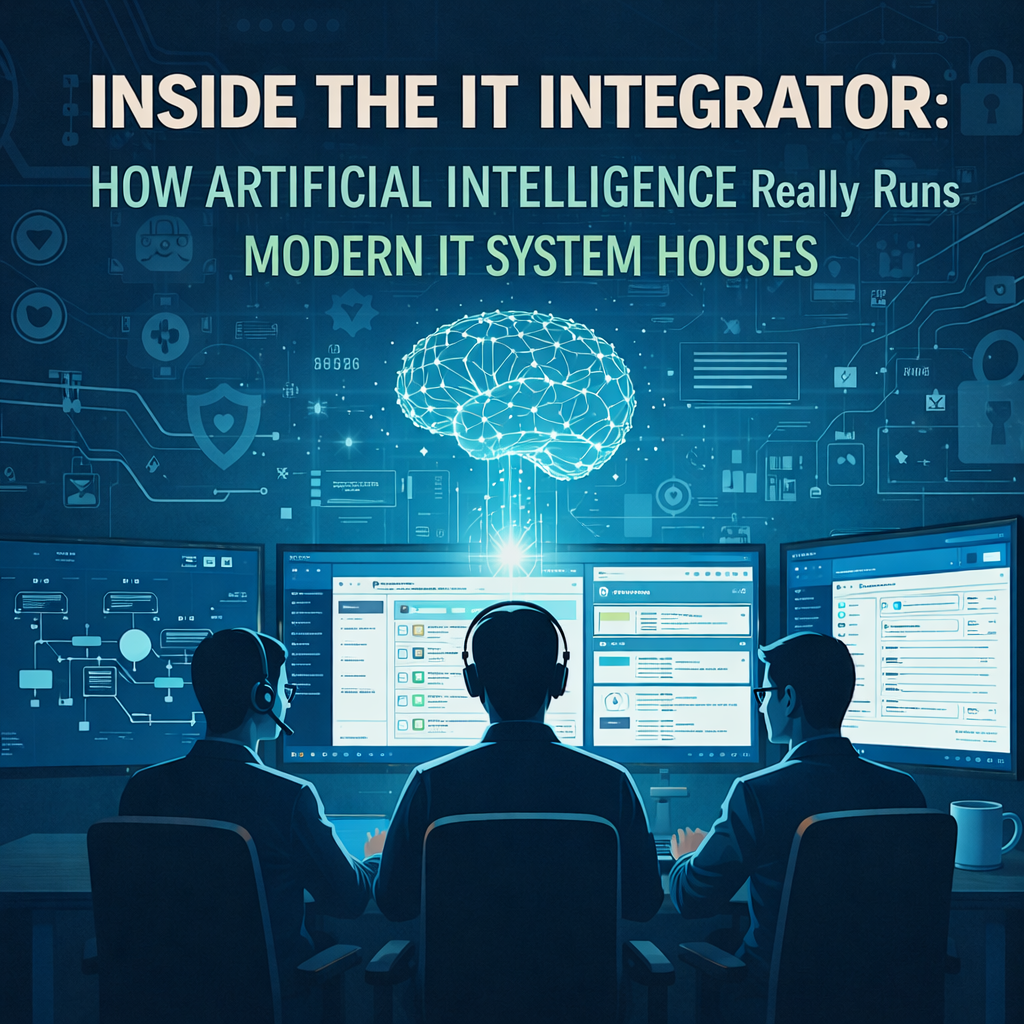
IT system houses sell digital transformation, automation, resilience and stability. They design and operate the infrastructures that banks, manufacturers, public institutions and entire supply chains depend on. They are invisible when everything works and absolutely critical when something breaks. That is exactly why the most interesting question is not what they sell, but what they use themselves. How Artificial Intelligence actually runs inside these organizations on a daily basis is far more revealing than any marketing slide, keynote presentation or vendor roadmap.
We spoke with CTOs, operations leads and service managers and we deliberately avoided asking about visions or future strategies. We asked about reality. What is running today. What actually works under pressure. Where AI is embedded in daily operations and where it quietly changes how work is done. What emerges from these conversations is not a story about disruption or replacement, but about control, scale and manageability in environments that have become too complex to run purely by human attention.
The first place where AI has become essential is the service desk. Every incoming ticket is analyzed automatically. The system reads the text, detects intent, estimates urgency and maps the request to known categories and solution patterns. Password resets, VPN issues, access problems and standard software requests are often resolved without any human involvement. More complex tickets are pre classified, enriched with context and diagnostic data and routed to the right teams before a human ever sees them. The result is not fewer people, but fewer interruptions, fewer context switches and far less time spent sorting and triaging instead of solving.
AI is also deeply embedded in monitoring and operations. It continuously analyzes logs, performance metrics, network traffic and system behavior across thousands of signals and data points. Instead of triggering alerts for every anomaly, it learns what normal looks like for a specific environment and highlights only meaningful deviations. Slow performance trends, unusual traffic patterns or early signs of system degradation are detected long before users notice any problem. In many environments the system does not just alert but also reacts. It can restart services, shift workloads, scale resources or isolate suspicious behavior automatically within predefined boundaries. Operations become more self regulating, calmer and more predictable, with fewer emergencies and more controlled interventions.
Another important area is internal knowledge. IT system houses accumulate massive amounts of documentation, runbooks, configuration data and historical incident information over the years. Traditionally this knowledge existed but was fragmented and difficult to access in practice. Today internal AI assistants index this information, connect it and make it searchable in natural language. Engineers ask how a specific firewall was configured for a certain customer setup or how a similar incident was resolved last year and receive a concrete contextual answer instead of a folder path, a ticket number or a vague reference.
Generative AI is also used in everyday operational work. It helps generate scripts, prepare configuration templates, write documentation, summarize incidents, translate technical information into customer friendly language and prepare internal reports. These are not glamorous tasks, but they consume enormous amounts of time and mental energy. AI does not replace expertise here, it amplifies it and removes friction from routine work so that human attention can be focused where judgment, experience and responsibility actually matter.
There is also a quieter but highly strategic use of AI in decision support. It is used to forecast ticket volumes, detect capacity bottlenecks, predict service level risks and support staffing and resource planning. It helps identify patterns that indicate rising operational load, upcoming pressure points or structural inefficiencies. It does not make decisions, but it gives operations and management earlier and clearer signals about what is coming, allowing them to react before problems become visible.
What emerges from all of this is not a futuristic autonomous company or a fully automated machine. It is something much more practical and much more valuable. A quieter organization. Fewer alerts. Fewer manual steps. Fewer surprises. Less reactive chaos and more proactive control. Artificial Intelligence does not replace people in these environments. It replaces noise, friction and uncertainty.That may not sound spectacular. But it is exactly what modern IT operations need.