At Darkgate, we went deep into what actually moved into the cloud in our article What Really Moved Into the Cloud. Not at a marketing level, not at a slide deck level, but at a structural one. We looked at which systems are truly running outside the enterprise today, which data lives there, which processes have been externalized. And anyone who follows this space knows the shift has been massive. Faster, broader and deeper than most expected just a few years ago.But at the same time, through our daily work in executive recruiting, we see something that rarely shows up in strategy decks. We work with companies across industry, energy, finance, government and high tech. And we see very clearly where the cloud stops. Where it does not reach. Where organizations hesitate. Or where they deliberately say no. Not now. Not here. Maybe not ever.
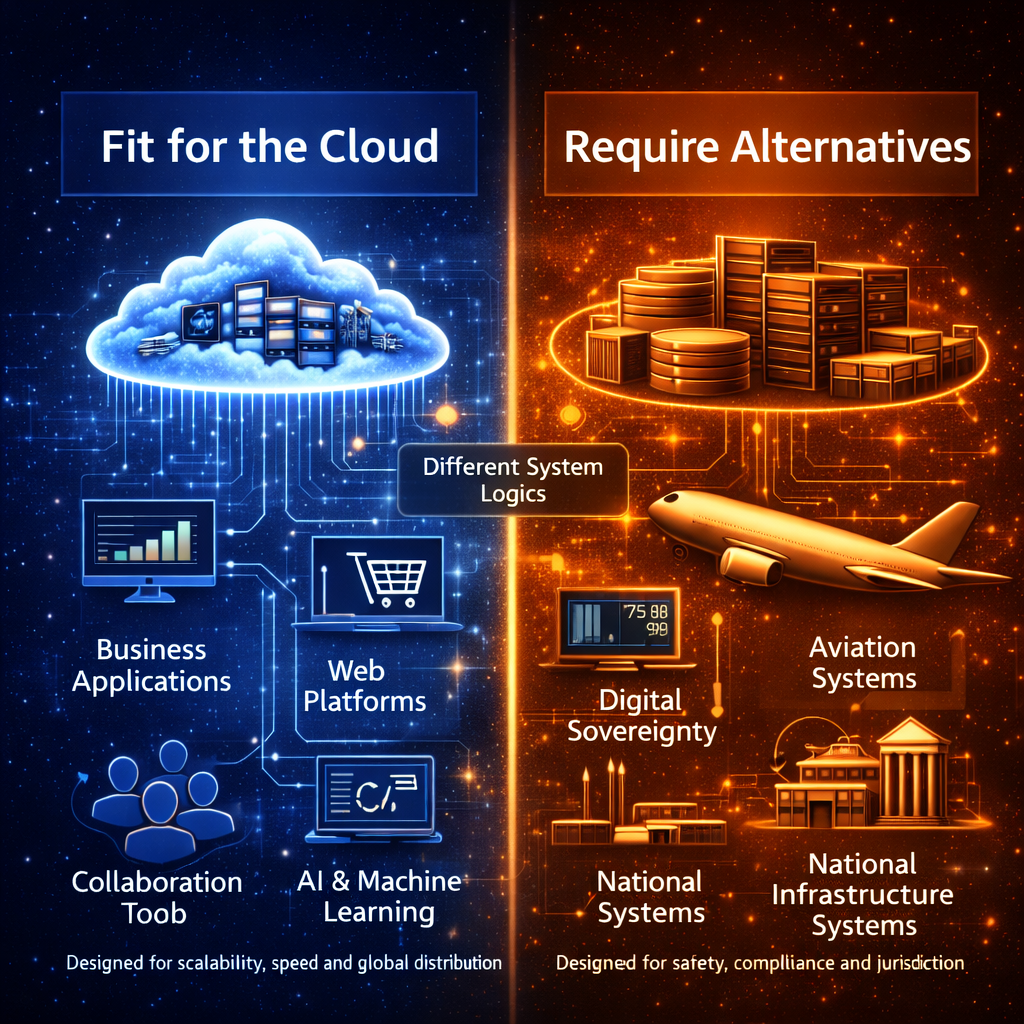
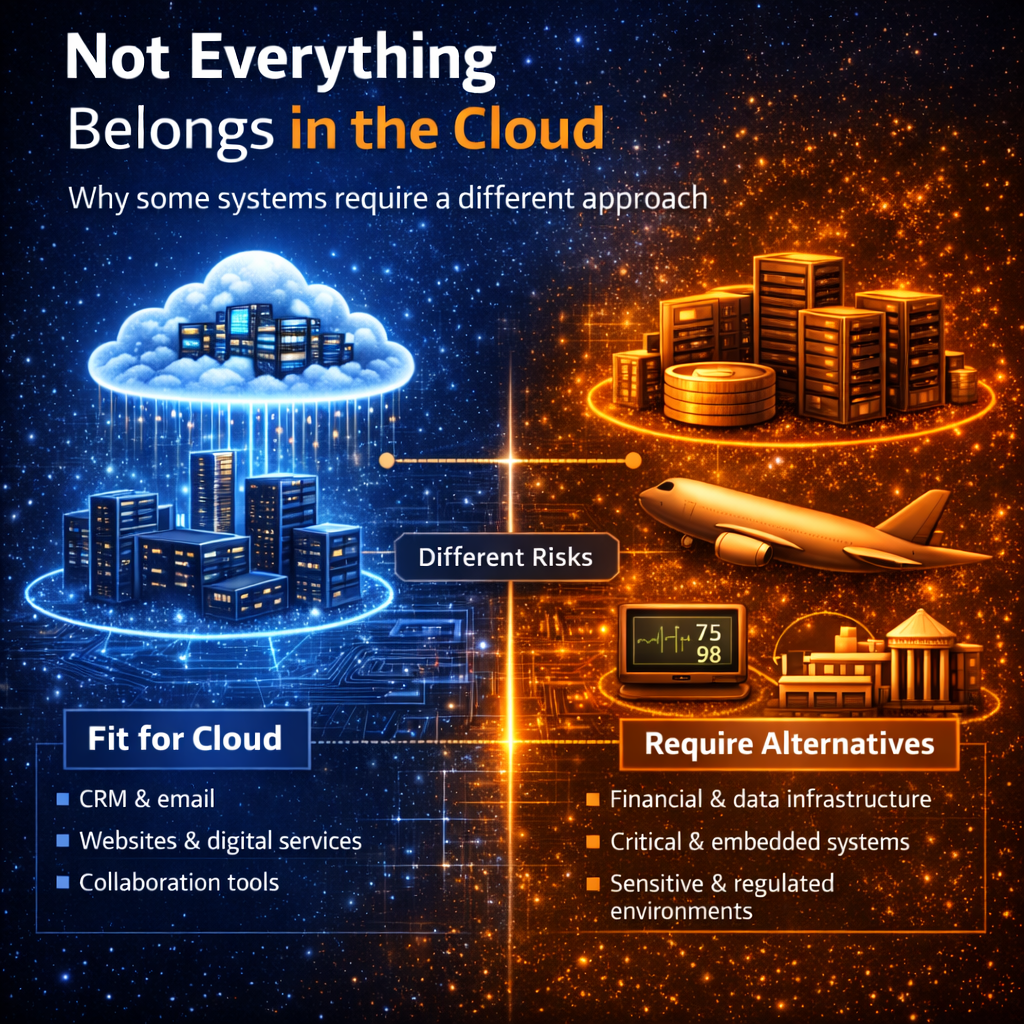
And what is striking is this. It is not the peripheral systems that resist the cloud. It is the most critical ones.Not email. Not collaboration tools. Not CRM. But the digital layers where physical reality, legal responsibility, safety and power intersect.Take industrial control systems. Production lines, power grids, water treatment plants, chemical processes. These systems were never designed to simply “run somewhere.” They are part of physical feedback loops. Sensors measure pressure, temperature, flow. Actuators open valves, start motors, switch circuits. Here latency is not a performance issue, it is a safety issue. Milliseconds matter. And the idea of moving that control logic away from the physical proximity of the plant still makes many engineers deeply uncomfortable. Not because they dislike change, but because they carry responsibility.
The same applies to high volume transactional core systems in banking and insurance. Core banking platforms, payment systems, risk engines. These systems are often decades old, deeply entangled with regulatory frameworks and tightly integrated into the organizational nervous system. They do not just run the business. They define it. Every change is surgical. Every migration is systemic risk. Technically, the cloud can host them. Organizationally, the transition itself is dangerous.Then there is identity and security infrastructure. Directory services, key management systems, access control, cryptographic trust anchors. These are the systems that decide who is allowed to do what. Who can read. Who can write. Who can shut something down. Many organizations are reluctant to delegate exactly this layer to external platforms. Not because they distrust the technology, but because they refuse to outsource ultimate control.And then there is data. Health records. Financial transactions. State information. Research data. Here the question is not only security, but sovereignty. Jurisdiction. Legal reach. Who can compel access under which laws. These are not abstract questions. They are geopolitical ones.Finally, there are embedded and real time systems. Aircraft, medical devices, vehicles, industrial robots. These systems are not online services. They are parts of physical processes. They must react deterministically. They cannot wait. They cannot fluctuate. They cannot be eventually consistent. For them, the cloud is not a place. It is noise.What all these systems have in common is not technology. It is responsibility.
Organizations do not hesitate because they are conservative. They hesitate because they understand what is at stake. They do not resist change. They resist uncontrolled change. The cloud is powerful because it abstracts complexity. But abstraction becomes dangerous when it hides where control ends and responsibility begins.Perhaps that is the most important insight in the cloud debate. Not everything that is technically possible is organizationally wise. Not everything that is economically attractive is strategically sound. And not everything that scales is responsibleThe systems that refuse the cloud are not outdated. They are mature. They mark the boundaries of the model. They show where technology ends and accountability begins.And perhaps that is exactly why they are the most interesting systems of our time.