There are career paths whose appeal doesn’t need loud promotion. Their fascination comes from the fact that they operate behind the scenes structured, focused, and quietly essential. The Security Operations Center, or SOC, is one of these places. And for anyone working in IT recruitment like we at Darkgate, who speak daily with young talents from Generation Z—it becomes clear very quickly that the SOC is far more than a technical department. For many, it represents a myth, a gateway, a place where responsibility, technology, and purpose converge in a way few other fields can match.As one of the most recognized recruiting agencies in the DACH IT landscape, we have examined closely why this specific environment is so attractive for ambitious newcomers. Our conversations with system engineers, generalist IT juniors, emerging security specialists and first-year analysts reveal a consistent pattern: for many young professionals, the SOC is the first real step into cybersecurity. And their fascination is anything but random.
Whenever we ask candidates what draws them in, we hear the same words over and over: “the atmosphere,” “the intensity,” “the feeling of doing something that actually matters.” This combination of technology, structure, urgency and a hint of secrecy makes the SOC one of the most coveted entry points for the next generation of IT professionals. To understand this more deeply, we evaluated candidate feedback, analyzed dozens of interview transcripts and conducted an internal survey among young applicants. The results draw a strikingly clear picture—and they explain perfectly why SOC positions are in such strong demand.
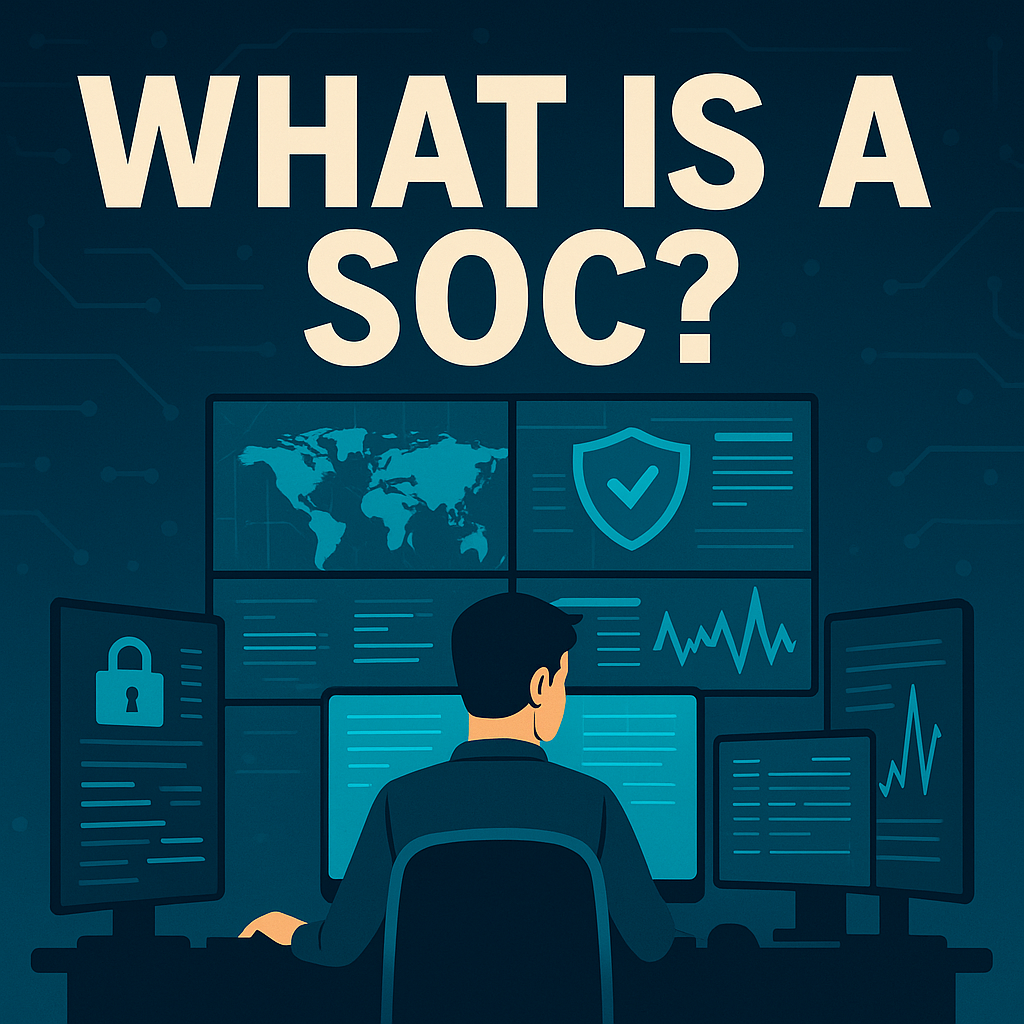
The first and perhaps most fascinating element is the physical reality of a SOC. A SOC is not an ordinary office space. It is often an isolated, highly controlled room, separated from the rest of the IT infrastructure. Windowless, quiet, dimly lit, and heavily secured. Access is restricted through multi-factor authentication, badges, identity checkpoints and video surveillance. For many, this environment feels like a blend of command center, intelligence hub, and security bunker. And it is exactly this atmosphere that resonates with younger candidates. “It feels like a place you have to earn your way into,” one applicant told us. “Not just another workstation.” The second component is the sheer visual power of the technology. Few IT environments feature a massive wall of screens displaying global threat feeds, heatmaps, XDR telemetry, SIEM correlations and live attack indicators. For many young applicants, this evokes images one would expect from NASA mission control, financial trading floors, or high-security operations rooms. And that is precisely the point: the SOC makes cybersecurity visible. It transforms abstract digital threats into tangible, observable reality. Young professionals often describe this as “the first job where you can see technology alive in real time.”
These screens are not just decoration—they are operationally essential. Real-time dashboards from XDR platforms, Zero Trust signals, identity anomalies, endpoint detections, network deviations—all displayed the moment they occur. For newcomers, that is electrifying. It’s the difference between watching cybersecurity from the outside and standing right in the middle of it. The third element that captivates young professionals is the structured progression within SOC teams. Unlike other IT domains where career paths are vague or loosely defined, the SOC offers a tangible hierarchy. Level 1 analysts monitor alerts and classify initial threats. Level 2 analysts conduct deep investigations, perform digital forensics and unravel complex incident patterns. Level 3 engineers and threat hunters shape detection logic, coordinate response efforts and serve as the strategic backbone of the team. Young professionals appreciate this clarity. “You know exactly where you start and exactly where you can go,” as one candidate summarized. “It feels like a real career path not just a job title.”
Another often overlooked but extremely important factor is the sense of meaningful work. Many junior professionals entering IT feel that their early tasks basic troubleshooting, simple support tickets, system maintenance do not reflect the importance of the industry they’ve chosen. In contrast, a SOC places newcomers directly in the flow of real threats, real impact, real urgency. Every anomaly reviewed, every alert assessed, every escalation initiated can have tangible consequences for the organization. Generation Z, which places high value on purpose and relevance, recognizes this immediately. And for many, this is the defining factor. What also appeals strongly to young candidates is the constant learning curve. In a SOC, stagnation is impossible. Tools evolve, threats evolve, detection methods evolve. Anyone who works in a SOC is automatically pulled into this cycle of continuous improvement. Many junior applicants highlight that they have no interest in repetitive or monotonous tasks. They want growth, challenge, and speed. The SOC offers exactly that. This is why SOC roles consistently rank among the most requested junior positions in our recruiting pipelines. Not because they are easier than other roles, and not because they’re generic entry points but because they embody an environment where responsibility, technology, secrecy, structure, analysis and purpose are combined into a form of work that the new generation finds genuinely compelling. Many describe the SOC as a hybrid between a technical lab, a mission control room and a digital defense center. And that description is surprisingly accurate.
In an era where cyberattacks are no longer abstract or distant, but immediate and globally interconnected, the appeal of the SOC will only grow. It is a space where young professionals develop rapidly, take responsibility, analyze real threats, and become part of a team that quietly protects the core stability of entire organizations. For us at Darkgate, none of this is surprising. With deep insights into the operations of leading system integrators, we have seen firsthand how central SOC teams have become. And for the new generation entering the workforce, the SOC is more than just a job. It is a statement. A beginning. And for many: the entry point into a career that will shape them for years to come.