
From Ownership to Agility: How CapEx and OpEx Redefined the Economics of IT Infrastructure
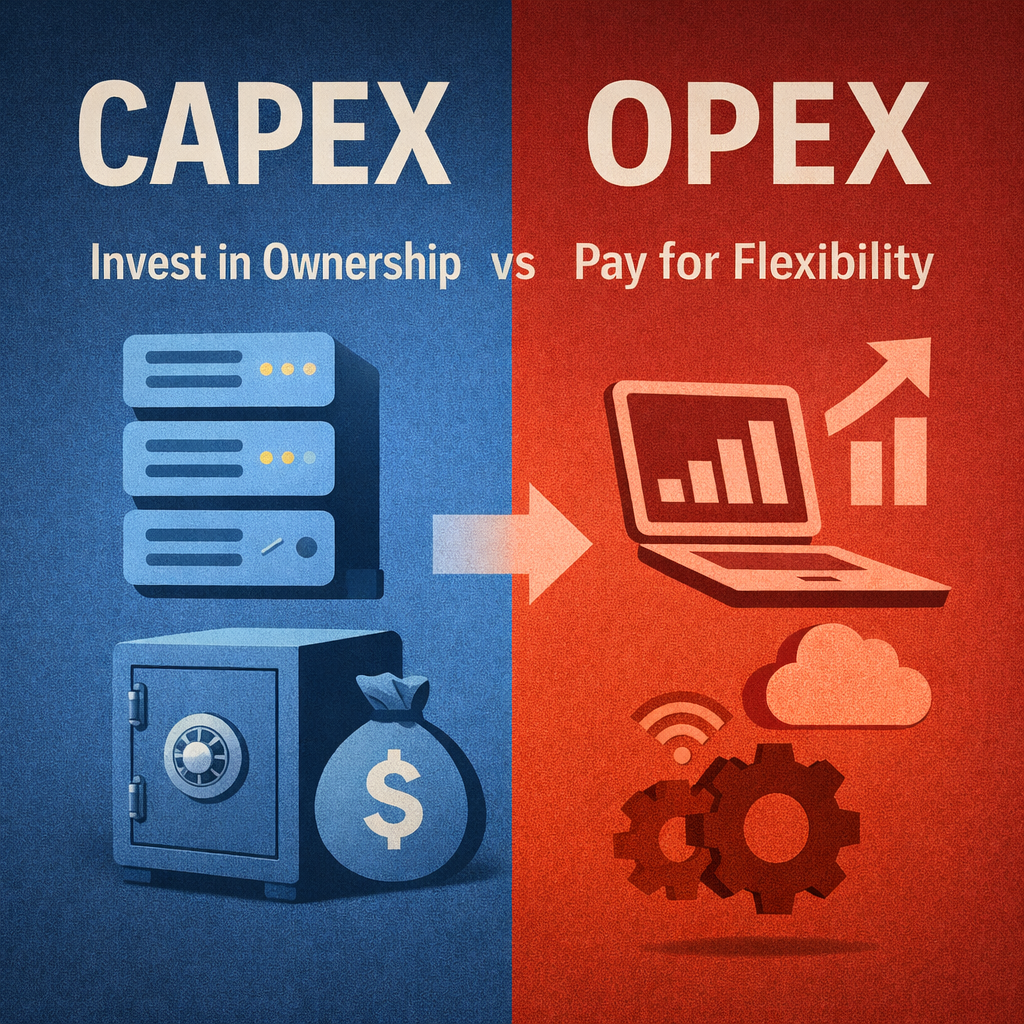
For a long time, IT infrastructure meant one thing above all else: ownership. Servers lived in on-premises data centers, networks were purchased, licenses paid once and depreciated over many years. This mindset remained stable for decades and seemed unquestionable. After the financial crisis of 2008, however, something began to shift. Not abruptly, not dramatically, but […]
From Unified Communications to Everywhere: How Edge, 5G and Real-Time Cloud Redefined Connectivity (2020–Today)
This article deliberately builds on our previous piece Unified Communications Transforming How We Connect and Collaborate. In that article, we described how voice, video and collaboration placed real-time pressure on networks from the 2010s onward and why Unified Communications became a benchmark for modern infrastructure. From 2020 onward, this benchmark shifted once again. Real-time communication […]
When Every Millisecond Matters: Performance, Latency and Real-Time Infrastructure from Unified Communications to the Edge

From the early 2000s onward, IT infrastructure entered a phase in which performance, latency and real-time capability became decisive design factors rather than technical side notes. Networks were no longer just transport layers for data. They were suddenly expected to deliver information at the right time, with predictable quality and without noticeable delay. This shift […]
When Networks Learned to Heal Themselves: Self-Healing & Autonomous Networks (2019–Today)
This article is a deliberate continuation of our piece When Infrastructure Learned to Speak Code. In that article, we described how infrastructure, starting around 2010, became programmable through code, APIs and automation. From around 2019 onwards, however, a much deeper shift began. Networks no longer simply execute instructions. They started to evaluate their own state, […]
When Infrastructure Learned to Speak Code: Automation and Programmable Networks (2010–Today)

From around 2010 onward, a development began in IT infrastructure that was long underestimated and is now impossible to ignore. It did not arrive with big announcements or glossy marketing, but quietly, pragmatically and often out of necessity. Automation and programmable networks were not born as a vision, but as a response to a reality […]
Hyperconverged Infrastructure: When Virtualization Became an Operating Model (From 2018 Onwards)
From around 2018, a clear shift can be observed in the infrastructure world. Not loud, not flashy, but fundamental. Virtualization, which for years had been understood primarily as a technical capability, changes its role. It is no longer just an architectural choice, it becomes an operating model. This is exactly where Hyperconverged Infrastructure enters the […]
Beyond Servers: How Network, Storage and Desktop Virtualization Merged into One Infrastructure Reality (2015–Today)
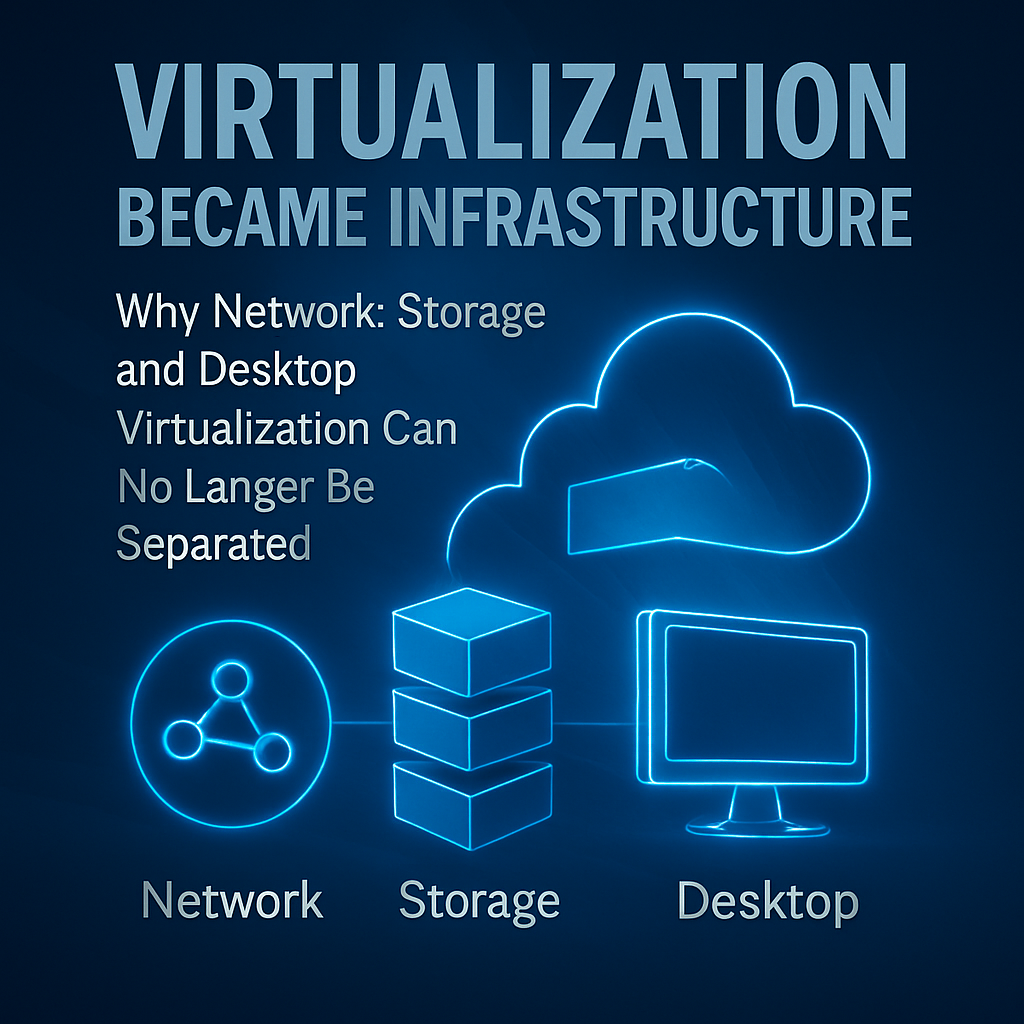
From around 2015 onwards, the story of virtualization can no longer be told as a set of separate technologies. Network virtualization, storage virtualization and desktop virtualization are increasingly discussed together, not because it sounds cleaner or more modern, but because this is how infrastructure has actually evolved. Virtualization leaves the server room as an isolated […]
When Servers Learned to Share: Virtualization as an Infrastructure Revolution (1998–2005)
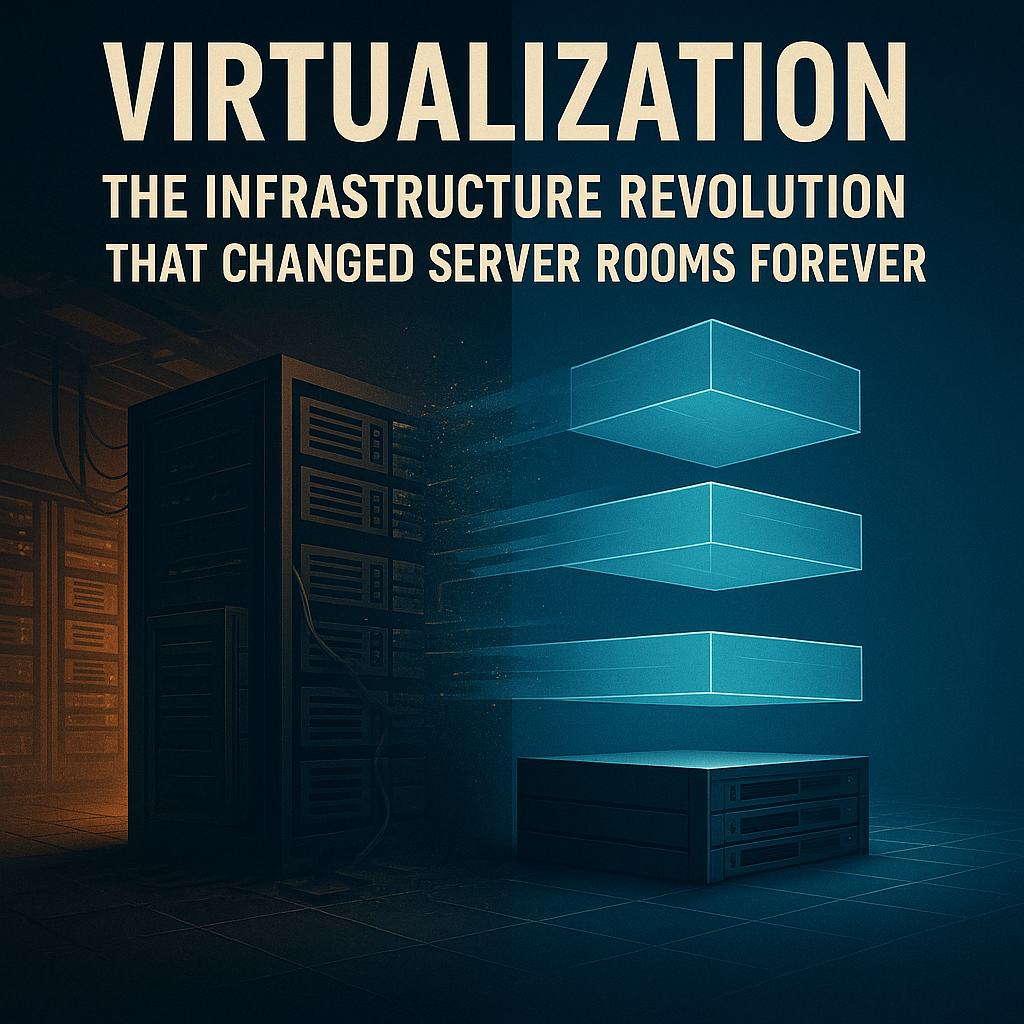
At the end of the 1990s, IT infrastructure was still rigid and physical. Server rooms were loud, hot, and packed with individual machines, each running a single operating system and usually a single application. Hardware was massively underutilized, often running at only five to fifteen percent capacity, yet every new application meant another physical server. […]
Hyperscalers and the Rise of Global Data Center Networks
Hyperscalers are not a sudden phenomenon, but the result of a long structural evolution in IT infrastructure. While the term itself appeared in the early 2010s, it only became truly relevant from around 2015 onward. From that point, the data center landscape began to change visibly. Data centers were no longer regional assets tied to […]
When Data Centers Left the Building – The Rise of Colocation as an Enterprise Standard

Colocation is not a new concept, but only over the past fifteen years has it reached the relevance it holds today. Its origins lie in a very practical need. Companies required reliable, high-performance IT infrastructure, yet many were unable or unwilling to build and operate professional data centers themselves. As early as the 1990s, specialized […]